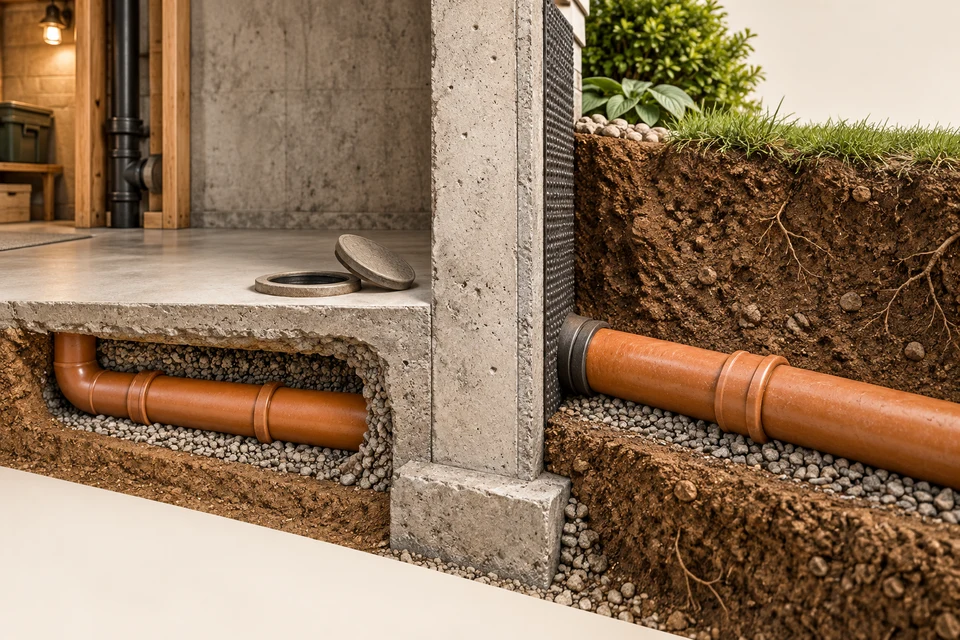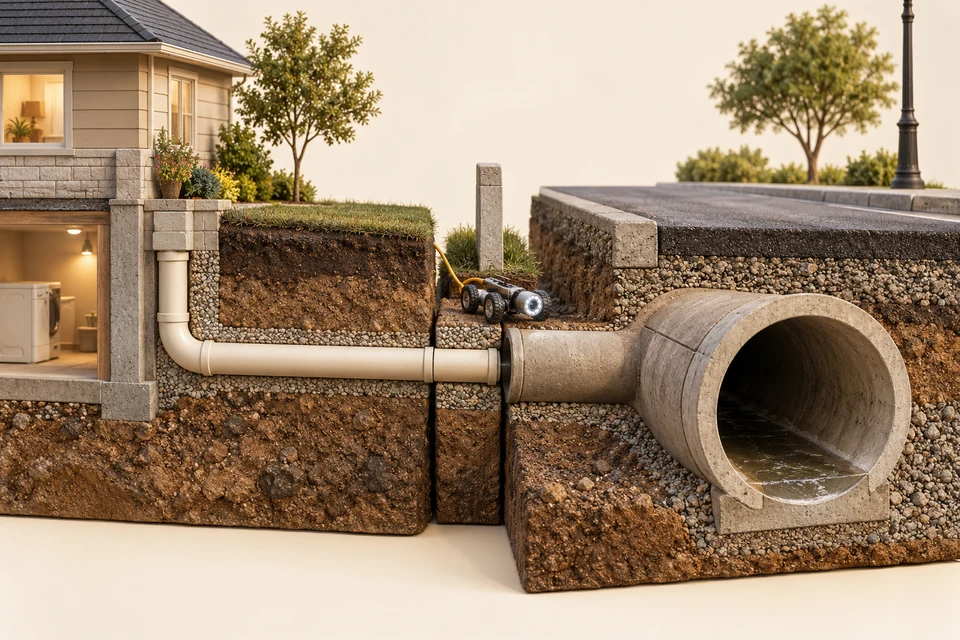
A sewer replacement is the cheapest time to add a backwater valve, because the floor or trench is already open, the pipe is exposed and a plumbing permit is already in play. The valve closes when sewage flows back from the main. In Edmonton, EPCOR offers a subsidy of up to $800 for eligible homes, and Calgary recommends valves on below-grade fixtures.
- A backwater valve lets wastewater leave the house and closes when flow reverses from the municipal side, protecting basement fixtures.
- Adding one while the building drain is exposed avoids a second round of slab cutting, permits and inspections.
- EPCOR's subsidy pays up to $800 for eligible Edmonton homes when a professional plumber installs an approved model under a City permit, as checked September 2026.
- Calgary recommends a valve on below-grade fixtures; Medicine Hat leaves installation to the homeowner's discretion.
- The owner maintains the valve after installation, so it needs an accessible lid and a simple routine.
01 /What does a backwater valve do?
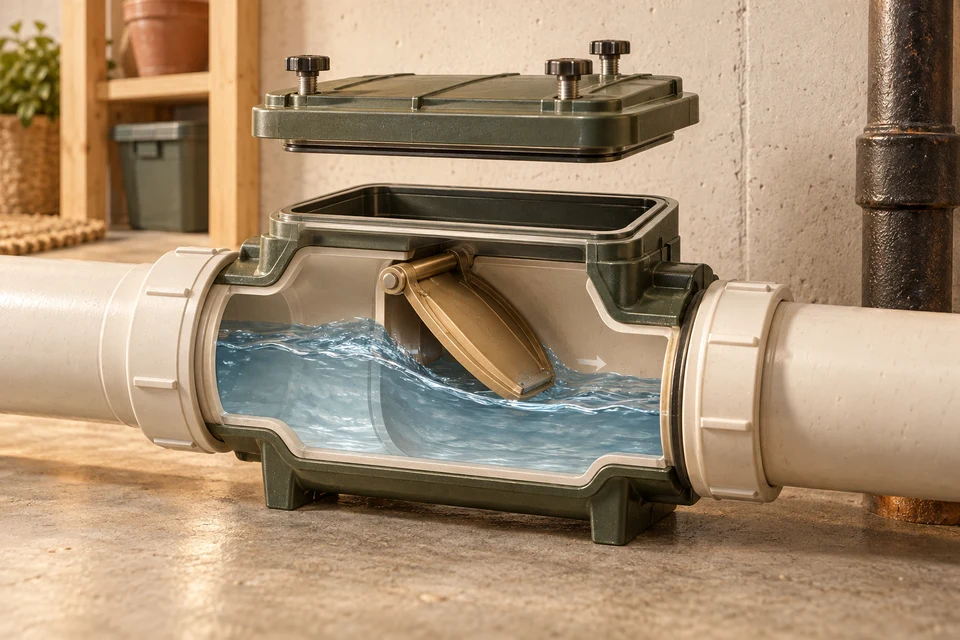
A backwater valve is a one-way device on the building drain that lets wastewater flow out of the house and closes when sewage tries to flow back in. In normal use, the flap hangs open or floats clear so drains empty freely. When the municipal main surcharges, during a heavy storm or a blockage downstream, reverse flow lifts the flap against its seat and seals the pipe.
While it is closed, the house's own wastewater cannot leave either. Water used upstairs during a backup collects in the pipe on the house side of the valve and can come up through the lowest fixture. The valve protects the basement from the city side; it relies on the household to stop running water until the main recovers.
02 /Why is a sewer replacement the best time to add one?
Because most of the cost of retrofitting a valve is getting to the pipe, and a replacement has already paid for that. On a normal retrofit, a crew cuts the basement slab, digs to the building drain, installs the valve body, inspects, backfills and restores the floor. During a replacement, the drain or sewer is already open and the new pipe can be built around the valve from the start.
- Access is done: the slab is already cut or the trench already open, so there is no second demolition.
- The permit is already in play: the valve can be part of the same plumbing scope and inspection sequence, rather than a separate job later.
- The layout can be right: the valve can sit where its lid is reachable, on straight pipe, with the fixtures it must protect upstream of it.
- New pipe, new valve: the valve connects to new pipe rather than being adapted into old cast iron or clay.
On an exterior-only replacement the building drain is not exposed, so the choice is between an exterior valve or opening the floor as well. The interior vs exterior guide explains how to tell which section your job involves.
03 /What does EPCOR's backwater valve subsidy offer in Edmonton?
EPCOR offers a subsidy of up to $800 toward an interior or exterior backwater valve for eligible Edmonton homes, as checked September 2026. The program's published conditions set out who qualifies and how to claim.
| Requirement | What EPCOR's page says |
|---|---|
| Amount | Up to $800 for an interior or exterior backwater valve |
| Eligibility (any of) | Home built before 1989, previous sanitary backup flooding, or an area with a history of neighbourhood flooding |
| Other conditions | No existing valve, no previous subsidy at the address, and a separately serviced home |
| Installer and product | A professional plumber must install one of five approved models |
| To claim | Submit the City of Edmonton permit (green sticker) number, the paid invoice and the application form |
| Funding | First-come, first-served and subject to availability |
Two practical points follow. A homeowner-installed valve does not qualify, even if you hold a homeowner plumbing permit for the rest of the job. And because the funding is limited, check availability and the approved model list with EPCOR before the valve is ordered, not after the floor is closed.
04 /What do other Alberta municipalities say about backwater valves?
The advice varies from a recommendation to a neutral note, as checked September 2026. None of the pages reviewed below makes a subsidy offer outside Edmonton; confirm locally before assuming there is none.
| Municipality | What its page says | What to confirm |
|---|---|---|
| Calgary | The sewage backup page recommends a backwater valve on below-grade fixtures | Permit and inspection through the plumbing permit process; call 311 |
| Edmonton | EPCOR says the owner maintains the valve if present; the City lists backwater valves as permit work | Subsidy availability with EPCOR before ordering |
| Medicine Hat | Installing a valve is at the homeowner's discretion | Permit requirements with the City |
| St. Albert | City cleaning or camera help needs a 4-inch cleanout inside the home | Valve and cleanout layout with Public Works |
| Airdrie | Plumbing work separate from original construction needs an accessory permit | Whether your valve scope needs one: Building Inspections, 403.948.8832 |
| Red Deer, Okotoks, Lethbridge | Not addressed on the pages reviewed | Ask the permit office |
St. Albert's cleanout rule is worth building in anywhere: if the drain is open, installing a full-size interior cleanout alongside the valve makes future cleaning and camera work easier. The Alberta City Sewer Rules Finder lists each city's permit body.
05 /Does adding a backwater valve need a permit in Alberta?
In the cities that address it, yes. Edmonton's residential plumbing permit page lists backwater valves among the work that needs a permit under the Safety Codes Act, and EPCOR's subsidy requires the City permit's green sticker number. Calgary requires a plumbing permit when a plumbing system is altered. Airdrie requires an accessory permit for plumbing separate from original construction, and from January 2026 a homeowner-led trade permit costs $100 while hired contractors are exempt from that fee.
During a replacement, ask the contractor to include the valve on the same permit as the pipe work, and make sure the inspector sees it before the floor is poured or the trench is backfilled.
06 /How much does a backwater valve cost during a replacement?
Backwater valve installation has a typical quoted range of $1,800–$4,500 as a standalone job on this site's pricing page. When a replacement has already opened the floor or trench, part of that standalone work (slab cutting, excavation and restoration) is already being paid for, so ask for the valve as its own line item inside the replacement quote. In Edmonton, an eligible home may recover up to $800 through the EPCOR subsidy.
07 /How do I maintain a backwater valve after the replacement?
The homeowner does. EPCOR says owners are responsible for maintaining the sewer lines on their property, including the backwater valve if present, and that is the practical position everywhere. A valve that is never checked can stick open, or closed, when it matters.
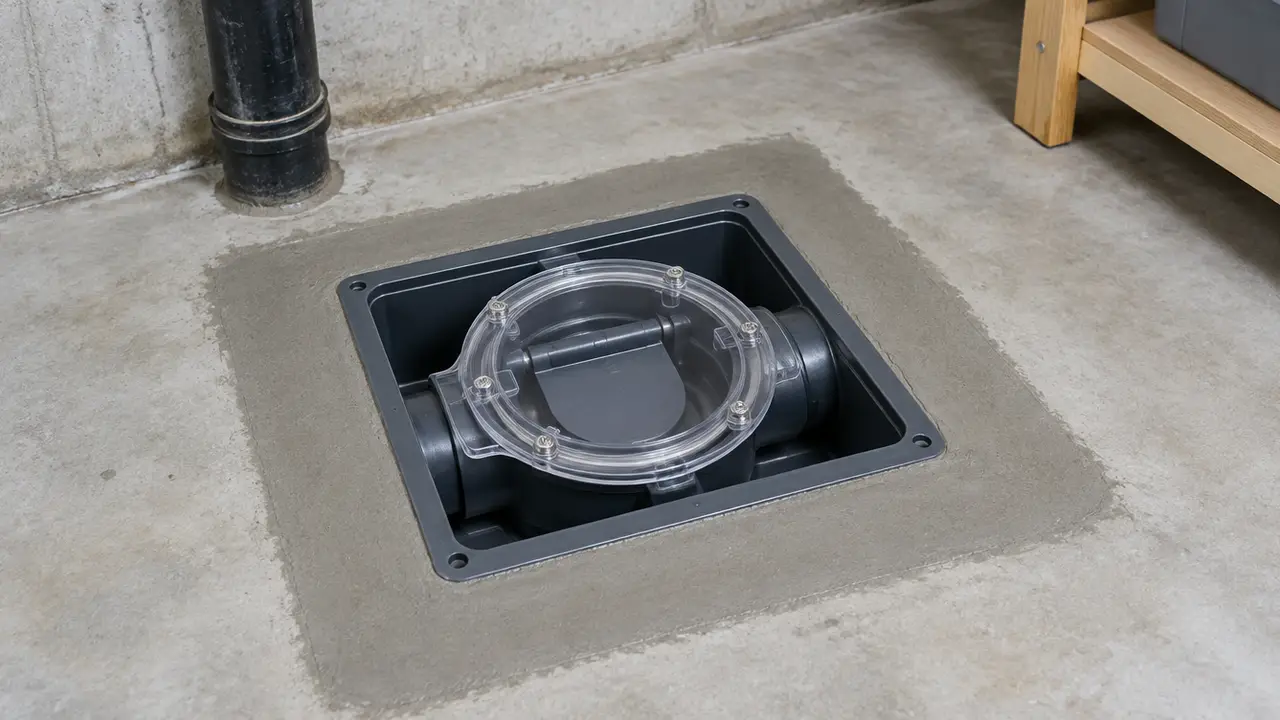
- Keep the lid accessible
Do not tile, carpet or build over the access cover. Note its location in the house file.
- Look inside periodically
Open the cover and check that the flap moves freely and seats cleanly, with no debris holding it open.
- Clean carefully
Remove debris by hand with gloves, following the manufacturer's instructions; avoid harsh chemicals that can damage seals.
- Check after every backup or heavy storm
Confirm the flap has returned to normal and nothing is lodged in the seat.
- Keep it on camera
Include the valve in any future camera inspection so its condition is recorded with the rest of the line.
For more on keeping a new line healthy, see extending sewer life. When you are ready to price a replacement with a valve included, send your details through the request form.
FAQQuestions people ask
Can an EPCOR backwater valve subsidy be claimed for a valve installed during a sewer line replacement?
EPCOR's published conditions do not exclude it: the home must be eligible, have no existing valve and no previous subsidy, and a professional plumber must install an approved model under a City permit. Confirm funding and model with EPCOR before the valve is ordered.
Can an Edmonton homeowner install their own backwater valve and still get the EPCOR subsidy?
No. EPCOR requires a professional plumber to install one of its approved models, and the claim needs the City permit's green sticker number and the paid invoice. A homeowner installation does not meet those terms.
Who maintains the backwater valve in an Edmonton house after the sewer is replaced?
The owner. EPCOR says owners are responsible for maintaining the sewer lines on their property, including the backwater valve if present. Keep the access lid clear and check the flap periodically.
Is a backwater valve mandatory in Medicine Hat when the sewer is replaced?
The City's wastewater page says installing a backwater valve is at the homeowner's discretion. Code and permit requirements for your particular work are a separate question, so confirm with the City's permit office when you apply.
Why does Calgary recommend a backwater valve on basement fixtures?
Below-grade fixtures are the lowest openings in the house, so a surcharge in the sewer reaches them first. The City's sewage backup page recommends a valve on those fixtures to stop sewage entering the basement when the system backs up.
Does an Airdrie homeowner pay the $100 trade permit fee to add a backwater valve?
If the homeowner leads plumbing work that needs a permit, Airdrie's $100 homeowner-led trade permit fee applies from January 2026; hired contractors are exempt from it. Ask Building Inspections whether your valve scope needs a permit.
NETWORKGo deeper across the HAUSE Sewer network
Backwater valve installation cost and municipal subsidies
Backwater valve installation cost in Canada for 2026: CAD ranges for unfinished and finished basements, line items, subsidy program patterns and insurance angles.
SewerCleaners.caWhere is my backwater valve? How to find it, recognize it and open the cover
Where is the backwater valve in a house? How to find it, what it looks like, what access box, sleeve and cover mean, how to open it safely, and valve alarms.
SewerInspector.caSewer inspection points and cleanouts: how to find, use or move one
What a sewer inspection point, chamber or cleanout is, how to find yours in a Canadian house, whether you can move or add one, and scoping through a toilet.