This glossary defines the words that appear in Alberta sewer replacement quotes, camera reports, permits and municipal pages, from lateral, building drain and sag to CIPP, pipe bursting, sonde, Click Before You Dig, protective structure, indemnified contractor and CAO approval. Each definition is written for a homeowner or property manager, and terms tied to one municipality say which one.
- Many quote disputes come down to a handful of words: lateral, building drain, property line, tie-in, restoration and allowance.
- Municipal terms such as "indemnified contractor" or "CAO approval" belong to one municipality; the definition names it.
- Where a term has a legal meaning, the definition is a plain-language summary; confirm the current rule with the municipality.
01 /How should I use this sewer replacement glossary?
Look up a word from a quote, a camera report or a municipal page, then follow the link to the page that explains it in context. The three families of terms that matter most are the parts of the line, explained in interior vs exterior replacement; the methods, in the methods overview; and the local approvals, in the Alberta cities overview.
If a contractor uses a term that is not here, ask them to explain it in writing; a clear answer is a good sign. Short answers to common questions are in the FAQ, and the Replacement Readiness Check uses many of these terms in its questions.
A–ZTerms
- ABS
- Acrylonitrile butadiene styrene: black plastic drain pipe common in homes built from the 1970s on, joined with solvent-cemented sockets.
- Access pit
- A small excavation used to reach a pipe for trenchless work, a connection or a collapse, instead of digging a full trench.
- Accessory permit
- Airdrie's term for a permit covering plumbing, gas, electrical, HVAC or building work done separately from the original construction.
- Allowance
- A priced placeholder in a quote for something not yet known, such as extra depth, rock or groundwater, with the rule for adjusting it stated in advance.
- As-built
- A record of where the new pipe, fittings and cleanouts actually ended up, ideally with depths and distances. Keep it with the permit and video.
- Backfill
- The soil or granular material placed back over and around a pipe after installation, compacted in layers to prevent settlement.
- Backwater valve
- A one-way flap in the building drain that closes when sewage tries to flow back toward the house. EPCOR places its maintenance with the owner.
- Bedding
- The layer of granular material a pipe rests on in the trench, which supports it evenly and holds the grade.
- Belly
- A low spot in a sewer line that holds water and solids; another word for a sag.
- Bituminous fibre pipe
- Also called Orangeburg: pipe made of wood fibre and tar pitch that deforms and blisters with age. It is generally treated as at the end of its life.
- Building drain
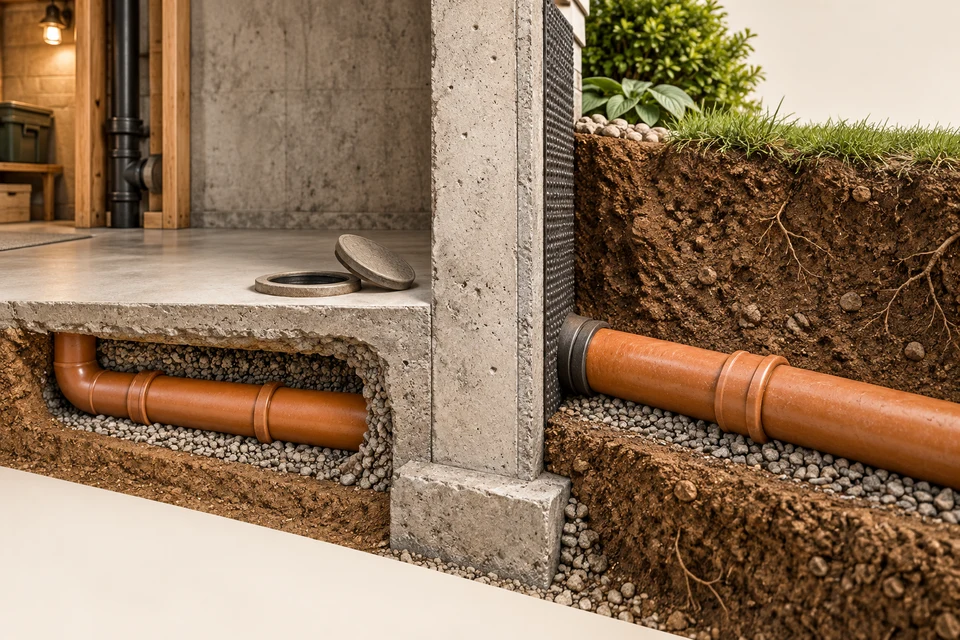
- The lowest horizontal drain inside a building, usually under the basement slab, collecting from the stacks and carrying waste to the foundation wall.
- Building sewer
- The pipe from the foundation wall to the municipal connection or main. Often called the lateral or sewer service.
- Camera inspection
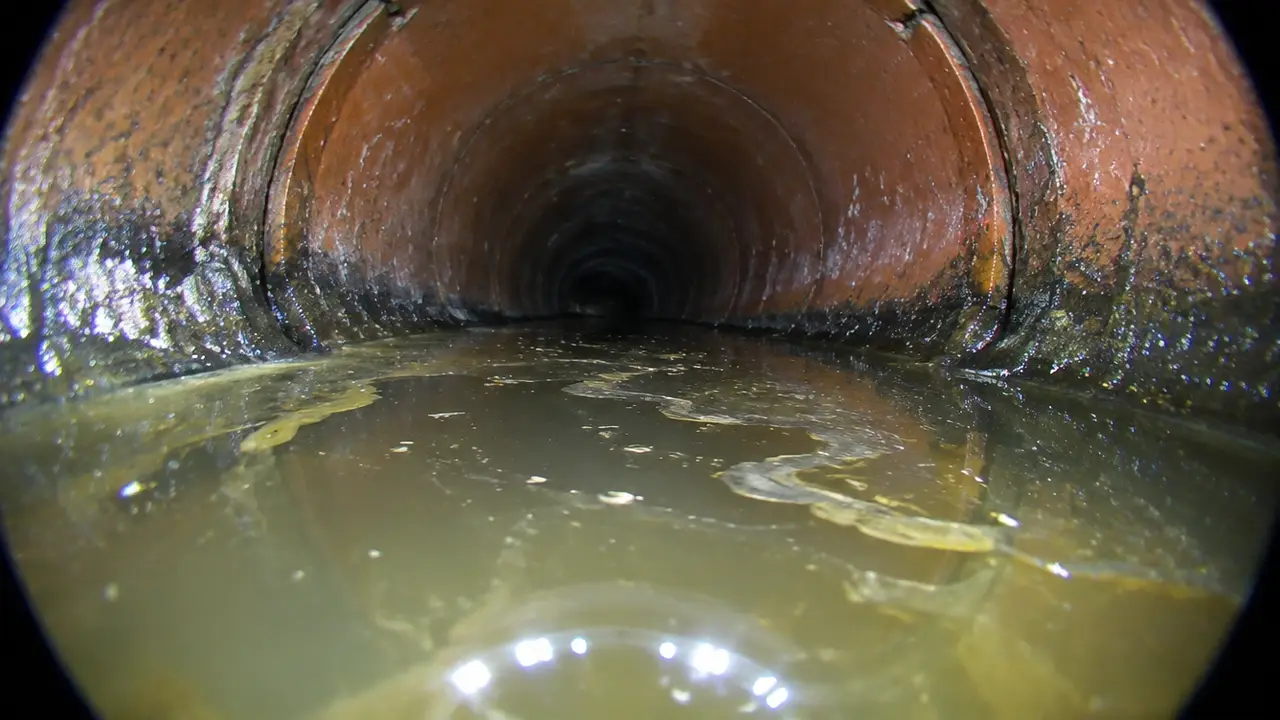
- A recorded video survey of the inside of a pipe with a push camera or crawler, with distances measured from the access point.
- CAO approval
- In Okotoks, the written approval of the Town's Chief Administrative Officer, which Bylaw 25-21 requires before a sewer connection is made, altered or removed.
- Cast iron
- Heavy metal drain pipe common in older homes, which corrodes from the inside, builds scale and cracks along the bottom as it thins.
- Change order
- A written, priced change to the agreed scope, usually after something unexpected is found once the ground is open.
- CIPP
- Cured-in-place pipe: a resin-soaked liner inserted into the old pipe and hardened to form a new pipe inside it. It follows the old grade.
- Cleanout
- A capped fitting that gives access into the drain or sewer for cleaning and cameras. St. Albert's City help needs a 4-inch interior cleanout.
- Click Before You Dig
- The Utility Safety Partners locate request service in Alberta. Ask at least three full working days before digging; private lines are not marked.
- Collapse
- A section of pipe that has caved in or is missing. EPCOR states that replacing the collapsed portion is the only viable option.
- Connection (sewer)
- The joint between a private sewer and the municipal main or service stub. Some municipalities control who may work on it.
- Crack
- A split in the pipe wall. EPCOR notes that small cracks may be tolerated if they are not wide enough to let backfill into the pipe.
- Cut back
- Sloping the walls of an excavation so they cannot cave in; Alberta's OHS Code sets minimum angles by soil type.
- Dewatering
- Pumping groundwater out of an excavation so the pipe can be laid and the walls stay stable.
- Engineering Services
- The City of Red Deer department that approves removing or installing sanitary, storm and water services on a lot under Utility Bylaw 3606/2018.
- EPCOR
- The utility that operates Edmonton's drainage system. It is responsible for the pipe from the property line to the main.
- Frost depth
- How far freezing penetrates the ground in winter. It varies with the winter, snow cover and surface; building sewers are laid below it.
- Grade
- The slope of a sewer line, which keeps water and solids moving toward the main. A sag is a loss of grade.
- Hand-expose zone
- The band 1 m either side of a locate mark (5 m for a high-pressure pipeline) where a line must be found with hand tools.
- HDPE
- High-density polyethylene: flexible plastic pipe joined by heat fusion, commonly pulled in behind a bursting head.
- Homeowner permit
- A permit issued to an owner doing their own work. Calgary and Edmonton require you to live in the home; Lethbridge asks for demonstrated competency.
- Host pipe
- The existing pipe that a liner is installed inside, or that a bursting head breaks.
- Hydro jetting
- Cleaning a line with high-pressure water through a nozzle, often before a camera run or lining.
- Indemnified contractor
- In Calgary, a contractor on the City's list under its Master Indemnification Agreement, for connections that tie into City infrastructure.
- Invert
- The inside bottom of a pipe, where flow runs and where cast iron usually wears through first.
- Lateral
- The private sewer pipe from a building to the municipal main; in everyday use, the same as the building sewer or sewer service line.
- Locate
- Marking the position of buried utilities on the ground before digging. Public locates cover registered lines; a private locate finds the rest.
- Main
- The municipal sewer pipe in the street or lane that collects from many properties.
- Master Indemnification Agreement
- The City of Calgary agreement under which it inspects service connections to City infrastructure installed by approved contractors.
- Mobilisation
- The cost of bringing equipment and crew to site and setting up, usually a separate quote line.
- National Plumbing Code of Canada
- The model plumbing code; the 2020 edition has been in force in Alberta since April 1, 2023, under the Safety Codes Act.
- Offset joint
- A joint where two pipe sections no longer line up, creating a lip that catches solids and lets roots in.
- Open cut
- Replacing a sewer by digging a continuous trench, removing the old pipe and laying a new one on grade.
- Pipe bursting
- A trenchless method that pulls a cone-shaped head through the old pipe, breaking it outward while a new pipe follows.
- Point repair
- Another name for a spot repair or sectional liner: renewing one short length of pipe.
- Post-work video
- A camera recording of the finished line, showing it is continuous, on grade and clear; ask for it in the quote.
- Prepaid contracting licence
- An Alberta licence for businesses that sell home improvement contracts away from their premises and take money before the work is finished.
- Private locator
- A company that finds customer-owned buried lines, such as a sewer lateral or water service, that public locate services do not mark.
- Property line
- The legal boundary of a lot, where many municipalities split owner and municipal responsibility for a sewer. Not a universal rule.
- PVC
- Polyvinyl chloride: rigid plastic pipe, usually white or green for sewer use, joined with gasketed bells or solvent cement.
- Reinstatement
- Reopening a branch connection from inside a newly lined pipe, usually with a remote cutter.
- Restoration
- Putting the surface back after the work: topsoil and seed, sod, concrete, asphalt, pavers or landscaping. Often the most variable quote line.
- Restricted Certificate of Competency "R"
- An Alberta certificate that contractors may require for sewer and water services work, according to the province's plumbing codes page.
- Rough-in inspection
- A permit inspection before new piping is covered. Calgary and Lethbridge list a rough-in and a final inspection.
- Safety Codes Act
- The Alberta law under which plumbing permits are issued and the National Plumbing Code is applied.
- Sag
- A section of pipe below its designed grade. EPCOR states sags can only be fixed by removing the pipe and regrading the trench bottom.
- Sanitary sewer
- The sewer that carries wastewater from toilets, sinks and drains, as opposed to the storm sewer.
- Sectional liner
- A short cured-in-place liner that renews one defect, such as a crack or an open joint, without lining the whole line.
- Service replacement
- Red Deer's term, among the items Engineering Services approves, for replacing an existing sanitary, storm or water service on a lot.
- Sonde
- A small transmitter on the camera head that lets an operator find its position and approximate depth from the surface.
- Spoil
- Excavated soil piled beside a trench. Alberta's OHS Code keeps its leading edge at least 1 m back from the edge.
- Spot repair
- Digging down to one defect and replacing that short section of pipe, leaving the rest in place.
- Temporary protective structure
- Shoring, a trench box or similar support that holds excavation walls in place so workers are protected.
- Tie-in
- The work that joins new pipe to the existing building drain or to the municipal connection.
- Trenchless
- Any method that renews a pipe without a continuous trench, such as lining or bursting.
- Utility Safety Partners
- Alberta's locate request organisation, formerly Alberta One-Call. It forwards requests to the owners of registered buried utilities.
- Vitrified clay pipe
- Fired clay sewer pipe laid in short lengths with many joints, which is where roots and offsets usually start.
- Water kill
- A disconnection of a water service at the main; listed by Red Deer among the applications Engineering Services handles.