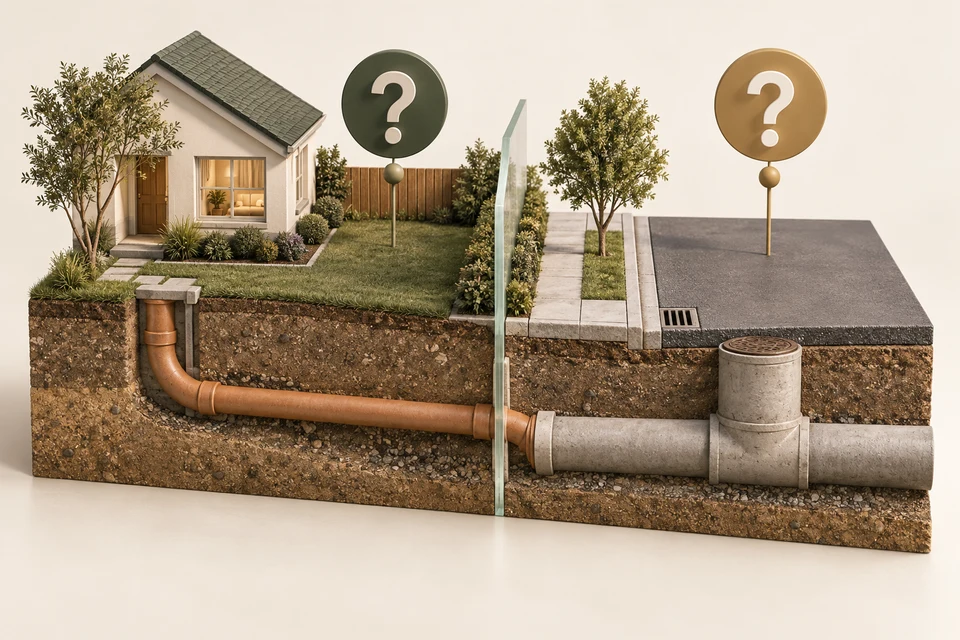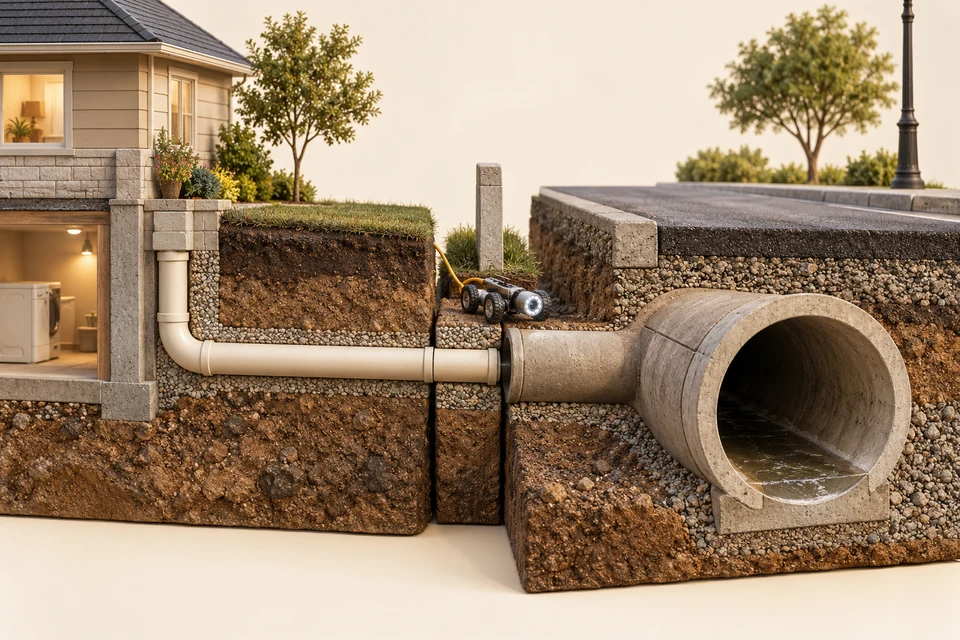
The Alberta City Sewer Rules Finder shows what each municipality publishes about sewer replacement: who owns the line on each side of the property line, which permit or approval applies, who can apply, what the municipality does at the connection, and who to call. It covers Calgary, Edmonton, Red Deer, Airdrie, Okotoks, Lethbridge, Medicine Hat and St. Albert, as checked September 2026, and says "confirm" wherever a page is silent.
- Every statement in the finder comes from a public municipal or utility page, linked in the result, as checked September 2026.
- Where a page does not define the ownership split (Red Deer, Lethbridge) or frames it two ways (St. Albert), the finder says so instead of guessing.
- Homeowner permits in Calgary and Edmonton require that you live in the home; Lethbridge asks a homeowner to demonstrate competency.
- The Alberta-wide lines never change: locates at least three full working days ahead, private lines not marked, and trench protection below 1.5 m.
Alberta City Sewer Rules Finder
01 /What does the Alberta City Sewer Rules Finder tell me?
It answers the local questions that come before any replacement price: whose pipe is it, which approval is needed, who is allowed to apply, and what the municipality itself does. Sewer rules in Alberta are set municipality by municipality, and in Edmonton by the utility, EPCOR. There is no single provincial property-line rule, so the only honest way to answer is one place at a time, from that place's own pages.
The finder holds a short, sourced summary for eight municipalities and a generic entry for anywhere else in the province. It does not rank or recommend contractors, and it does not tell you what a municipality will decide about your address. It tells you what the municipality has published, so you know what to ask.
02 /Which inputs does it use?
- Municipality: Calgary, Edmonton, Red Deer, Airdrie, Okotoks, Lethbridge, Medicine Hat, St. Albert, or another Alberta municipality.
- Where the defect sits: between the house and the property line, near the property line, past the property line toward the main, or not known yet.
- Who will do the work: a hired contractor, or you as the owner.
- Property: a house you live in, a rental you own, or a multi-unit, condo or commercial building.
The result updates as soon as you change an answer after the first run, which makes it easy to compare two municipalities or see how the answer changes once a camera locates the defect.
03 /How does the finder build its answer?
Each municipality has five stored statements: the ownership split, what happens past the property line, the permit or approval, who applies, and whether a homeowner may do the work. Your answers decide which statements are shown and which extra warnings are added.
| You choose | Headline | What the finder explains |
|---|---|---|
| Between the house and the property line | Owner side | The published split; where none is published, it says to treat the private side as yours until the municipality says otherwise |
| Near the property line | At the boundary | Surface-locate the defect with a sonde, measure it against your survey, and ask the municipality in writing who owns that segment |
| Past the property line | Past the property line | What the municipality or utility publishes about its side, or that you need to ask |
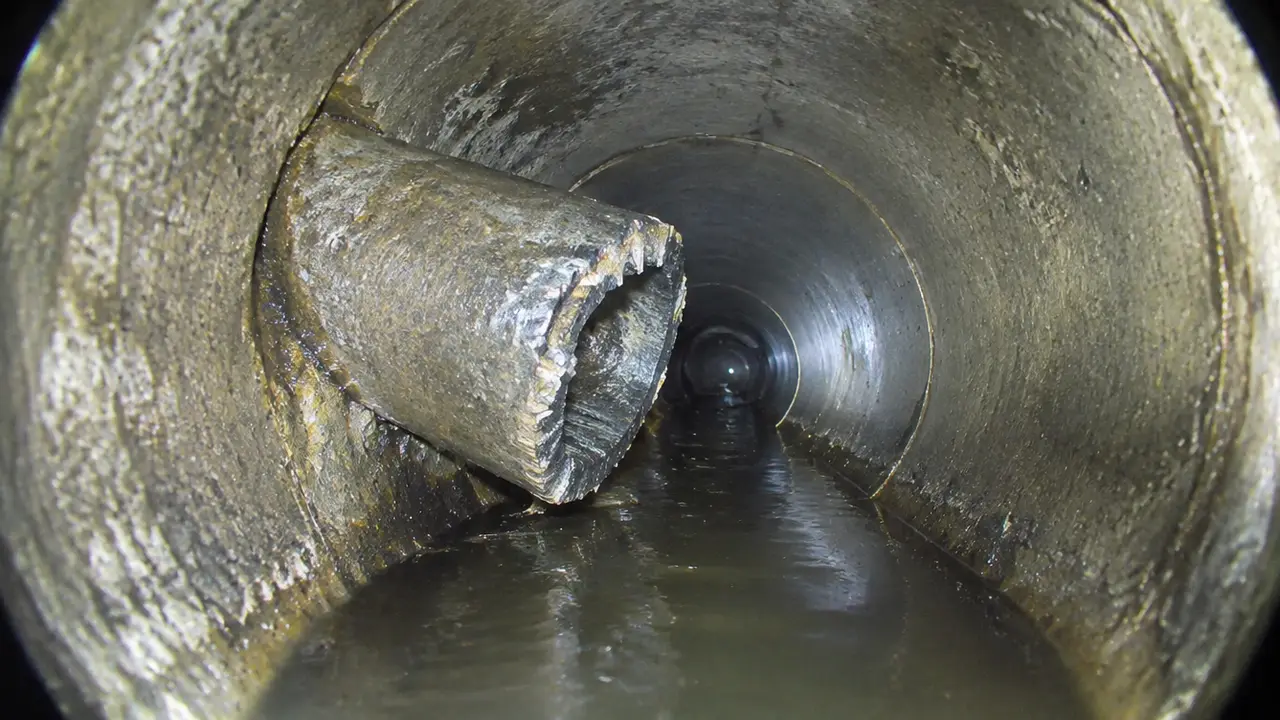
| Not known yet | Locate the defect first | A recorded camera run with distances plus a surface locate tells you which side it is on |
The "who will do the work" answer swaps the "who applies" line for the homeowner rule. Three warnings are added automatically: a rental in a municipality whose homeowner permit requires living in the home (Calgary, Edmonton and Lethbridge); a multi-unit, condo or commercial property with the owner doing the work; and, for Lethbridge commercial or complex jobs, the drawings its application lists. A condo note also reminds you that the corporation or manager usually decides who orders shared-line work.
04 /What does each municipality publish?
This table is the finder's data in one place, paraphrased from the linked pages as checked September 2026. It is orientation, not a legal interpretation.
| Municipality | Ownership split | Permit or approval | Who may apply |
|---|---|---|---|
| Calgary | Owner: property line to building | Plumbing permit; replacing sewer lines is listed | Hired contractor; homeowner if owner-occupier doing own work |
| Edmonton (EPCOR) | Owner: lines on the property; EPCOR: property line to main | City plumbing permit for drains and backwater valves | City-licensed contractor; owner-occupier of a single detached house |
| Red Deer | Not defined on the approval page | Engineering Services approval (Utility Bylaw 3606/2018) | Confirm with Engineering Services |
| Airdrie | Owner: building to property line | Accessory permit for plumbing | Contractor; homeowner trade permit with a fee |
| Okotoks | Owner keeps connection clear to the main; Town repairs corrosion, deterioration or frost damage past the property line | Written CAO approval to make, alter or remove a connection | Confirm with the Town |
| Lethbridge | Not defined on the permit page | Plumbing permit to replace sewer connections | Licensed contractor with City business licence; competent resident homeowner |
| Medicine Hat | Owner: home to property line; City: main to property line | Confirm with the City | Confirm with the City |
| St. Albert | Framed two ways; confirm with Public Works | Confirm with the City | Confirm with the City |
Fees appear only where a page states them: Edmonton's residential plumbing permit at $120 per address or unit plus a minimum $4.80 safety code fee (other than new single-family construction), Lethbridge's minimum permit fee of $110.00 plus the Safety Codes Council levy, and Airdrie's $100 fee on each homeowner-led trade permit from January 2026. Calgary publishes its fees in a schedule that rises each January 1, and Red Deer quotes a fee per service on request.
Each municipality has a full page on this site with its evidence checklist, permit path and cost factors: Calgary, Edmonton, Red Deer, Airdrie, Okotoks and Lethbridge. Medicine Hat and St. Albert are covered on the Alberta cities overview.
05 /What does the finder show for every Alberta address?
Three rules apply wherever you are in the province, so every result repeats them.
- Locates: Utility Safety Partners asks for a locate request at least three full working days before you dig. Customer-owned lines, including the sewer and water service lines, are not registered and are not marked, so a private locator has to find your lateral, usually with a camera sonde.
- Hand-expose zone: within 1 m either side of a locate mark (5 m for a high-pressure pipeline), a line is exposed by hand to find its exact position and depth.
- Trench protection: under the OHS Code, a worker in an excavation more than 1.5 m deep and closer to the wall than its depth must be protected by cutting back the walls, a temporary protective structure, or both.
The generic "another Alberta municipality" entry adds the provincial background: plumbing work falls under the Safety Codes Act, the National Plumbing Code of Canada 2020 has been in force in Alberta since April 1, 2023, and contractors may need a Restricted Certificate of Competency "R" for sewer and water services.
06 /What are the finder's limits?
It is only as current as the pages it summarises, and municipal pages change. It paraphrases rather than quotes, and it cannot interpret a bylaw for your lot. Where a municipality's page says nothing, the finder says "confirm" rather than filling the gap with a guess. It also does not know which contractors are licensed or approved at your address; ask each contractor for their licence details and check them yourself.
Use it before you sign, alongside the evidence. The Replacement Readiness Check tells you whether the camera record is good enough to price; this finder tells you who you will be dealing with. The sewer responsibility guide walks through the scenarios where the boundary matters most.
07 /How do I turn the result into questions for a contractor?
- Pin the defect to a side
Use the camera distance and a surface locate to place the defect on your survey or real property report.
- Ask the municipality in writing
Send the video and the measured location, and ask who owns and maintains that segment. Keep the reply.
- Name the approval in the scope
The quote should say which permit or approval applies, who applies, and which inspections will be booked.
- Use the finder's questions
Each result ends with three questions for that municipality. Put them to every contractor you are comparing.
When the scope is clear, send it with your video and the desk will reply with next steps. For how the rules translate into cost, see the Alberta pricing page.
FAQQuestions people ask
Which Alberta municipalities does the city sewer rules finder cover?
Calgary, Edmonton (with EPCOR), Red Deer, Airdrie, Okotoks, Lethbridge, Medicine Hat and St. Albert, plus a generic entry for any other Alberta municipality.
Why does the rules finder say "confirm" for Red Deer ownership?
Red Deer's page on installing and replacing services sets out the approval process but does not define who owns or repairs each part of the line. Engineering Services can answer for your lot.
Can a landlord pull a homeowner plumbing permit in Calgary or Edmonton?
Not according to their pages: both require that you live in the home and do the work yourself. A rental needs a contractor to apply.
Does the finder tell me whether Okotoks will pay for my repair?
It shows the bylaw rule: past the property line, the Town pays for repairs caused by corrosion, deterioration or frost damage, while routine blockages are the owner's. The Town decides for your case, so share dated video.
How current is the Alberta city rules data?
Every entry was checked against the linked pages in September 2026. Municipal pages change, so the finder links each source for you to recheck.
NETWORKGo deeper across the HAUSE Sewer network
Sewer line replacement cost by city: why local quotes differ
Sewer line replacement cost by city: why Calgary, Edmonton, Regina and other Canadian markets quote differently, GST/HST by province, and local drivers.
SewerInspector.caSewer camera inspection certification and training: what it proves
Sewer camera inspection certification and training in Canada: NASSCO PACP and LACP, home inspector courses, safety training and what a credential proves.
DrainAugering.caHow to snake a sink drain from the trap arm, not the plughole
How to snake a sink drain: pull the P-trap, feed 1/4-inch cable into the trap arm, get it down the tee, and handle double basins and garbage disposals.