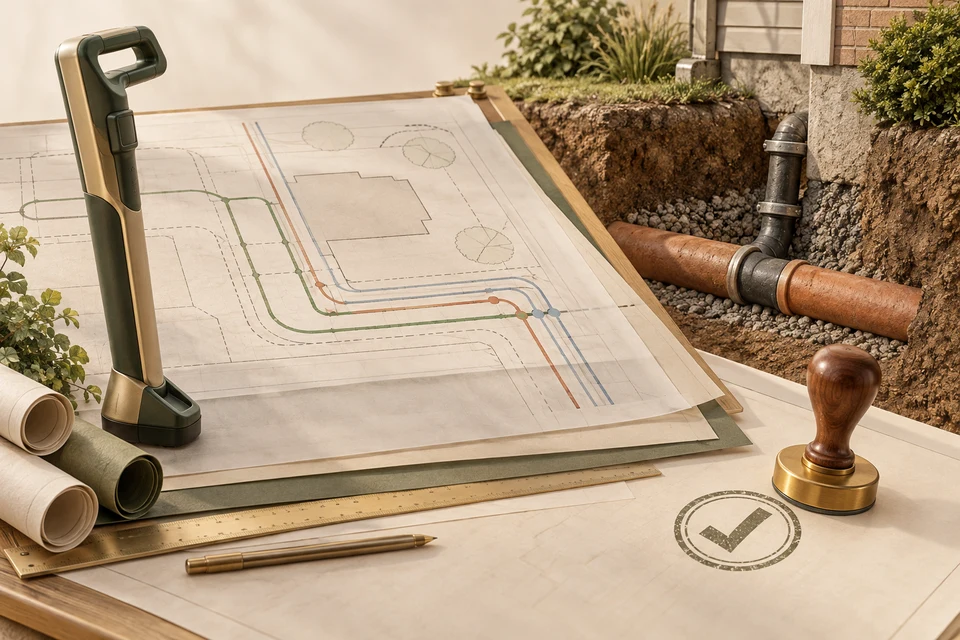
Sewer replacement in Lethbridge is permit work. The City lists replacing septic, sewer or storm sewer connections among jobs that need a plumbing permit. A licensed plumbing contractor with a valid City business licence applies, or a resident homeowner who can show the competency to do the work to code. The minimum fee is $110.00 plus the Safety Codes Council levy.
- Replacing a sewer connection in Lethbridge needs a plumbing permit, the same as installing, extending, altering or replacing a plumbing system.
- Permits go to a licensed plumbing contractor with a valid City business licence, or to a resident homeowner who can demonstrate competency to do the work to code.
- The application describes the work and includes the pipe layout, fixture locations and contractor licensing, plus drawings for complex or commercial systems.
- Typical inspections are a rough-in before piping is concealed and a final, booked at least one business day ahead through eInspections.
- The published permit page does not define the repair ownership boundary, so confirm the private-versus-City split with the City.
01 /Where does a Lethbridge sewer replacement start?
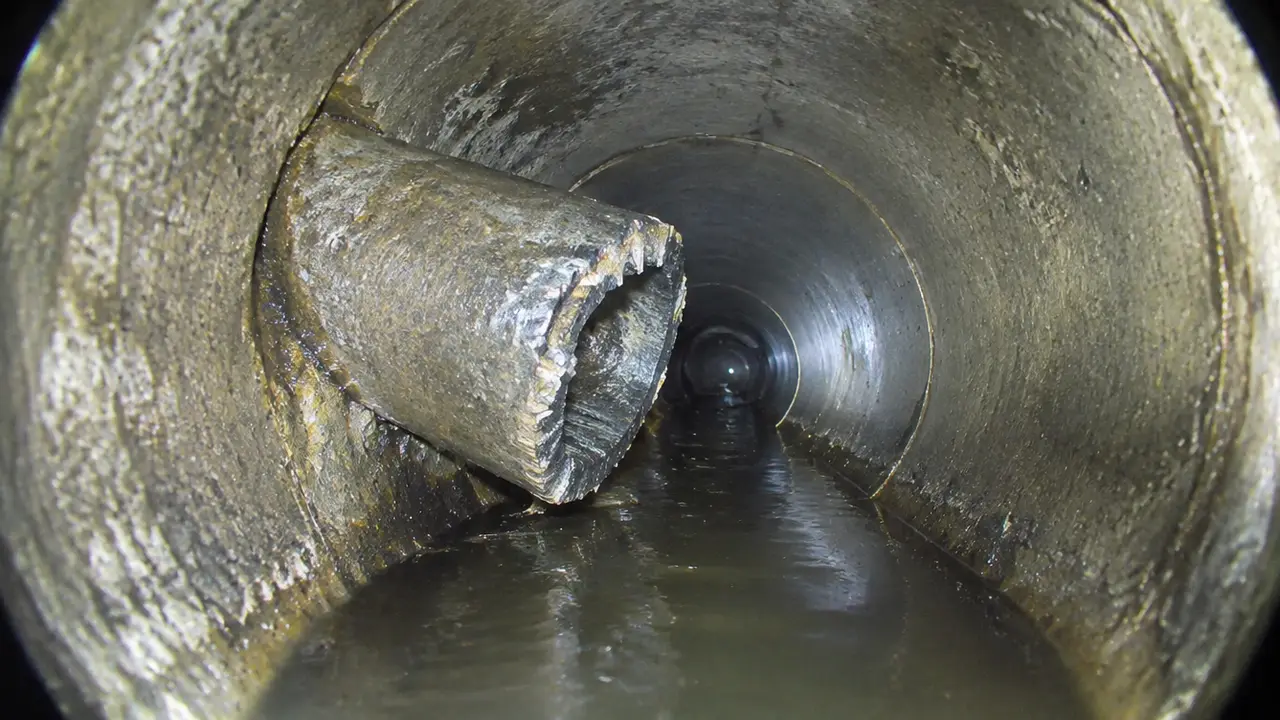
With a defined scope that can go on a permit application. The City of Lethbridge lists replacing a sewer connection as permit work and expects the application to describe the work and show the pipe layout. A clear camera record and a written scope are the practical starting point, before you compare methods or proposals.
A recurring backup still does not decide the question. Roots, grease and debris block many sound lines. A recorded camera run and a contractor review show whether cleaning, a local repair, lining or replacement fits. The Replacement Readiness Check flags missing evidence, and the Alberta cities overview compares Lethbridge with the rest of the province.
02 /Do you need a permit to replace a sewer line in Lethbridge?
Yes. The City's plumbing permits page says a permit is needed to install, extend, alter or replace a plumbing system, and to replace septic, sewer or storm sewer connections, as checked September 2026. Work must meet the code in force; the Government of Alberta confirms the National Plumbing Code of Canada 2020 has applied in the province since April 1, 2023.
| Item | What the City says |
|---|---|
| Who may apply | A licensed plumbing contractor with a valid City business licence, or a resident homeowner who can demonstrate sufficient competency to do the work to code |
| Application contents | Address, contact details, description of work, pipe layout and fixture locations, contractor licensing; drawings for complex or commercial systems |
| Typical inspections | Rough-in before piping is concealed, and final |
| Booking | At least one business day ahead, through eInspections |
| Fee | Minimum $110.00 plus the Safety Codes Council levy, rising with construction value |
| Where to apply | eApply online, or City Hall at 910 4 Avenue South; 311 or 403-320-3111 |
The homeowner route in Lethbridge is framed around competency, not just ownership. A resident homeowner has to be able to show the City they can do the work to code, which for a buried sewer connection means depth, slope, bedding, joints, the tie-in and a safe trench. The homeowner permit guide is a frank look at that route.
03 /What goes into a Lethbridge sewer permit application?
Enough detail for the City to know what is being replaced and where. The listed items are the property address, contact information, a description of the work, the pipe layout and fixture locations, and contractor licensing details. Complex or commercial systems also need drawings. For a residential sewer connection, a good application usually starts from the camera evidence.
- Scope the line
Record a camera run with footage distances and mark the route and depth on the surface.
- Draw the layout
Sketch the existing and new pipe from the building to the connection, with lengths, fittings, cleanouts and any backwater valve.
- Describe the work
State the method, the length replaced and where the new pipe joins the old or the connection.
- Confirm licensing
A contractor applicant provides licensing and City business licence details; a homeowner prepares to show competency.
- Apply and book
Apply through eApply or at City Hall, then book the rough-in at least one business day before you need it.
04 /Who owns which part of a Lethbridge sewer line?
The permit page does not say. It covers who may apply and what inspections apply, not who maintains or repairs which section of the line. Confirm the private-versus-City boundary for your property directly with the City, through 311 or 403-320-3111, before pricing a repair near the street.
The practical risk is paying to replace pipe that is not yours, or assuming the City will fix pipe that is. If the camera finds a defect near the property line or under the boulevard, give the City the recording and ask who is responsible for that section. The sewer responsibility guide and the Alberta City Sewer Rules Finder both mark Lethbridge's boundary as one to confirm.
05 /What camera evidence should you request in Lethbridge?
Evidence that supports the permit scope and both inspections. The sewer camera evidence page explains how to read a report; for Lethbridge, ask for:
- Footage distances and defect locations that define the permit scope.
- Pipe material and the connection points that will be replaced or joined.
- Where each defect sits relative to the property line.
- Roots, sags, offsets or breaks, each with a timestamp and distance.
- Before-and-after recordings that support the rough-in and final stages.
06 /How should you plan locates, trench safety and restoration in Lethbridge?
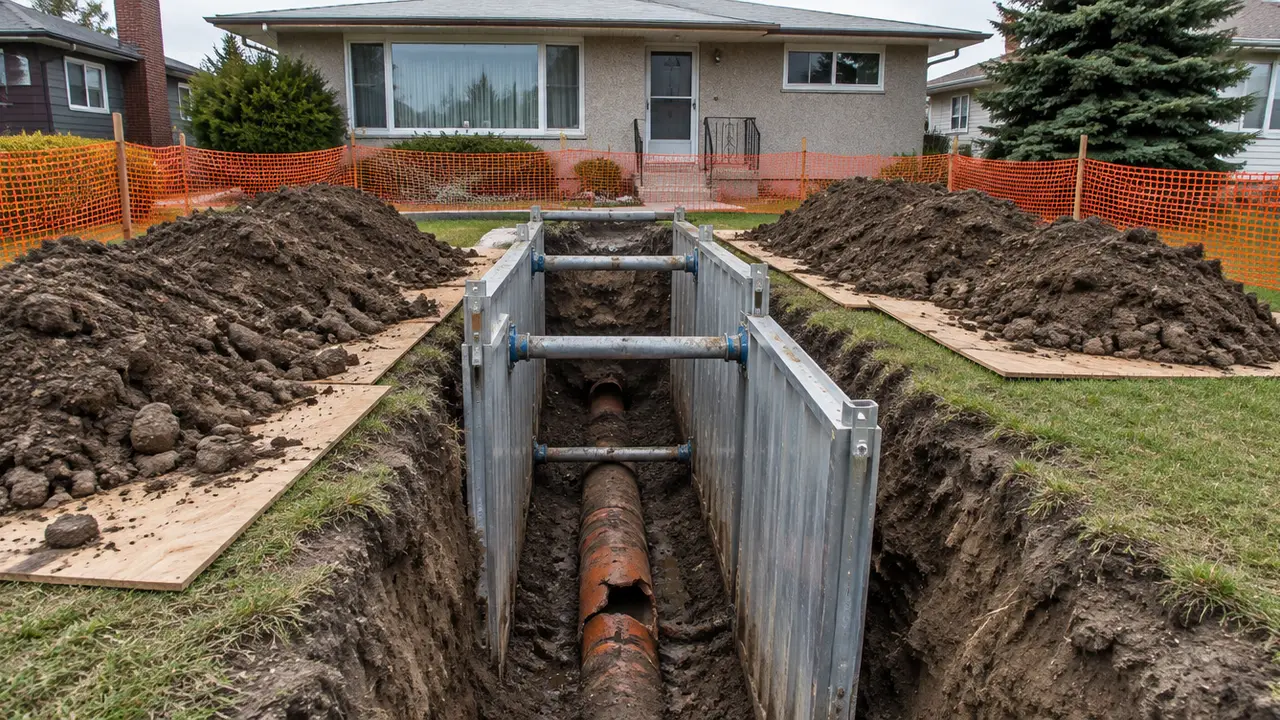
Book locates once the permit is in hand. Utility Safety Partners needs at least three full working days before digging, online or at 1-800-242-3447. Customer-owned lines, your sewer and water service among them, are left unmarked, so budget for a private locate. Expose any line by hand within 1 m either side of its mark, and remember marks show location, not depth.
Under Alberta's OHS Code Part 32, a worker in an excavation deeper than 1.5 m, and closer to the wall than its depth, must be protected by cutting back the walls, a temporary protective structure, or both. Cut-back walls slope at not less than 30 degrees from vertical in hard, compact soil and 45 degrees in soil likely to crack or crumble. Soft, sandy or loose soil is cut back at 45 degrees from the bottom, and spoil sits at least 1 m back. Ask how the connection point will be exposed and protected, and identify the lawn, driveway or slab areas to be opened, with restoration in writing. The locates and digging guide covers more.
07 /When do open-cut and trenchless belong in a Lethbridge conversation?
Neither is right by default. Open-cut is usually discussed when the record shows collapse, sag or grade problems, when connections need to be rebuilt and inspected, or when trenchless access is impractical. Trenchless may be discussed when the host pipe and geometry suit the system, access points and connections can be managed, and the permit scope for the chosen method has been confirmed.
The inspection stages sharpen the trenchless question in Lethbridge. A rough-in inspection happens before piping is concealed, which is simple in an open trench. For a liner or a burst pipe, ask the contractor and the City how the work will be inspected and what recording the inspector expects. Compare both approaches on the open-cut replacement and trenchless lining pages.
08 /What does sewer replacement cost in Lethbridge?
Alberta prices are not separately published; the City prints only its permit fee. The ranges below are the network-wide planning figures used across HAUSE sewer sites; the Alberta pricing page explains every line.
| Item | Typical quoted range |
|---|---|
| Camera inspection with recorded video (+ locate) | $250–$600 |
| Excavated spot repair | $3,500–$16,000 |
| Full-length CIPP lining (15–25 m) | $9,000–$28,000 |
| Pipe bursting (15–25 m) | $10,000–$30,000 |
| Open-cut replacement (15–25 m) | $12,000–$35,000+ |
| Mobilisation and utility locates | $500–$2,000 |
| Post-work camera video | $0–$400 |
Because the Lethbridge fee rises with construction value, a larger scope costs more to permit as well as to build. Depth, hard surfaces and the connection work push prices up, as does winter digging. A short private-side repair under lawn sits near the bottom. The cost drivers guide explains the pattern.
09 /What should you ask before you sign in Lethbridge?
- Do you hold a valid City of Lethbridge business licence, and will you apply for the plumbing permit?
- Which inspection stages apply, and who books them through eInspections?
- Is the pipe layout in the application the same as the scope in your quote?
- Where is the ownership boundary for this property, and has the City confirmed it?
- Who calls in the locates, public and private, and what restoration does the price cover?
- If a deposit is due before the job is complete, where is your Alberta prepaid contracting licence?
Consumers can check a prepaid contracting licence with the Service Alberta Find a Licensed Business search. With the evidence in order, send your details through the request form. The Red Deer page shows how another mid-sized Alberta city handles approvals.
FAQQuestions people ask
Does replacing a sewer connection in Lethbridge need a plumbing permit?
Yes. The City lists replacing septic, sewer or storm sewer connections among work that requires a plumbing permit, along with installing, extending, altering or replacing a plumbing system.
Can a Lethbridge homeowner apply for their own sewer replacement permit?
A resident homeowner may apply if they can demonstrate sufficient competency to do the work to code. Otherwise the permit is obtained by a licensed plumbing contractor with a valid City business licence.
What is the minimum plumbing permit fee in Lethbridge?
The City lists a minimum of $110.00 plus the Safety Codes Council levy, rising with construction value, as checked September 2026. Confirm the fee for your scope when you apply.
Which inspections apply to a Lethbridge sewer permit?
Typically a rough-in before piping is concealed and a final. Book each at least one business day ahead through eInspections.
Does the City of Lethbridge define who owns which part of the sewer service?
Its plumbing permit page does not define the repair ownership boundary. Confirm the private-versus-City split for your property with the City through 311 or 403-320-3111.
What must a Lethbridge sewer permit application include?
The address, contact details, a description of the work, the pipe layout and fixture locations, contractor licensing details, and drawings for complex or commercial systems.
NETWORKGo deeper across the HAUSE Sewer network
Sewer permits, inspections and who pays: owner or city?
Sewer line permits and who pays in Canada: the usual owner vs city split, permit and inspection costs, road cuts, city tree roots and what to confirm.
SewerInspector.caSewer camera inspection certification and training: what it proves
Sewer camera inspection certification and training in Canada: NASSCO PACP and LACP, home inspector courses, safety training and what a credential proves.
SewerCleaners.caBackwater valves: how they work and how to maintain one
How a backwater valve works, normally open vs normally closed types, a step-by-step maintenance routine, and what to do when it closes in a storm.