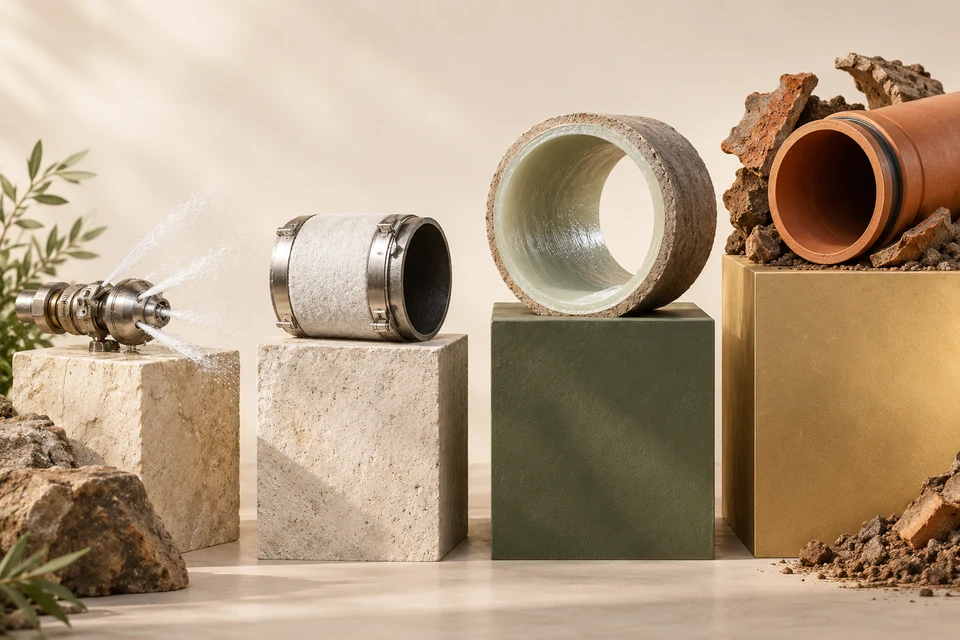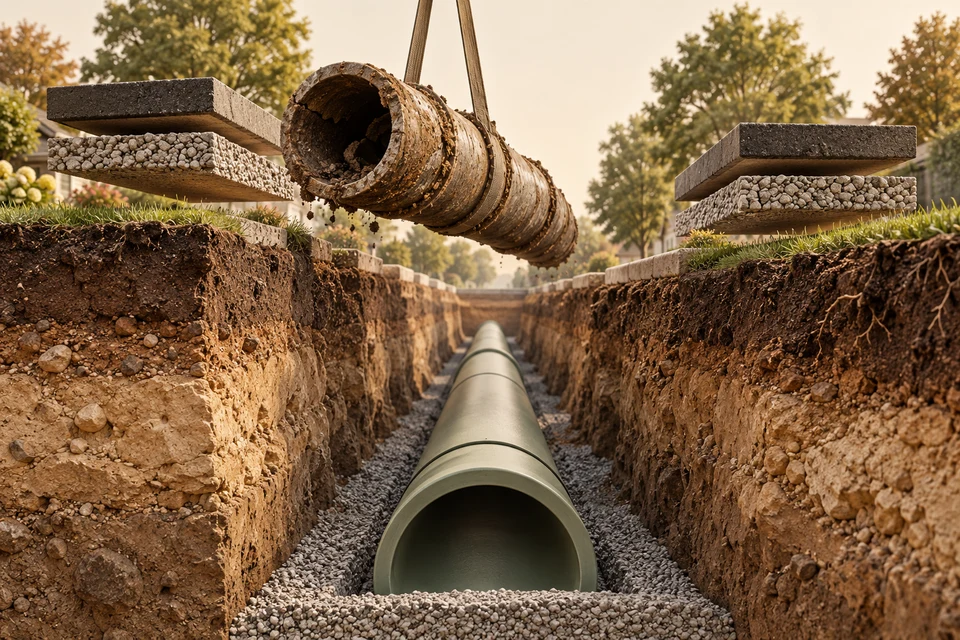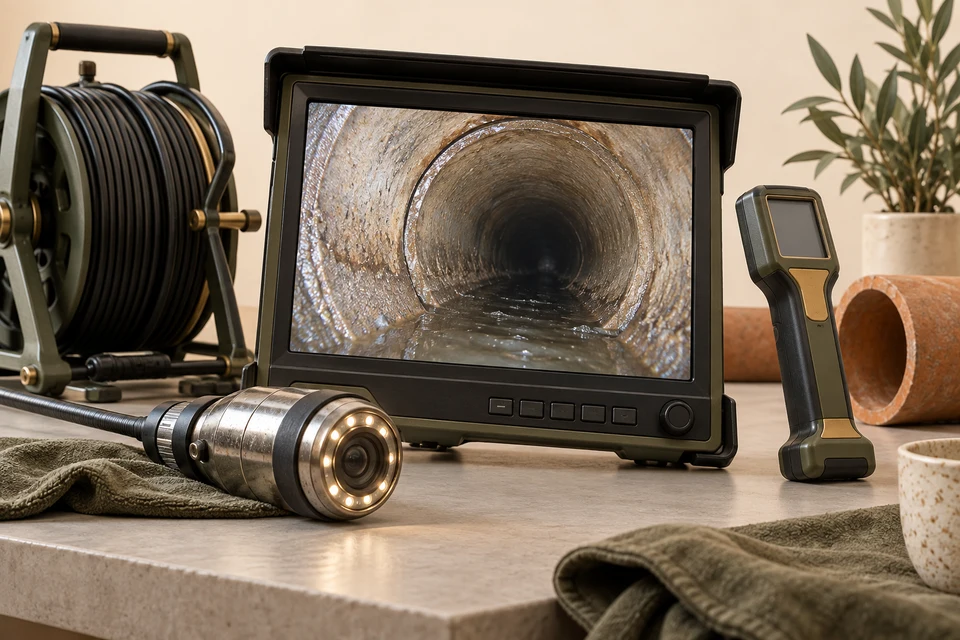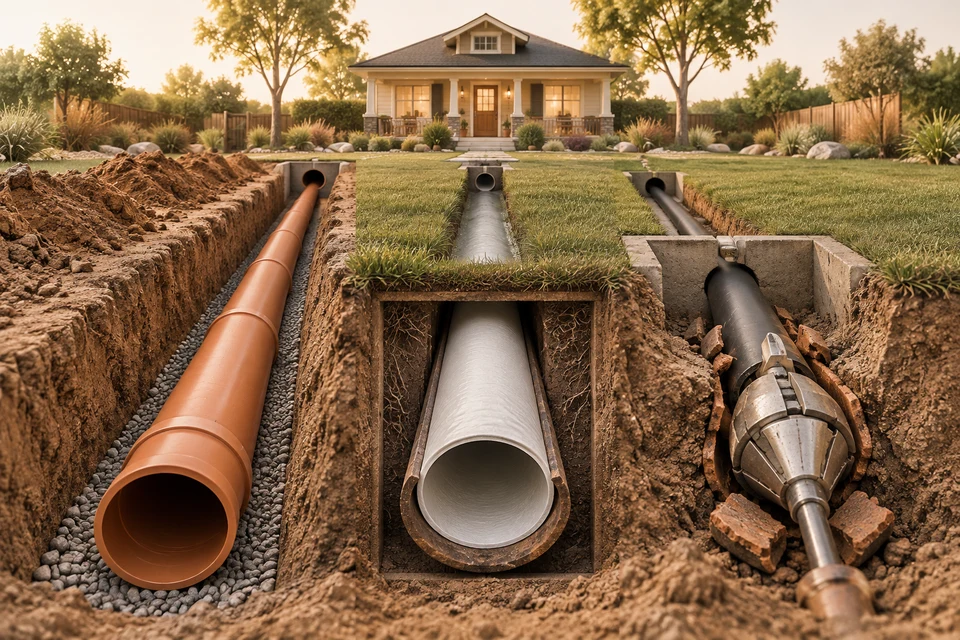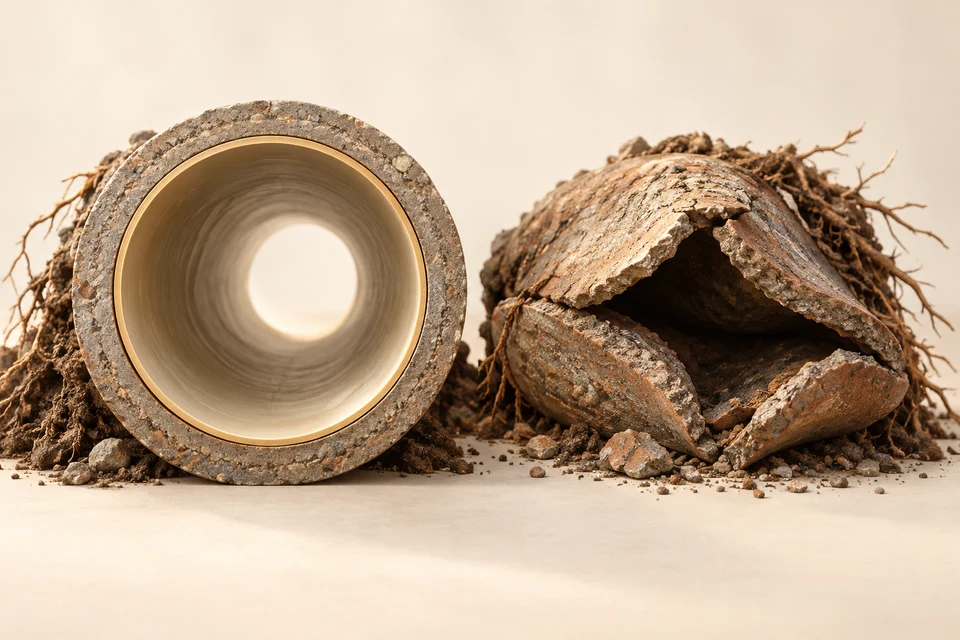
A lateral is eligible for trenchless sewer lining when the old pipe is continuous, roughly round, on grade and cleanable, with defects such as cracks, open joints or root entry rather than collapse. A liner cures inside the host pipe and follows it exactly, so it cannot lift a sag or bridge missing pipe. Eligibility comes from a full camera record, not from how much digging you want to avoid.
- A liner copies the pipe it sits in: route, bends and low spots included.
- EPCOR says a sag can only be fixed by removing the pipe and regrading, so a belly is the most common reason lining is ruled out.
- Lining reduces the bore slightly; for most house laterals that is minor, but it should be stated for the specific pipe.
- Branch connections must be reopened and ideally sealed after curing, and that step belongs in the scope.
- When the host pipe is too broken to line but the route is straight, pipe bursting is the other trenchless option.
01 /Which sewer lines qualify for trenchless lining?
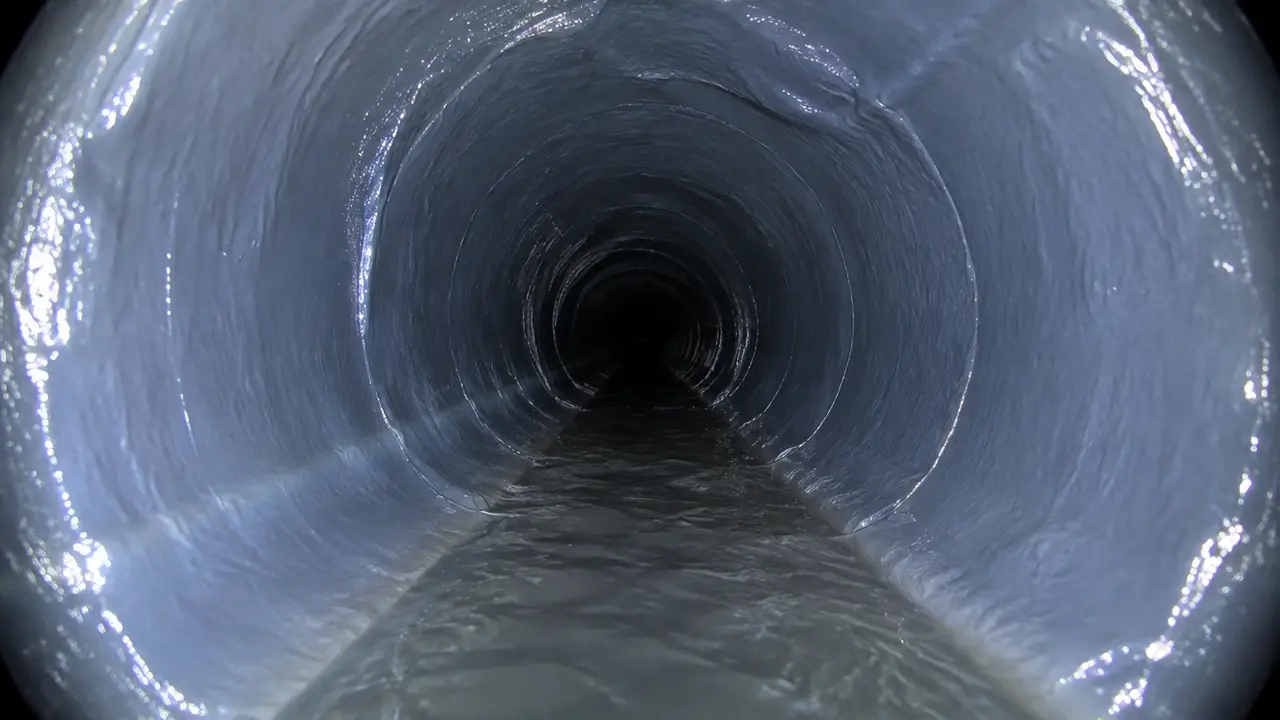
Lines qualify when the host pipe can act as a mould. Cured-in-place pipe (CIPP) lining pushes or pulls a resin-saturated tube into the old pipe, presses it against the wall and cures it into a new pipe inside the old one. That only works if there is a continuous wall to press against, a clean surface to bond or fit to, and a grade the new pipe can live with.
Typical good candidates in Alberta are clay or cast iron laterals with root entry at joints, hairline or longitudinal cracks, open joints and light corrosion, where the pipe is still round and water drains through it. Poor candidates are pipes with a collapsed section, a belly, badly offset joints, Orangeburg that has deformed, or heavy scale that cannot be removed. The methods hub sets lining against the other options.
02 /What should a lining eligibility review check?
Six review items decide eligibility. Each one should be answered from the camera record and the site visit, and each should appear in the written scope.
| Review item | What the evidence must show | What rules lining out |
|---|---|---|
| Host pipe condition | A continuous, reasonably round wall along the lined length | Collapse, severe deformation or missing pipe |
| Alignment and grade | Flow runs through without ponding | A belly, poor slope or a major offset; the liner copies them |
| Cleaning and access | The pipe can be cleaned to its wall and reached from a cleanout or small pit | Scale, roots or debris that cannot be removed; no workable access |
| Branches and transitions | Every connection, diameter change and bend located on the video | Unmapped branches that would be sealed over, or bends the system cannot pass |
| Reduced surface opening | Where access pits or interior openings are still needed | An access plan that is really an excavation in disguise |
| Documented system | The named liner product, curing method, standard and final inspection | An unnamed system with no post-lining video |
03 /What disqualifies a sewer line from lining?
Anything that removes the host pipe's shape or grade disqualifies it. EPCOR's Edmonton sewer line guidance (as checked September 2026) states that sags can only be fixed by removing the affected pipe and regrading the trench bottom, and that replacing a collapsed portion is the only viable option. It also notes that small cracks may be tolerated if they are not wide enough to let backfill into the pipe, which is useful context: not every crack needs a liner.
- Collapse or missing pipe: there is nothing to cure against. Dig out the collapsed section; the remainder may still be lined.
- Sag or belly: the liner follows it and the ponding continues. Dig and regrade at least the sag.
- Severe offsets: a joint displaced far enough to block the camera will leave a step or wrinkle in the liner.
- Heavy deformation: oval or flattened pipe cures into an oval liner, and some systems cannot fit at all.
- Uncleanable pipe: roots, grease and scale must come out first; if they cannot, the liner will not seat properly.
A mixed scope, where the contractor excavates one bad section and lines the rest, is common. Ask for each part to be described and priced separately, as the open-cut page suggests.
04 /How much capacity does a liner take away?
Some. A liner adds a wall inside the old pipe, so the finished inside diameter is smaller than the original. For a typical house lateral the change is usually small, and a smooth liner surface with no open joints can offset part of it, but the loss should be stated for the actual pipe size and product rather than waved away.
It matters more when the lateral is already small, serves a suite or several units, or has a history of surcharging. In those cases, ask the contractor to confirm that the lined pipe still suits the fixtures it serves. A pipe that needs more capacity is a case for bursting up a size or open-cut replacement. Liner design depth is the lane of SewerRelining.ca.
05 /How are branch connections reopened after lining?
Branch connections are reopened from inside after the liner cures, usually with a remote cutter guided by camera. Until then, every branch along the lined length is sealed shut, so the video must show where each one is before the liner goes in.
- Ask how many connections the lined length has and how each will be reopened.
- Ask whether the reopened connections will be sealed with a connection liner or seal, or left as cut holes.
- Check the post-lining video for rough edges, partly opened branches and gaps at the liner ends.
Reinstatement and connection seals as repairs are covered by TrenchlessSewerRepair.ca. For a replacement decision, the key point is that an unmapped branch can be sealed over by accident, so a complete camera record comes first.
06 /When is pipe bursting the better trenchless route?
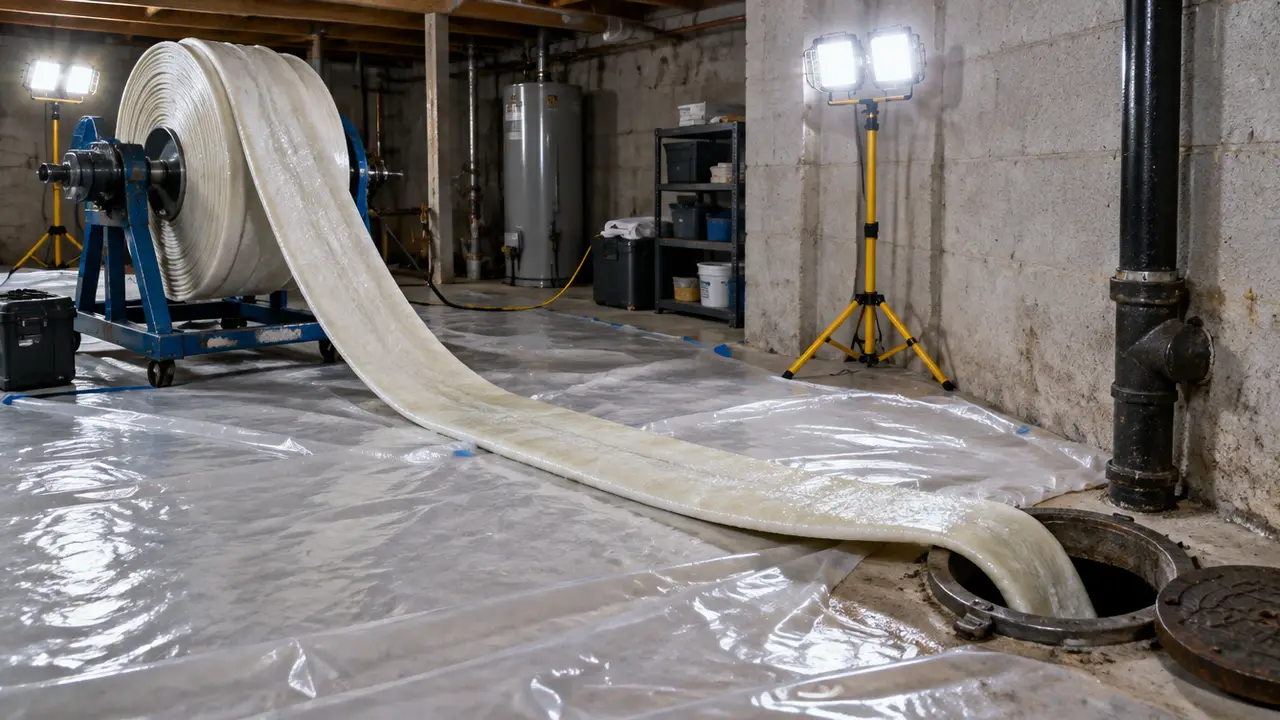
Bursting is the better trenchless route when the host pipe is too broken to line but a cable can still be pulled through it and the route is reasonably straight. A bursting head breaks the old pipe outward and pulls new pipe, usually fused HDPE, into its place from a launch pit to a receiving pit. The old pipe is destroyed, not reused, so its condition matters much less.
It keeps two limits of lining: it follows the old alignment and grade, so a sag still has to be designed out, and it needs pits at each end and wherever a connection is rebuilt. It can install the same size or larger. PipeBursting.ca explains the method in depth.
07 /How does Calgary's City-run lateral lining pilot work?
The City of Calgary runs a Sanitary Lateral Lining Program pilot that installs liners inside existing sanitary service pipes in older communities, working from manholes. As checked September 2026, the City describes four stages (assessment, preparation, liner installation and final assessment), says residents get about 30 minutes' notice in person, and that the connection is out of service for about three hours.
Other Alberta municipalities run their own service programs. St. Albert, for example, has a Household Sewer Service Line Replacement Program for the City portion. The cities overview lists what was verified for each municipality.
08 /What does a lining project look like from start to finish?
- Inspect and measure
Record the full accessible run: defect locations, material, diameter, bends, branches and deformation.
- Confirm eligibility
The contractor explains which findings support lining and which could require another method.
- Define access and preparation
Cleaning, access points, water-use restrictions and the handling of each connection go into the scope.
- Install the specified liner
Installation and curing follow the named system and the manufacturer's requirements.
- Reopen connections
Branches are reinstated and sealed using the method the scope specifies.
- Verify the result
A final camera run, from the same access point as the first, plus any testing the permit or contract requires, documents the installed liner.
Whether a permit applies depends on the city and the scope. Calgary, for example, requires a plumbing permit when sewer lines in or around the home are replaced; confirm with the permit body whether lining counts for your address.
09 /What does trenchless lining cost in Alberta?
| Item | Typical quoted range |
|---|---|
| Camera inspection with recorded video and locate | $250–$600 |
| Hydro jetting before lining, residential main | $450–$1,100 per visit |
| Sectional (point) liner | $2,500–$6,500 first section; $1,500–$3,500 each extra on the same visit |
| Full-length CIPP lining, 15–25 m | $9,000–$28,000 ($500–$1,200/m plus setup) |
| Pipe bursting, 15–25 m | $10,000–$30,000 ($550–$1,300/m plus pits of $1,500–$6,000 each) |
| Post-work camera video | $0–$400 |
See the pricing page for every line item, and environmental factors in trenchless work for what a smaller dig does and does not save.
10 /Which questions should a lining quote answer?
- Which liner system will you install, and which findings support lining this line?
- How did you assess collapse, offsets, grade and deformation?
- Where are the access points, and how will the pipe be cleaned first?
- How many branches are in the lined length, and how will each be reopened and sealed?
- How long must the house stop using water during curing?
- Will I get the post-lining video and any test results?
- What restoration, warranty, maintenance and exclusions are in writing?
Unsure whether your evidence is complete? The Replacement Readiness Check flags the gaps, and the request form sends your video for a scope review.
FAQQuestions people ask
Is every Alberta sewer lateral suitable for trenchless lining?
No. Eligibility depends on host pipe condition, deformation, collapse, grade, offsets, material, diameter, access and connections. Many older Calgary and Edmonton laterals qualify for part of their length and need a dig elsewhere. A complete camera review decides it.
Will a liner fix a belly in an Edmonton or Calgary sewer line?
No. A liner follows the existing pipe path, low spot included. EPCOR states that a sag can only be fixed by removing the affected pipe and regrading the trench bottom, so the belly is dug out and the rest may be lined.
How much smaller is an Alberta sewer lateral after CIPP lining?
The liner wall reduces the inside diameter somewhat; the exact loss depends on the product and pipe size. Ask the contractor to state the finished diameter and confirm it still suits the fixtures, suites or units the line serves.
Do trenchless lining jobs in Alberta still need an access pit?
Often not for a short run with a good cleanout, but many jobs need one pit near the property line or a larger interior opening. The number and position depend on the system, cleaning needs, existing cleanouts and site layout.
What warranty should Alberta homeowners expect on a sewer liner?
Provider and manufacturer terms vary. Ask for the exact product, the coverage period, exclusions such as root cutting or chemical cleaners, maintenance conditions, transfer on sale and the claim process in writing before work starts.
Does Calgary's lateral lining pilot mean my private sewer line is lined?
Not necessarily. The City's pilot page does not state which portion is lined or who pays, and a liner on one part says nothing about the rest. Call 311 to confirm what was done at your address.
NETWORKGo deeper across the HAUSE Sewer network
Trenchless lining vs pipe bursting: cost, fit and trade-offs
Trenchless lining vs pipe bursting cost in Canada: 2026 CIPP and bursting ranges in CAD, line items, which defects each fixes and how to choose.
SewerRoots.caPermanent fixes for roots in sewer lines
Permanent fixes for roots in sewer lines: CIPP lining, sectional point repairs, pipe bursting and open-cut replacement compared by cost, lifespan and fit.
PipeCleaning.caDrain pipe cleaning tools: springs, rods, brushes, kits and pigs
Drain pipe cleaning tools explained: drain springs and hand augers, drain rods, pipe brushes, hose jetters and kits, and which pipe each one suits.