Sewer replacement in Calgary starts with evidence and ownership. The City's connections page puts the service from the property line to the house plumbing with the homeowner, built by the owner's contractor at the owner's expense. Replacing a sewer line is plumbing-permit work: a hired contractor applies, and a homeowner may apply only for a home they own, live in and work on themselves.
- A recurring backup or a root finding in Calgary is a reason to scope the line, not proof that the whole service must be replaced.
- The City places the service from the property line to the building plumbing with the homeowner; confirm the street-side section for your address through 311.
- Replacing water and sewer lines in or around the home needs a plumbing permit, with a rough-in and a final inspection.
- Work that touches a City connection is inspected under the Master Indemnification Agreement, which has its own list of approved indemnified contractors.
- The City's sanitary lateral lining pilot relines service pipes from manholes in older communities, but its page does not say which portion or who pays.
01 /How should a Calgary homeowner approach a sewer replacement decision?
Treat replacement as the last answer in a chain of evidence, not the first. In Calgary a recurring backup, a slow basement floor drain or a scope report that mentions roots is a reason to investigate, not proof that the whole line has failed. A sound review starts with a recorded camera run, then works out which length of pipe is affected, who owns it, whether a plumbing permit applies, and how much of the lawn, driveway, lane approach or basement floor would be opened and put back.
Each answer changes the next. The Alberta cities overview compares the same questions across the province, and the Replacement Readiness Check lists the evidence gaps to close before pricing.
02 /Who owns which part of a Calgary sewer service line?
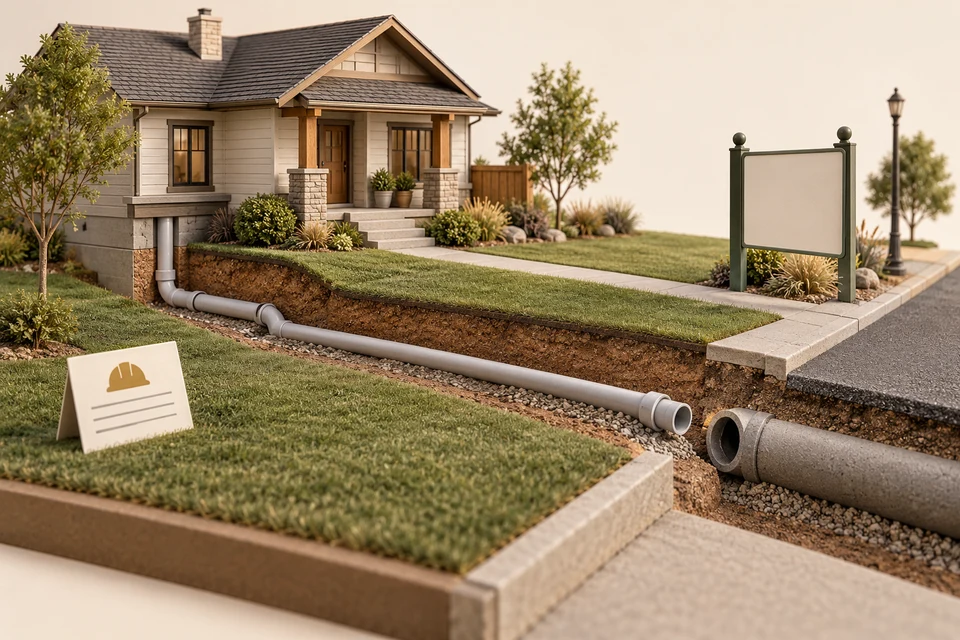
The homeowner owns the private side. The City of Calgary's page on installing water and sewer connections says builders and homeowners are responsible for the service connections from the property line to their plumbing system, and that servicing on private property must be owned by the builder or homeowner and built by their contractor at their expense, as checked September 2026. The pipe under your yard, from the foundation to the property line, is yours to maintain, repair and replace.
The page says it has no legal status as an official bylaw interpretation, and it does not describe the street-side section between the property line and the main. Before assuming who pays for a defect near or past the property line, call 311 with your camera evidence and ask how the City treats that section at your address.
| Section | What the City page says | Next step |
|---|---|---|
| Inside the house, incl. any backwater valve | Private plumbing | Plumber or drain contractor |
| Foundation to property line | Owned by the homeowner, built by their contractor at their expense | Scope, locate, written quote |
| Property line to the main | Not described on the connections page | Call 311 with the video and footage distance |
| Tie-in at City infrastructure | Inspected under the Master Indemnification Agreement | Ask whether the contractor is on the indemnified list |
The Master Indemnification Agreement is the Calgary detail that catches people out. When service work connects to City infrastructure, the City inspects it under that agreement and publishes a list of approved indemnified contractors. If a quote includes work at the connection, ask whether the contractor is on that list and how the City side will be inspected. The sewer responsibility guide covers the pattern across Alberta.
03 /Do you need a plumbing permit to replace a sewer line in Calgary?
Yes. The City's homeowner electrical and plumbing permits page lists replacing water and sewer lines in or around the home as permit work, alongside constructing, extending or altering a plumbing system. The work must meet the current National Plumbing Code of Canada; Alberta has had the 2020 edition in force since April 1, 2023.
A homeowner permit is only for someone who owns the home, lives in it (not a rental) and does the work personally. Hire someone and the permit becomes the contractor's to obtain. Homeowners may apply for every permit type except gas. The homeowner permit guide explains what doing it yourself involves on a buried line.
- No permit needed to repair a leak, replace existing faucets and fixtures, or remove a blockage.
- Two inspections on a homeowner permit: rough-in, before anything is buried, and final.
- Booking is through 311 or VISTA; next-day requests have to be in by 2 p.m.
- Fees sit in the building and trade permit fee schedule and rise every January 1; the permit page prints no amount, so confirm it with the City.
04 /What does the City do when a Calgary sewer backs up?
Call 311 first. The City's sewage backup page says a crew runs a steel snake to the sewer main to find out whether the blockage is on private or public property, and a private-side blockage is referred back to you and a plumber. If your cleanout is hidden behind finishing, you have to locate and expose it before the crew can work.
The page names grease as usually the main cause of backups and recommends a backwater valve on below-grade fixtures. A line that backs up from grease needs cleaning and habit changes, not a trench, and a replacement that opens the building sewer at the foundation is the cheapest moment to add a valve; see the backwater valve guide.
05 /What is Calgary's sanitary lateral lining pilot?
The Sanitary Lateral Lining Program is a City pilot that installs liners inside existing sanitary service pipes in older communities. Crews work from manholes in four stages: assessment, preparation, lining and final assessment. Residents get about 30 minutes' notice in person, and the connection is out of service for about three hours, as checked September 2026.
The page does not say which portion is lined or who pays, and a relined section says nothing about the pipe on your side. If your street is in a pilot area, ask 311 which length was lined and whether a recording exists, and have the private side scoped separately.
06 /What camera evidence should you request for a Calgary replacement?
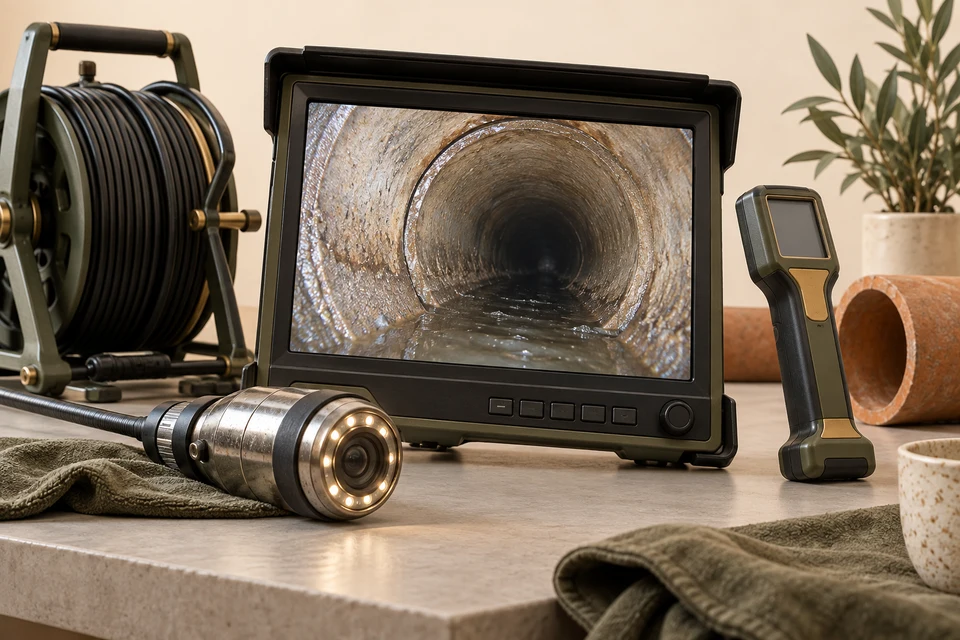
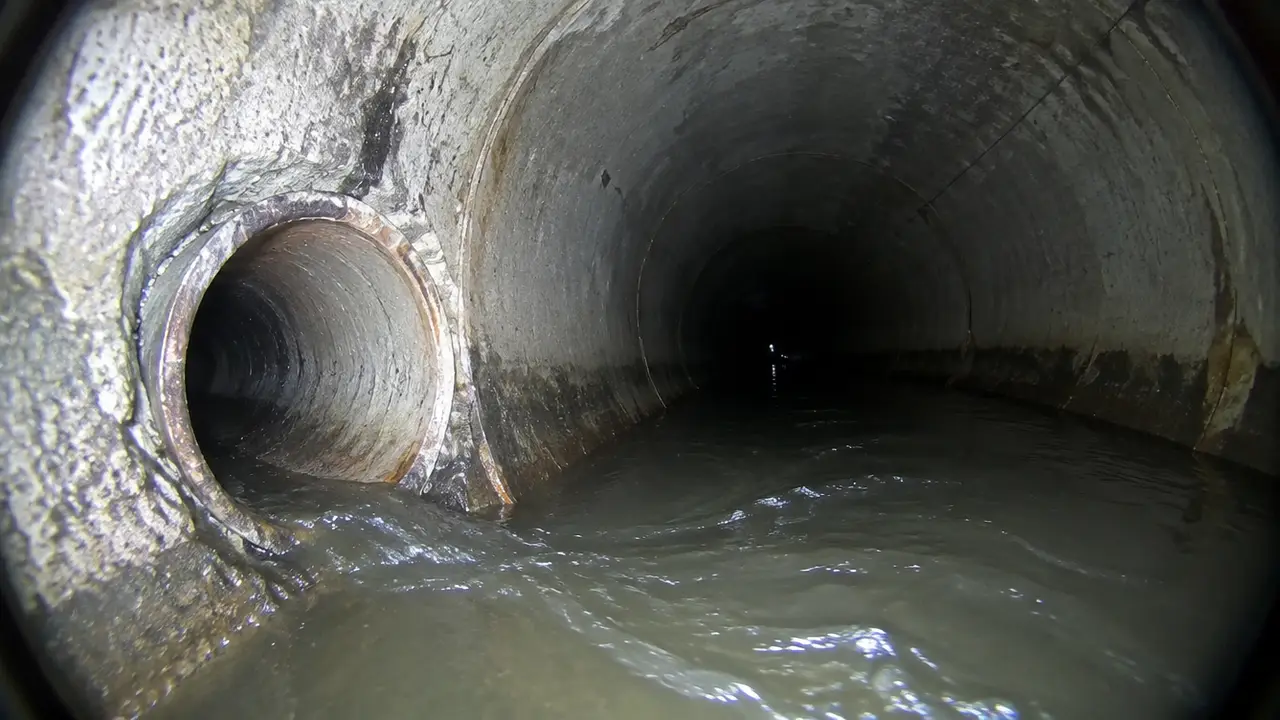
Ask for a recording that a second contractor, 311 and your insurer can all read the same way. The sewer camera evidence page explains how to read a report; for Calgary, make sure the record includes:
- Recorded video with a running footage counter, measured from a named cleanout.
- Where each defect sits relative to the property line, with a surface locate photographed from a fixed point such as the foundation corner.
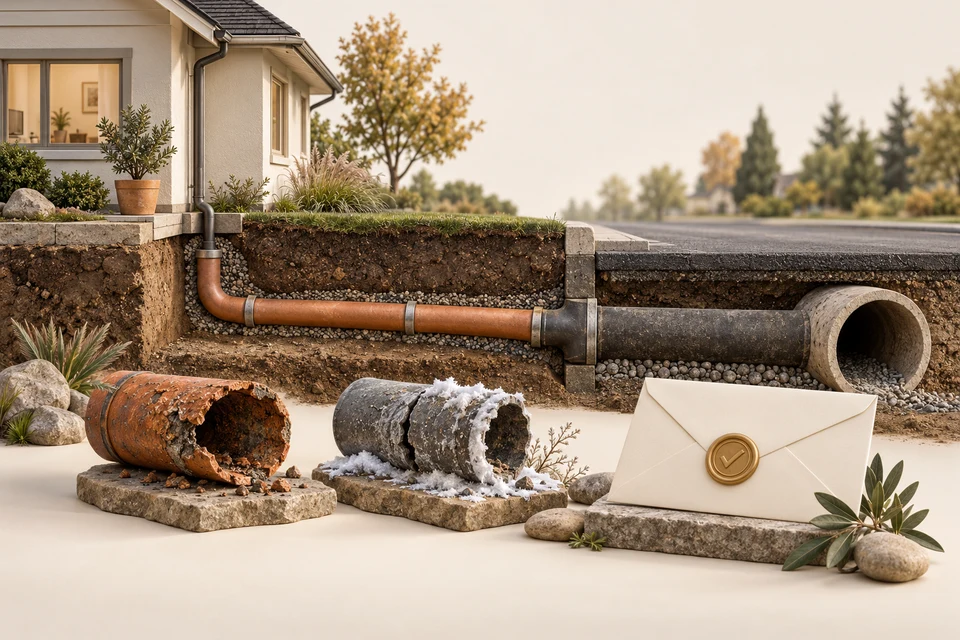
- The pipe material and every transition, since older Calgary lines were often repaired in pieces.
- Sags or standing water, cracks, offset joints and root entry points, each with its distance and estimated depth.
- Whether the line was cleaned before recording, and a second pass if the first was obscured.
- Whether the run reached the City connection, and what it showed there.
07 /How do permits, locates and restoration fit together on a Calgary job?
Line them up before anyone books an excavator: the permit from the right applicant, public locates through Utility Safety Partners at least three full working days before digging, a private locate for your own lines, and the restoration scope written into the contract. The locates and digging safety guide covers each step.
- Public locates: request online or at 1-800-242-3447. Marks show approximate location, not depth; within 1 m either side of a mark, expose the line by hand.
- Private lines are not marked. Your sewer and water service, sprinklers and lines to a detached garage are not registered, so hire a private locator.
- Trench safety: under Alberta's OHS Code Part 32, a worker in an excavation over 1.5 m deep, closer to the wall than its depth, must be protected by sloped walls, a temporary protective structure, or both. Spoil sits at least 1 m back from the edge.
- Restoration: list every surface to be disturbed (lawn, driveway, garage slab, lane approach, basement floor), who restores it, to what standard and by when.
08 /When do open-cut and trenchless belong in a Calgary conversation?
Neither method is right by default. Open-cut is usually discussed when the video shows a sag or collapse needing regrading or direct replacement, when connections, fittings or grade must be rebuilt, or when there is no practical access for lining or bursting equipment. Trenchless may be discussed when the host pipe is intact enough and its geometry suits the system, access and connections can be managed, and saving a mature tree, driveway or finished basement matters.
Two Calgary facts sharpen the choice. If the City has relined the street side under the pilot, the plan has to join that lined section to the private work, so ask how. And if the scope reaches the City connection, the indemnified-contractor question applies whichever method is chosen. Compare them on the open-cut replacement and trenchless lining pages.
09 /What does sewer replacement cost in Calgary?
Alberta prices are not separately published, and there is no verified Calgary-only price list. The figures below are the network-wide planning ranges used across HAUSE sewer sites, useful for sizing a budget and spotting a quote that leaves things out. The Alberta pricing page explains each line.
| Item | Typical quoted range |
|---|---|
| Camera inspection with recorded video (+ locate) | $250–$600 |
| Excavated spot repair | $3,500–$16,000 |
| Full-length CIPP lining (15–25 m) | $9,000–$28,000 |
| Pipe bursting (15–25 m) | $10,000–$30,000 |
| Open-cut replacement (15–25 m) | $12,000–$35,000+ |
| Permits and inspections | $150–$1,000+ |
| Backwater valve installation | $1,800–$4,500 |
Deep services and runs under a driveway, garage or lane approach push open-cut work toward the $22,000–$50,000+ band for deep or hard-surface replacement. Mature trees, winter digging and a City tie-in (anywhere from $0 to $15,000+) add more. A short, shallow run under lawn with a good cleanout and an intact host pipe pulls the number down. The cost drivers guide explains why depth and frost dominate.
10 /What should you ask a Calgary contractor before you sign?
- Who applies for the plumbing permit, and when will each inspection be booked?
- Does the scope touch the City connection, and are you on the approved indemnified contractor list?
- Who requests public locates, and who locates my private sewer and water service?
- What length is included, from which point to which point, by what method?
- What does restoration include, surface by surface?
- Will I get a post-work camera recording with footage distances?
- Do you hold an Alberta prepaid contracting licence if you collect a deposit before finishing?
For a Calgary-only deep dive on replacement, see CalgarySewerReplacement.ca. When your evidence is in order, send your details through the request form and the HAUSE desk will route the scope review.
FAQQuestions people ask
Can a Calgary landlord pull a homeowner plumbing permit to replace the sewer at a rental house?
No. The City's homeowner permit is only for someone who owns the home, lives in it and does the work personally, and it cannot be a rental. A landlord who hires a contractor has the contractor apply.
What does a City of Calgary crew check after a 311 call about a basement sewer backup?
The crew runs a steel snake to the sewer main to tell whether the blockage is on private or public property; a private-side blockage goes back to the owner and a plumber. You must locate and expose a hidden cleanout first.
Who pays for a broken sewer pipe between the property line and the main in Calgary?
The City's connections page places the service from the property line to the house with the homeowner but does not describe the street side. Call 311 with the recorded video, footage distance and surface mark, and ask how that section is handled at your address.
Does the Calgary Sanitary Lateral Lining Program reline the private side of my service?
The pilot page says the City lines existing sanitary service pipes from manholes in older communities, but not which portion is lined or who pays. Ask 311 which length was lined, and have the private side scoped separately.
Which inspections does a Calgary homeowner sewer replacement permit require?
Two: a rough-in inspection before anything is covered and a final inspection. Book them through 311 or VISTA; next-day requests have to be in by 2 p.m., as checked September 2026.
Is a Calgary plumbing permit required just to clear a blocked sewer?
No. Removing a blockage does not need a permit, and neither does repairing a leak or replacing existing faucets and fixtures. Replacing water and sewer lines in or around the home does.
NETWORKGo deeper across the HAUSE Sewer network
Sewer permits, inspections and who pays: owner or city?
Sewer line permits and who pays in Canada: the usual owner vs city split, permit and inspection costs, road cuts, city tree roots and what to confirm.
SewerInspector.caSewer scope inspections in Edmonton: what to expect and who to call
Sewer scope and sewer line inspection in Edmonton: what mature and newer neighbourhoods show on camera, cold and clay soils, elms, EPCOR and 311 checks.
SewerCleaners.caBackwater valves: how they work and how to maintain one
How a backwater valve works, normally open vs normally closed types, a step-by-step maintenance routine, and what to do when it closes in a storm.