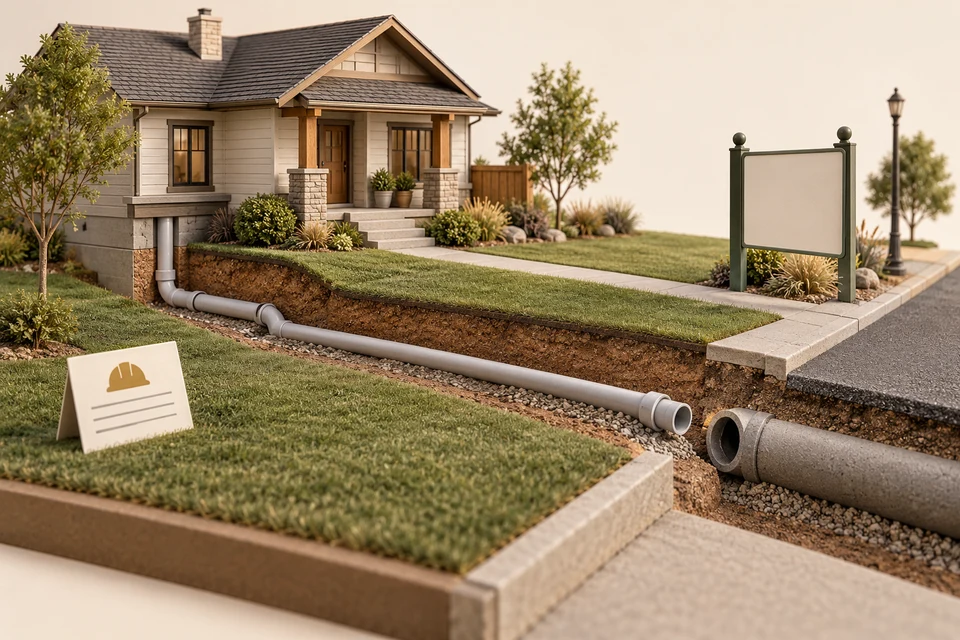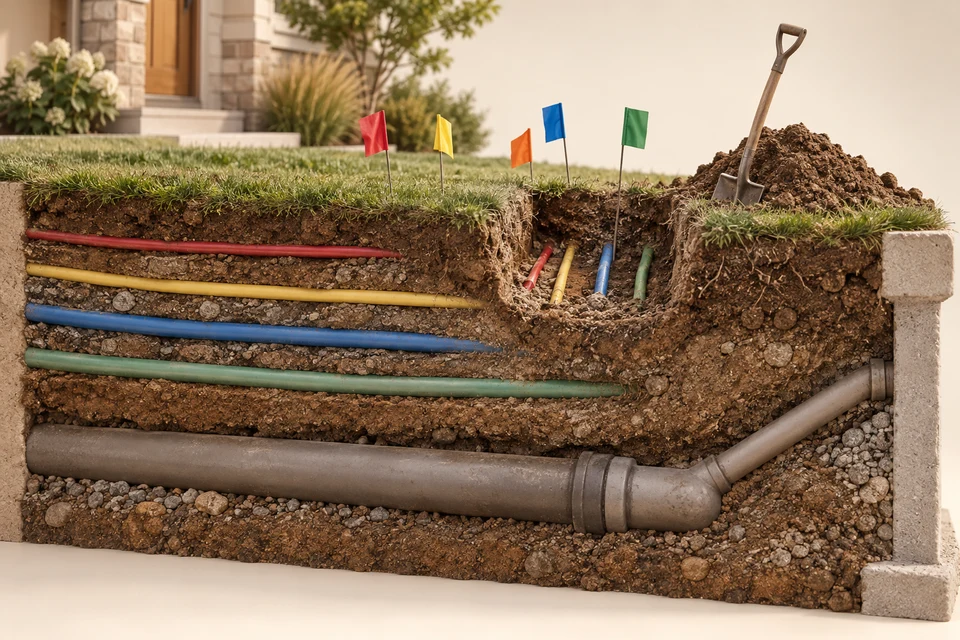
Before any sewer dig in Alberta, request locates through Utility Safety Partners' Click Before You Dig at least three full working days ahead. Marks show approximate location, not depth, and lines within 1 m of a mark (5 m for high-pressure pipelines) must be exposed by hand. Your own sewer and water service lines are not marked, so a private locator or camera sonde has to find them.
- Request locates online or at 1-800-242-3447 at least three full working days before the ground is disturbed; Airdrie allows requests up to 14 days ahead.
- Paint and flags give approximate location only; hand-expose within 1 m of either side of a mark, or 5 m for high-pressure pipelines.
- Customer-owned lines, including the sewer you are replacing, the water service, sprinklers and lines between buildings, are not marked.
- Alberta's OHS Code forbids digging until buried facilities are marked and requires trench protection past 1.5 m.
- In Airdrie, damage to buried utilities is the excavating party's responsibility, so the contract must name who that is.
01 /What has to happen before anyone digs for a sewer in Alberta?
Someone has to request utility locates through Utility Safety Partners, wait for the marks, and find the private lines those marks will not show. Utility Safety Partners (USP) runs Alberta's Click Before You Dig service. Its homeowner guidance asks for a request at least three full working days before you start, made online or by phone at 1-800-242-3447.
Alberta's Occupational Health and Safety Code puts the same idea into law for employers. Under Part 32, s.447, before ground is disturbed the employer must contact the owners of buried facilities, have the facilities marked, and not dig until they are marked. A sewer contractor who arrives with an excavator and no locate ticket is breaking that rule.
Municipal pages repeat the timing with local detail. Airdrie's locates page, as checked September 2026, asks residents to request locates from USP at least three business days before disturbing the ground and allows requests up to 14 days ahead. City water, sewer, storm and fibre lines are registered with USP, so they are marked; privately installed lines are not.
02 /What do the locate marks actually tell you?
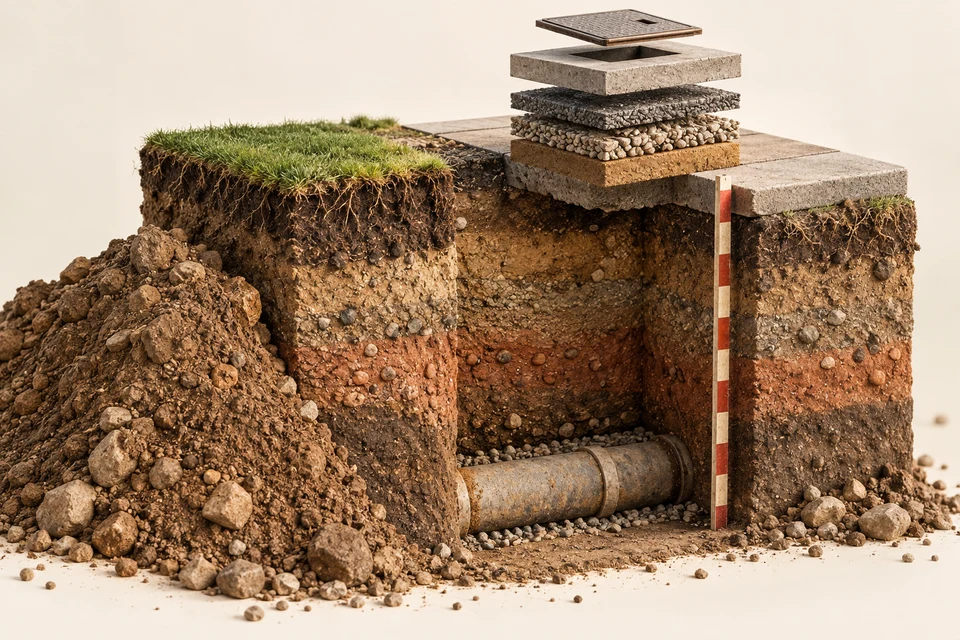
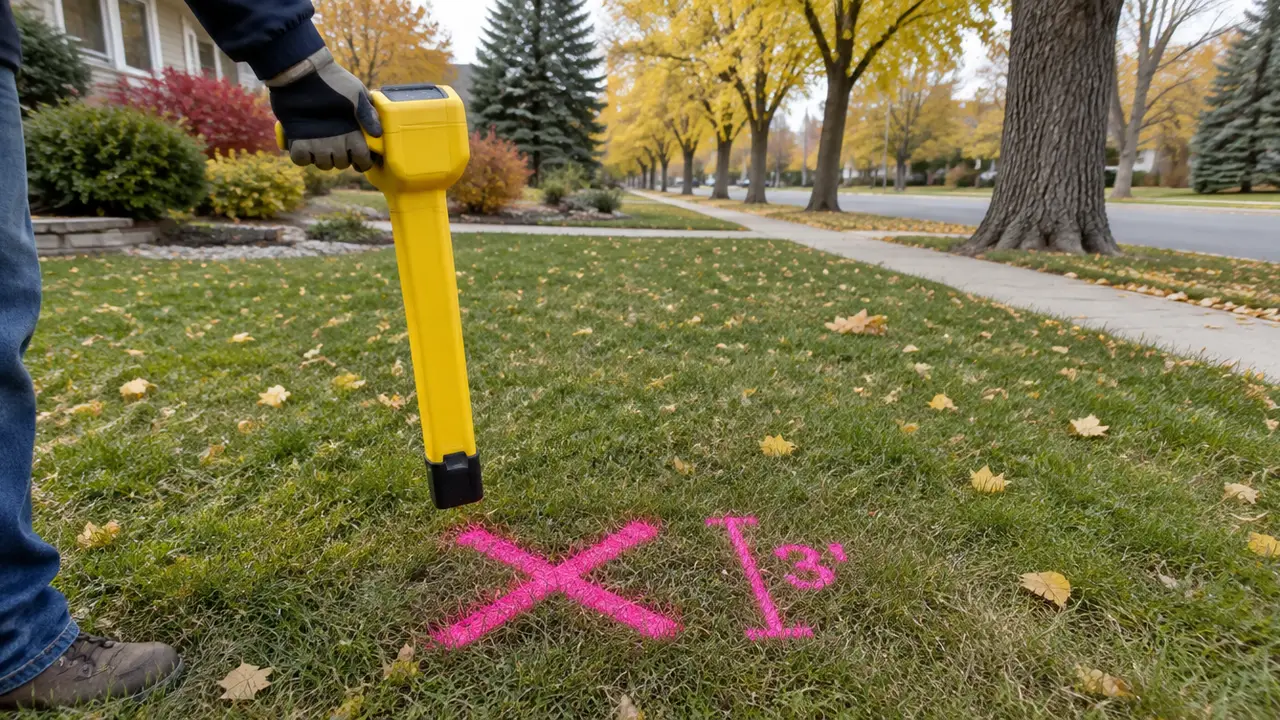
They tell you roughly where a registered line runs, not how deep it is. USP says marks give an approximate location, and that any line within 1 m of either side of the marks must be exposed by hand before machine digging continues. For high-pressure pipelines that hand-expose zone widens to 5 m.
| Line | Marked by the USP request? | How to find it |
|---|---|---|
| Gas service to the meter | Yes, if registered by the owner utility | Marks; hand-expose within 1 m |
| Electrical, telecom and fibre | Yes, where registered | Marks; hand-expose within 1 m |
| City water, sewer and storm (Airdrie example) | Yes, where registered with USP | Marks; ask the municipality for records |
| Your private sewer lateral | No | Camera with sonde, or a private locator |
| Your private water service | No | Private locator; curb stop position |
| Sprinklers, lighting, lines to a garage or shed | No | Private locator, owner knowledge |
Because the depth is unknown, a mark crossing your sewer route is a signal to slow down. Crews expose the crossing with shovels or a hydrovac, then work around the uncovered line. Budget time for that; it is one reason mobilisation and locates carry a typical quoted range of $500–$2,000.
03 /Why is my own sewer line not marked?
Because it is customer-owned and therefore not registered with USP. USP lists water and sewer service lines, sprinklers and lines between buildings among the facilities it does not mark, and advises hiring a private locator. That catches many homeowners out: the pipe being replaced, and often the water service in the same trench corridor, are exactly the lines a sewer crew most needs to know about.
The water service and the sanitary sewer often leave the house near each other and run toward the street. Hitting the water service during a sewer dig turns a planned job into an emergency. A private locate before excavation, and hand exposure where the lines are expected to be close, is the protection.
04 /How is a private sewer lateral located?
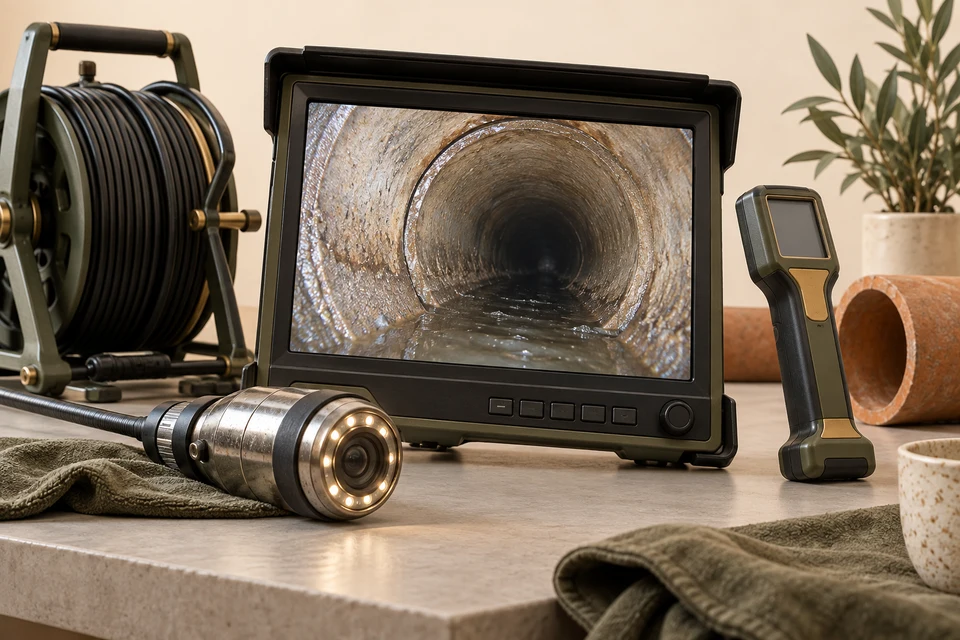
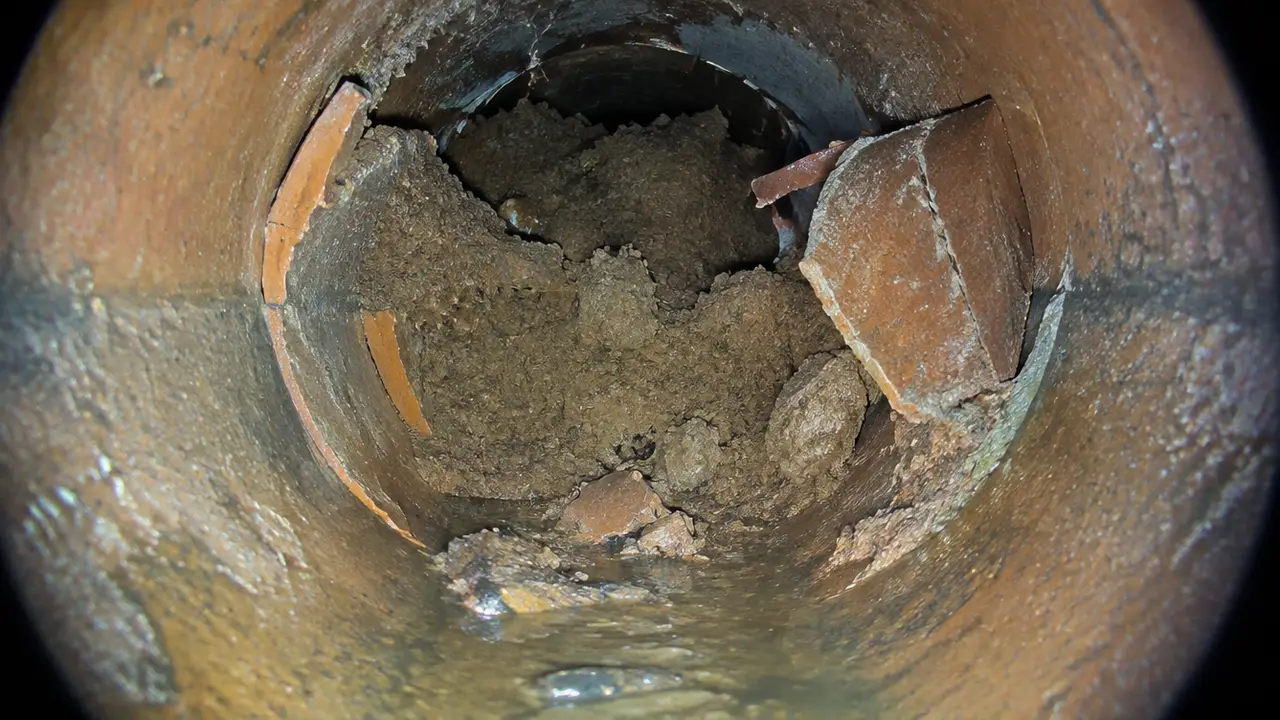
Usually with the same camera that recorded the defects. A small transmitter called a sonde sits behind the camera head. As the camera moves down the pipe, a technician on the surface uses a receiver to find the signal, marks the spot, and reads an estimated depth. Repeating that every few metres traces the route and the depth profile of the lateral.
- Start at a known cleanout
Note which cleanout was used, because every distance on the video is measured from it.
- Mark the defects
Stop the camera at each significant defect and mark the surface above it with paint or a flag.
- Record depth estimates
Write the receiver's depth reading beside each mark; treat it as an estimate, especially near metal or other lines.
- Measure to fixed points
Tape each mark to the foundation corner or another permanent feature so it survives rain and mowing.
- Keep the video and the marks together
The contractor pricing the dig needs both, and so does the permit reviewer.
A sonde locate also shows where the failure sits relative to the property line, which decides who pays and which approvals apply. The camera evidence page explains what a useful recording includes.
05 /Which Alberta OHS rules apply once digging starts?
Four sections of the OHS Code, Part 32, shape a residential sewer excavation. They are written for employers and workers, which covers any contractor on your property.
| Section | What it requires |
|---|---|
| s.447 | Contact the owners of buried facilities, have them marked, and do not disturb the ground until they are. |
| s.450 | Protect a worker in an excavation deeper than 1.5 m who is closer to the wall than the depth, by cutting back, a temporary protective structure or both (not required in solid rock). |
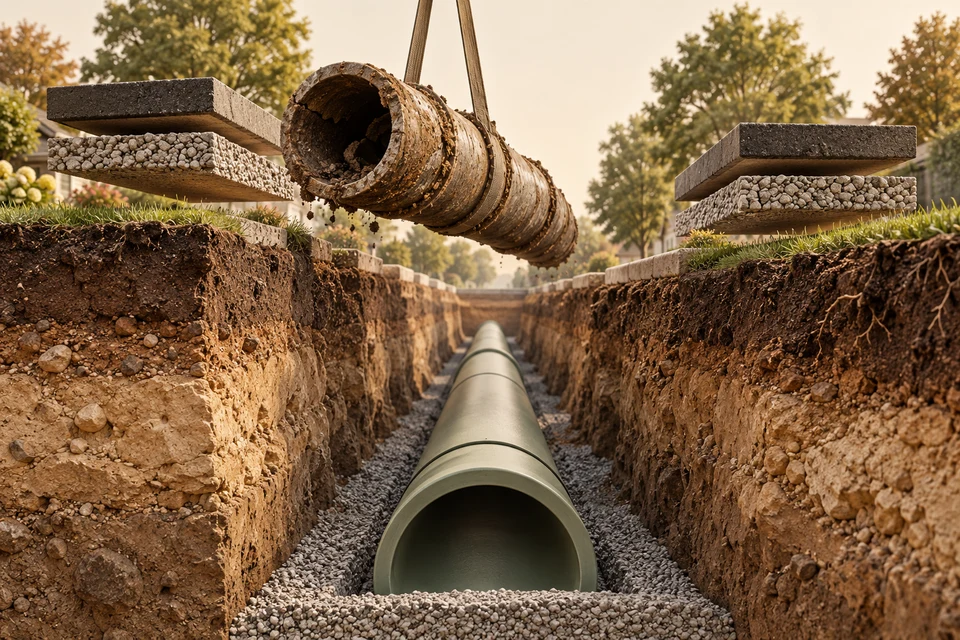
| s.451 | Cut-back walls at not less than 30° from vertical in hard, compact soil and 45° in soil likely to crack or crumble, to within 1.5 m of the bottom; 45° from the bottom in soft, sandy or loose soil. |
| s.453 | Keep spoil piles at least 1 m back from the edge, sloped at not more than 45°. |
06 /Who pays if a buried line is damaged during the dig?
Generally the party doing the excavation. Airdrie's locates page says damage to buried utilities is the excavating party's responsibility, as checked September 2026. That is why the contract should name the excavating party and confirm that party requested the locates, holds the ticket and carries insurance for the work.
If you are doing some digging yourself, you may be that party. The homeowner DIY guide covers what that means for permits, trench safety and the city connection.
07 /What should a contractor show you before digging?
Ask to see these before the excavator starts. A professional crew will have them ready.
- The USP locate ticket number, date and expiry, and photos of the marks.
- The private locate result for the sewer lateral and water service, with depth estimates.
- The plumbing permit number and, where applicable, the city approval for the connection (for example Red Deer Engineering Services or the Okotoks CAO).
- The trench protection plan: cut-back slopes or a trench box, and where spoil will sit at least 1 m from the edge.
- Where hand or hydrovac exposure will happen at each marked crossing.
- Who to call and what to do if a line is struck.
The Alberta City Sewer Rules Finder lists each municipality's approval body alongside the Alberta-wide locate and trench rules. The cost factors guide explains how those rules show up in a price. When your plan is ready, send it through the request form.
FAQQuestions people ask
Does Utility Safety Partners mark the private sewer lateral on an Alberta residential lot?
No. USP says customer-owned facilities such as water and sewer service lines, sprinklers and lines between buildings are not registered and are not marked. Hire a private locator or use a camera with a sonde to trace the lateral before digging.
How far ahead can I book an Airdrie locate before digging for a sewer?
Airdrie's locates page asks for a request to Utility Safety Partners at least three business days before disturbing the ground, and allows requests up to 14 days ahead. Plan the dig date so the marks are fresh when the crew arrives.
Who pays if my Airdrie sewer contractor hits a buried City line?
Airdrie says damage to buried utilities is the excavating party's responsibility. If your contractor is excavating, that is the contractor; make sure the contract names the excavating party and that they hold the locate ticket.
How close to an Alberta locate mark can an excavator bucket dig?
USP says lines within 1 m of either side of the marks must be exposed by hand, and within 5 m for high-pressure pipelines. Machine digging resumes only once the line's actual position is known.
Can a camera sonde tell an Alberta contractor how deep my sewer lateral is?
It gives an estimate. The receiver reads the sonde's signal and calculates depth, but metal, other lines and soil conditions can affect it. Treat the reading as a planning figure and confirm it when the pipe is exposed.
Do Alberta locate marks show how deep a gas line is buried?
No. USP says marks give approximate location, not depth. That is why the hand-expose zone exists: the crew uncovers the line to see where it really is before machine digging nearby.
NETWORKGo deeper across the HAUSE Sewer network
Sewer line locating and depth: how the mark on your lawn is made
How sewer line locating and depth readings work: the sonde, the hand-held locator, peak and null readings, marking, accuracy, and calling before you dig.
SewerRoots.caDoes home insurance cover tree roots in a sewer line?
Does home insurance cover tree roots in a sewer line in Canada? Why root cutting and pipe repair are usually excluded, and what backup endorsements pay.
PipeCleaning.caHow long cast iron drain pipes last, and when to repair, line or replace
How long do cast iron drain pipes last? Why they rust and crack, how to judge remaining life, and when a repair sleeve, lining or replacement is right.