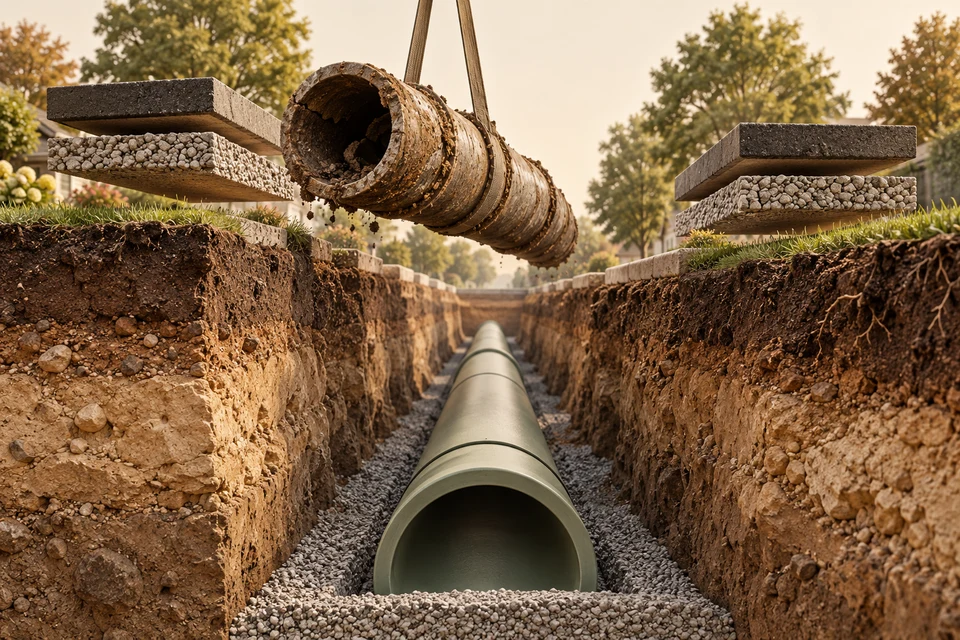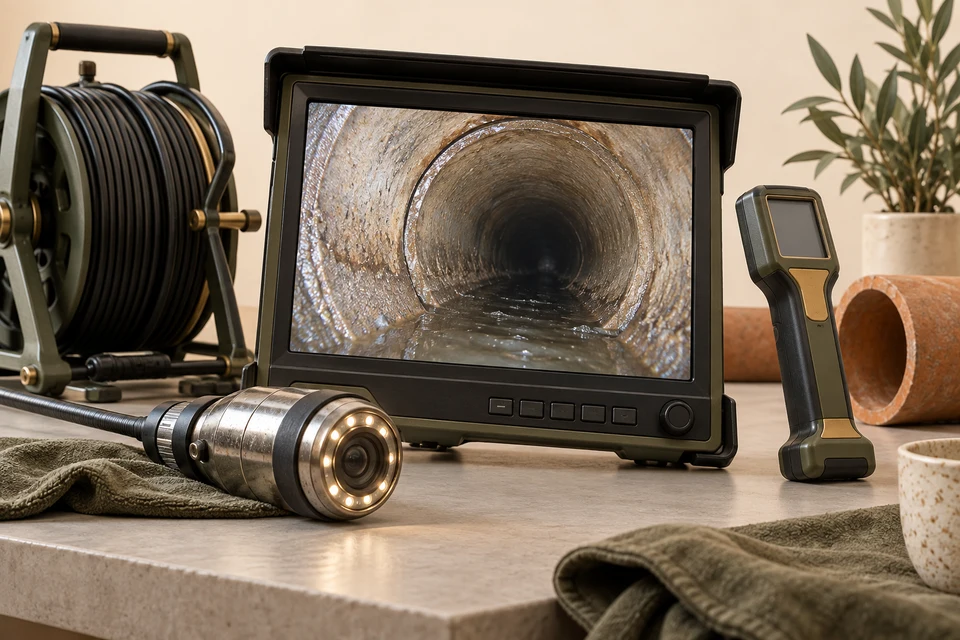
Sewer camera evidence is a continuous recorded run of the lateral, with a distance counter from a named access point, surface locates of the worst findings, the pipe material and any sections the camera could not see. It shows whether the line needs cleaning, a limited repair, lining or replacement review. It cannot, on its own, prove a method; access, grade and ownership still have to be checked.
- Ask for the whole video, not a handful of dramatic stills; the gaps between frames are where disputes start.
- The distance counter measures cable paid out, which is not the straight-line distance across the yard.
- Roots, grease and standing water can hide the pipe wall, so a line sometimes has to be cleaned and filmed again.
- Several Alberta cities tie their own help to cleanout access: Calgary asks you to expose a hidden cleanout, and St. Albert needs a 4-inch cleanout for City camera help.
01 /What should sewer camera evidence document?
Camera evidence should document six things, and a useful recording shows all of them. They are the six review points this page has always carried, with what each looks like in an Alberta replacement file.
| Review item | What it means | What you should be able to point to |
|---|---|---|
| View the accessible run | As much of the lateral as access and condition allow | Continuous video from the access point to the main, or to where the camera stopped and why |
| Locate findings | Tie defects to the property | Distances on screen and surface marks measured from the foundation |
| Identify material and geometry | Material, diameter, bends, transitions, branches | Where clay changes to PVC, where the wye is, where the line bends |
| Separate blockage from structure | Debris and roots versus the pipe itself | A note of whether the line was cleaned first, and a clean re-run if needed |
| Record severity and extent | Is the crack, offset, sag or collapse local or repeated? | Start and end distances of each defect, not just one frame |
| Preserve the evidence | Keep what every bidder will price against | The video file and a plain-language summary you own |
Defect codes and reading a report in detail belong to SewerInspector.ca. This page is about whether the recording is good enough to decide a replacement.
02 /What does a replacement-grade recording contain?
A replacement-grade recording lets a second contractor price the job without filming it again. That needs more than a clear picture.
- Continuous video. One unbroken run, or clearly joined segments, with the camera moving steadily and pausing on each defect.
- A distance counter from a named access point. The screen shows metres travelled, and the report says where zero was: the basement cleanout, an exterior cleanout, a pulled toilet.
- A surface locate with a sonde. A transmitter in the camera head is found from above, and the spot is marked and measured, ideally with an estimated depth. That is where a spot repair pit would go.
- Material transitions. Many Alberta laterals change material at a past repair or at the property line; each change is a joint worth seeing.
- The relation to the property line. Where the private side ends decides who pays for which metres. The camera cannot see a boundary, so compare the locate marks with the city's records and the property survey.
- Stated limits. Where the camera stopped, why, and what was not seen.
03 /What are the limits of a sewer camera inspection?
A camera only shows the inside surface it can reach and light. Three limits matter most for a replacement decision.
- Cable distance is not straight-line distance. The counter measures cable paid out through bends, fittings and any slack. A defect at 14 m on screen may be well short of 14 m from the wall across the yard. The sonde locate, not the counter, puts the mark on the ground.
- Blocked views. Standing water in a belly, a root mass, grease or a collapse stops the camera or hides the pipe floor. The honest report says so; a clean re-run or a second access point may be needed.
- Grade is inferred. Water lying in the pipe suggests a sag, but a push camera does not survey the slope. How deep and long a belly is, and how far it runs, is an estimate until the pipe is exposed.
04 /How do Alberta cities use cleanout access and camera work?
Several Alberta municipalities make cleanout access a condition of their own help, so knowing where yours is and how big it is saves time. As checked September 2026:
- Calgary: for a sewage backup, call 311. The City crew runs a steel snake to the sewer main to tell whether the blockage is on private or public property, and the customer must locate and expose a hidden cleanout. If the blockage is private, the customer is advised to call a plumber.
- Edmonton (EPCOR): EPCOR offers a basic service to help diagnose drainage problems. Its crews cannot safely work in spaces under 5 ft high and 4 ft by 4 ft wide at the cleanout, and EPCOR will not reimburse plumber's fees regardless of where the blockage is.
- St. Albert: City cleaning or camera help needs a 4-inch cleanout inside the home; smaller cleanouts are not normally eligible. The City's service line replacement program runs CCTV before and after work on the City portion.
- Medicine Hat: since April 1, 2020, a fee applies for City crews to clear blockages on private property (403-529-8176).
If there is no usable cleanout, installing one is often the first job, and it makes every future inspection and cleaning easier. The cities overview and the City Sewer Rules Finder list each municipality's process.
05 /How does a typical camera inspection run?
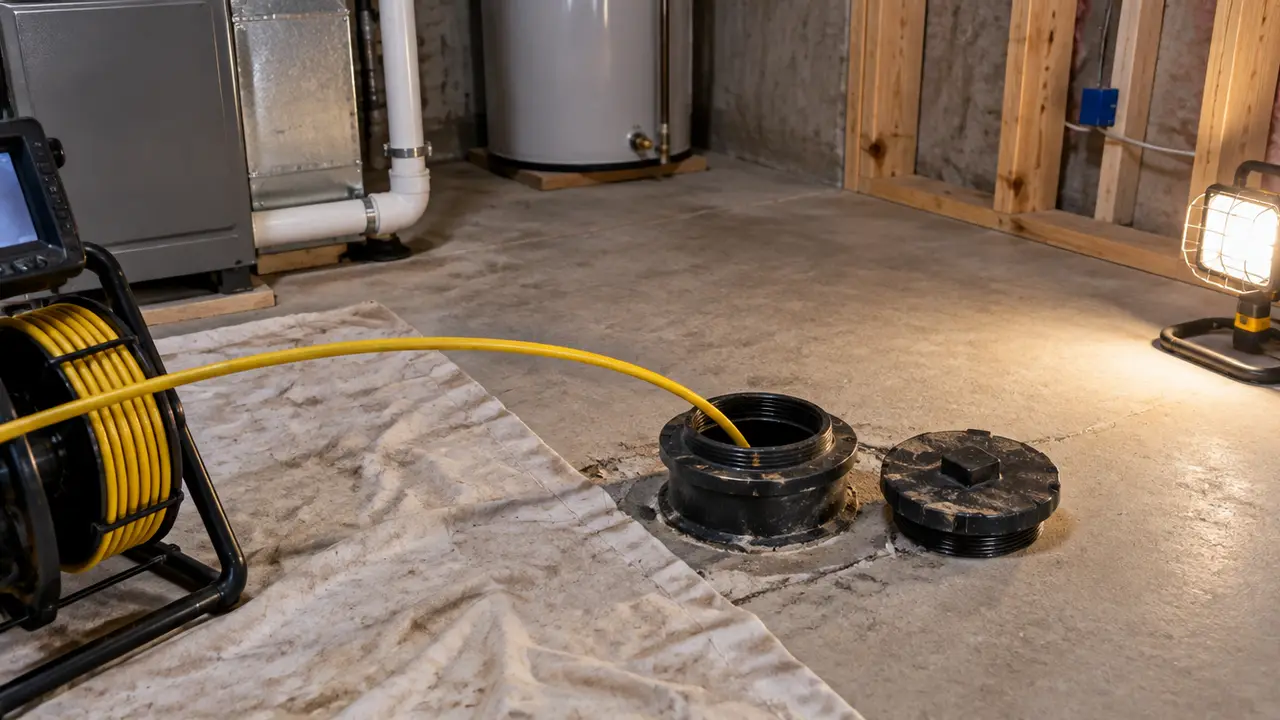
- Confirm an access point
A suitable cleanout or other approved access is needed for the camera. Clear the area around it.
- Prepare the line if required
Standing water, debris, grease or roots may limit visibility and can require cleaning before assessment.
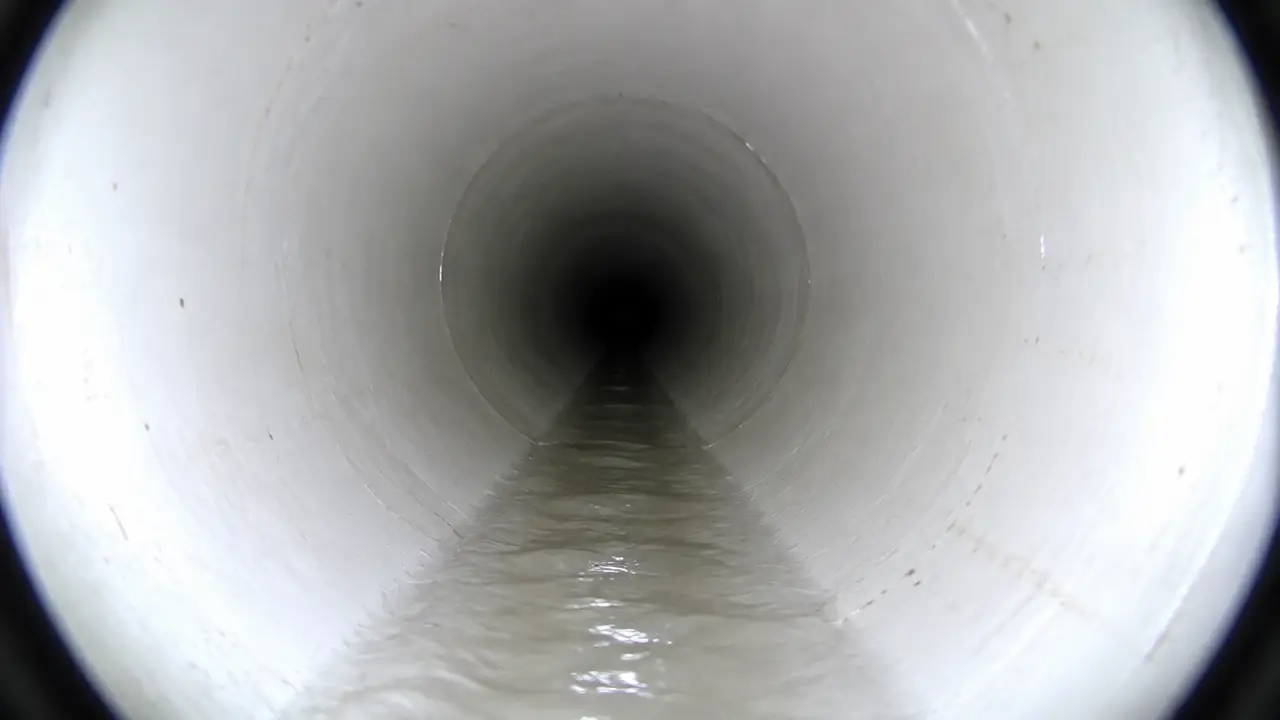
- Record the run
The operator advances the camera while noting distance, direction, material, branches and visible conditions.
- Locate key defects
The worst findings are found with the sonde and marked at the surface when equipment and site allow.
- Review the recording
Ask which findings are structural, which are maintenance, and where uncertainty remains.
- Compare next steps
Any recommended work should tie directly to recorded findings. The Replacement Readiness Check turns the findings into a direction.
06 /Does a camera finding mean the line must be replaced?
Not by itself. A camera finding is evidence of a condition; the method still depends on how far it runs, the grade, the access, the depth and who owns that stretch. Some common findings and what they usually lead to:
| Finding | Often justifies | Rarely justifies on its own |
|---|---|---|
| Fine roots at one joint | Cleaning, then monitoring or a spot repair | Full replacement |
| Grease coating | Cleaning and changed habits | Any structural work |
| Water lying in one section | Locating and measuring the sag | Lining |
| Collapse | Excavating at least that section | Lining that section |
| Repeated open joints along the run | Full-length lining or replacement review | A single spot repair |
The warning signs guide covers what sends people to a camera in the first place, and the methods hub shows how findings map to methods.
07 /What does a sewer camera inspection cost in Alberta?
A camera inspection with recorded video and a surface locate is typically quoted at $250–$600. Price rises with a difficult access point, a long run, a locate across hard surfaces, and a detailed written report. If the line has to be cleared first, main-line clearing with an auger typically runs $200–$450 per visit and hydro jetting $450–$1,100 per visit. A post-work camera run after a repair is typically $0–$400, and sometimes included in the repair price.
Paying for an independent inspection before inviting replacement quotes lets every bidder price the same evidence. The pricing page has the full list of line items.
08 /What should you ask the camera operator?
- Will I get a continuous recording, not only selected stills?
- Where is zero on the distance counter, and will defects be marked at the surface?
- What is the location, type, severity and extent of each defect?
- Which sections were not viewed, and why?
- Which findings are flow obstructions and which are structural?
- Does any recommended work tie to specific recorded findings?
Send the video and summary through the request form for a scope review before deciding on replacement.
FAQQuestions people ask
Can an Alberta sewer camera inspection prove that replacement is needed?
It provides key evidence, but the method also depends on access, grade, ownership boundaries, utilities and field measurements. The contractor should connect any proposed scope to specific findings on the video, with distances and surface marks.
Can a camera see through a blocked sewer line in a Calgary home?
Not always. Standing water, roots, debris, grease or a collapse can stop the camera or hide the pipe wall. The line may need clearing first or a second access point. For an active backup in Calgary, call 311 before any inspection.
What files should I receive after a sewer inspection in Alberta?
Ask for the full video file, distance references from a named access point, surface locations of the key findings, a plain-language summary, and a note of any limits encountered. Confirm in advance that you keep the file.
Do tree roots on an Edmonton or Red Deer camera video mean replacing the lateral?
No. Roots show an opening at a joint or crack. The opening and the pipe around it must be assessed to decide whether cleaning, a localised repair, lining or replacement fits. One root joint on sound pipe rarely justifies a full renewal.
What drives sewer camera inspection pricing in Alberta cities?
Access, line length, whether the line must be cleaned first, locating across hard surfaces, reporting detail and local market conditions. Confirm inclusions, especially the video file and surface locate, before the inspection.
Does St. Albert help with sewer camera work if my cleanout is small?
As checked September 2026, St. Albert says City cleaning or camera help needs a 4-inch cleanout inside the home, and smaller cleanouts are not normally eligible. Confirm your situation with City Utilities before booking private work.
NETWORKGo deeper across the HAUSE Sewer network
How a sewer camera inspection works, step by step
How a sewer camera inspection works, start to finish: access points, push vs crawler cameras, the footage counter, sonde locating and what limits the view.
SewerCleaners.caWhat happens during a professional sewer cleaning visit
A step-by-step look at a professional sewer cleaning visit: arrival, questions, access, cleaning, flow testing, camera verification and the paperwork you keep.
DrainAugering.caAuger Cable Sizer: pick the cable, head and machine before you start
Auger Cable Sizer: choose the line, the distance to the clog and the clog type to get drum or sectional cable, length, head, machine class and a pro flag.