Five sewer warning signs justify a closer look: slow drains at several fixtures, sewage odours, unexplained wet ground over the line, new settlement near the foundation, and more pests around drains. None of them proves the line needs replacing. Each is a reason to record what happens, rule out fixture causes, and, if the pattern points to the main line, get a recorded camera run before any price talk.
- A symptom is a reason to investigate, not a diagnosis; replacement decisions rest on recorded camera evidence and a located defect.
- One slow fixture is usually a fixture or branch problem; several fixtures misbehaving together point toward the shared building drain or sewer.
- Write down when a sign appears, which fixtures are involved and what the weather was doing; that log shortens the diagnosis.
- Sewage rising into the house, a floor drain overflowing or sewage surfacing outdoors is an urgent situation, not a watch-and-wait one.
01 /Why a warning sign is not a replacement diagnosis
A warning sign tells you something in the drainage system is not behaving; it does not tell you which part or why. The same slow drain can come from a grease plug in a kitchen branch, a blocked vent, a root mass at a clay joint, or a belly in the yard that holds solids. Only one of those has anything to do with replacing a sewer line, which is why every sign below ends with the same question: what evidence would separate the possibilities?
On this site the path from symptom to decision is an evidence ladder. It starts with the symptom, moves to a recorded camera run, then a surface locate of anything the camera finds, an ownership check against your municipality's published split, a written scope, a permit, and finally post-work video. Skipping rungs is how homeowners end up paying for the wrong fix.
02 /1. Slow drains at several fixtures at once
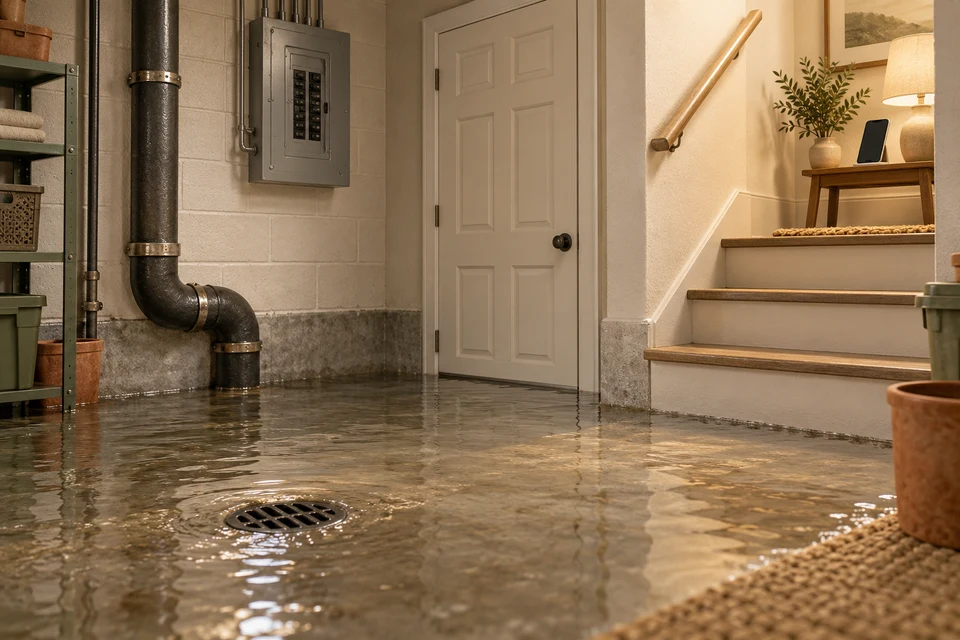
Several slow fixtures at the same time is the strongest of the five signs, because it points past the individual fixtures toward the pipe they share. A single slow bathroom sink is almost always its trap, its tailpiece or the short branch behind the wall. When a basement toilet gurgles as the washing machine drains, or water appears in the floor drain while an upstairs tub empties, the restriction is somewhere downstream of where those branches join.
That shared stretch can be the building drain under the basement slab or the building sewer outside the foundation. Venting problems can also make several fixtures gurgle and drain sluggishly, because the water seal in each trap is being pulled as other fixtures discharge, so a blocked roof vent belongs on the list before anyone talks about digging.
| What you notice | Leans toward | Why |
|---|---|---|
| One fixture slow, others fine | Fixture or branch | Nothing downstream of the shared drain is affected |
| All fixtures on one floor slow | Branch or stack | They share a horizontal branch or one stack |
| Lowest drain gurgles or rises when others run | Building drain or sewer | Water is backing up to the lowest opening first |
| Gurgling but drains clear normally | Venting | Traps are siphoning without a flow restriction |
| Problem returns weeks after clearing | Pipe defect | Something in the pipe keeps catching solids |
Record which fixtures were involved, what was draining at the time, and whether the problem came back after a clearing.
03 /2. Sewage odours inside or around the house
A sewage smell means sewer gas is escaping somewhere it should not, but the usual sources are small and inside the house. The commonest is a dry trap: a floor drain or rarely used shower loses its water seal to evaporation. Loose cleanout caps, a failed toilet wax ring and vent problems follow.
A buried lateral can cause odours too, typically outdoors near the line or around the foundation where a crack lets gas track through soil. That is the less likely explanation, which is why the first moves are cheap: pour water into every floor drain and seldom-used fixture, check that cleanout caps are tight, and note where the smell is strongest and when.
Record the location, the time of day, whether it follows heavy water use, and whether it changes with wind or furnace operation. An odour that only appears after laundry day points somewhere different from one that is constant.
04 /3. Wet ground, soft spots or unusually green grass over the line
A persistently soggy patch or a stripe of greener grass along the route of the sewer can mean wastewater is leaking into the soil, but in Alberta yards it has several rivals. Downspouts, irrigation lines, a leaking water service and snowmelt pooling in a low spot all produce the same look.
The useful clue is the pattern. Wetness that follows the straight line from the cleanout toward the street, stays wet in dry weeks and gets worse after heavy indoor water use is worth a camera run. Wetness that appears only during spring thaw or after rain is more likely surface drainage. A leaking water service tends to stay wet regardless of what the household is doing, because it is pressurized all the time.
Keep children and pets away from any patch you suspect is sewage, photograph it with a fixed reference such as the foundation corner, and note the weather. If you know roughly where the line runs, sketch the patch against it; a camera operator with a locator can later confirm whether the two match.
05 /4. New settlement or cracking near the foundation
A leaking sewer can wash fine soil into the pipe or saturate the ground around it, and that loss of support can show up as a sinking patch of lawn, a dropped walkway or new cracking near where the line leaves the house. It is one possible contributor among many, and it should never be the assumed cause of building movement.
Alberta clay soils shrink and swell with moisture, frost heaves shallow slabs and steps, and poor lot grading sends meltwater against foundations every spring. A structural concern needs structural review in its own right. What the sewer investigation adds is one answer: is there a defect in the pipe near the area that is moving? If a camera run shows an open joint, a fracture or a collapse right under the sinking patch, that is a strong link. If the pipe is sound there, look elsewhere.
Record the date you first noticed the change, photograph cracks with a ruler in frame, and note whether nearby doors or windows have started sticking.
06 /5. More pests around drains
Drain flies around a floor drain, cockroaches near a basement bathroom or rats in a yard can be linked to the drainage system, but pests have many causes and the sewer is rarely the first one. Drain flies breed in the organic film inside traps and floor drains; a thorough cleaning of the drain body often ends them. Rodents are more telling if they appear inside near a floor drain or cleanout, because a broken lateral or an open joint can give them a path from the municipal system.
If pests keep returning after cleaning and sealing obvious openings, add them and where they were seen to your log.
07 /When is a camera run warranted?
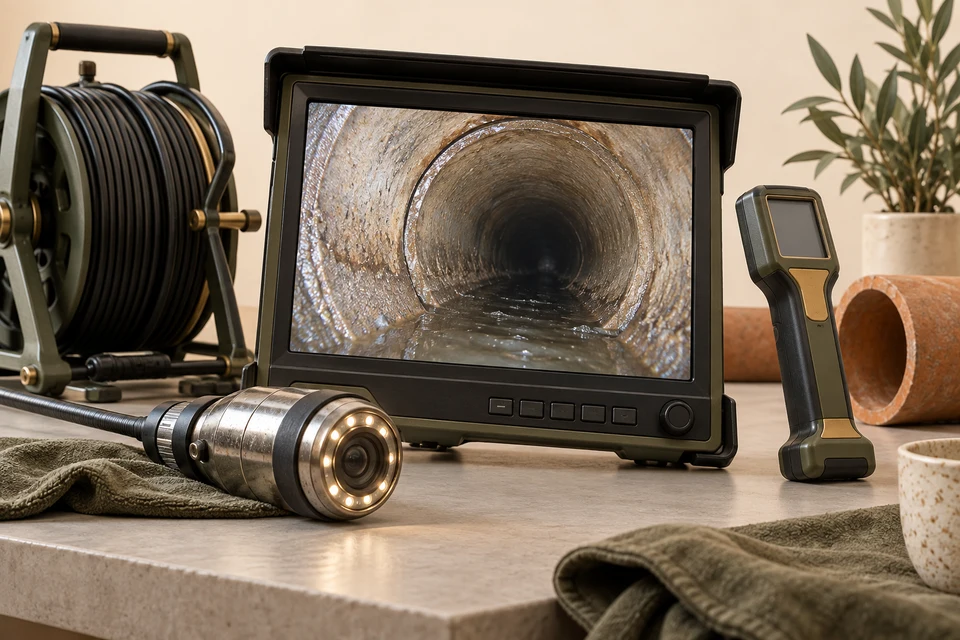
A camera inspection is warranted when the pattern points past the fixtures: several fixtures affected together, the lowest drain rising, a blockage that returns after clearing, or wet ground that tracks the line. It is also sensible before buying an older home or before finishing a basement over the building drain.
Ask for a recorded video with a distance counter, the entry point noted, and a sonde locate marked on the surface for anything significant. A line packed with debris may need clearing first. Typical quoted ranges are about $250–$600 for a camera inspection with recorded video and a locate, and about $200–$450 for a main-line clearing visit.
When the video is in hand, the Replacement Readiness Check scores how ready your evidence is and which direction it points, and the sewer camera evidence page explains what a useful recording contains.
08 /Which signs mean act now, not later?
Act immediately if sewage is coming up through a floor drain, toilet or tub, if wastewater is surfacing in the yard, or if a strong gas smell makes anyone unwell. Stop running water and flushing, keep people and pets away from contaminated areas, and use the urgent intake and safe first steps page. HAUSE is an information and service-request network, so the desk takes requests but no arrival time is promised.
In Calgary, a suspected backup can be reported to 311; the City's sewage backup page says a crew runs a steel snake to the sewer main to tell whether the blockage is on private or public property, as checked September 2026. In Edmonton, EPCOR says it offers a basic service to help diagnose drainage problems. Other municipalities are summarized on the Alberta cities page.
09 /How do Alberta seasons change what the signs mean?
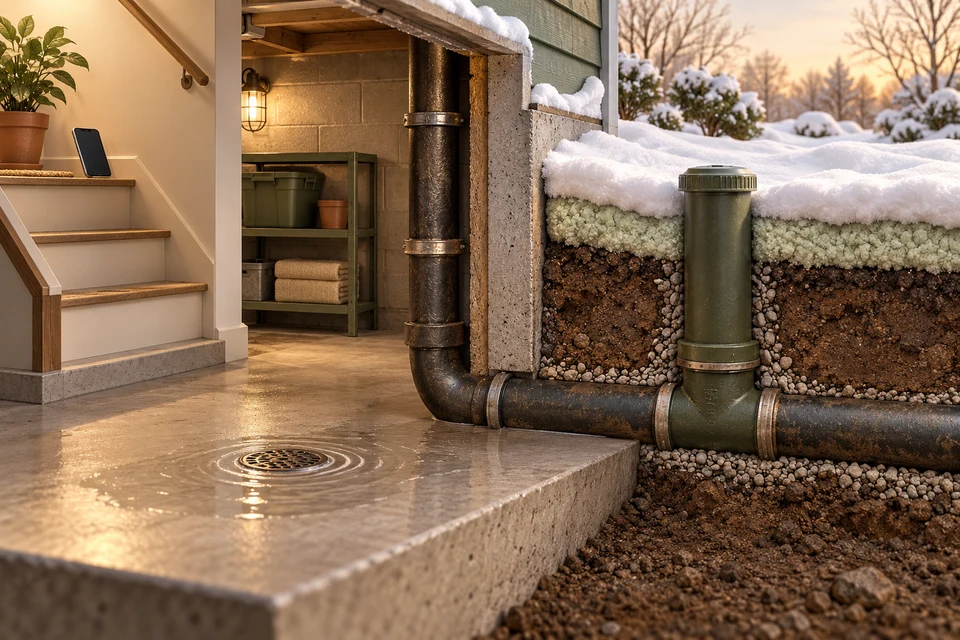
Seasons change the likely cause more than the symptom. In deep cold, a line that drains slowly may be partly iced in a shallow section, especially under a driveway that is plowed bare and loses its snow insulation. During spring thaw, soggy yards and wet basements are often meltwater and grading, not sewer leaks. Chinook freeze-thaw swings move soil around shallow pipes and can open weak joints.
So add the date and the weather to every entry in your log. A backup in January on a line that behaved all summer points toward ice or grease hardening in the cold; the same backup in May, after the frost comes out, may point toward a joint that moved. For cold-weather specifics, see winter sewer problems.
10 /What to do after you have the evidence
- Keep a symptom log
Date, fixtures involved, what was draining, weather, and anything that cleared it.
- Rule out fixture causes
Refill traps, check cleanout caps, clear single-fixture clogs and check the roof vent is not capped with snow or debris.
- Get a recorded camera run
Distance counter, entry point, and a surface locate of each significant finding.
- Check who owns the defect
Compare the located position with your municipality's published split; the Alberta City Sewer Rules Finder lists each one.
When you are ready to compare options, send your log and video through the request form.
FAQQuestions people ask
My Calgary basement floor drain gurgles when the washer drains; is my sewer line failing?
Not necessarily. It means water is backing up toward the lowest opening, which can be a partial blockage in the building drain, the sewer or a vent issue. Clearing plus a recorded camera run tells you which; if the backup is active, the City's page says to call 311.
Should an Edmonton homeowner call EPCOR or a plumber first for slow drains throughout the house?
EPCOR says it offers a basic service to help diagnose drainage problems and that owners maintain the lines on their property, as checked September 2026. EPCOR also says it will not reimburse plumber fees wherever the blockage turns out to be, so ask EPCOR what its service covers before booking.
Does a green stripe of lawn over the sewer route in an Alberta yard mean the line is leaking?
It can, but downspouts, irrigation, a leaking water service and spring meltwater produce the same look. A stripe that tracks the line, stays green in dry weeks and follows indoor water use is worth a camera run with a locator.
Can frost heave in Alberta cause the same symptoms as a broken sewer lateral?
Some of them. Frost heave lifts shallow slabs, steps and walks and can mimic settlement, while ice in a shallow sewer section can cause slow drains in deep cold. A camera run separates a pipe defect from a surface movement problem.
How many slow drains justify a sewer camera inspection in an older Red Deer or Lethbridge house?
Two or more fixtures slowing together, especially if the lowest drain rises, justify one. So does a blockage that returns after clearing. A single slow sink usually needs its trap or branch cleared first.
Are drain flies near an Airdrie basement floor drain a sign of a broken sewer line?
Usually not. Drain flies breed in the film inside floor drains and traps, and cleaning the drain body often ends them. Rodents appearing near a floor drain or cleanout are a stronger reason to check the line for an opening.
NETWORKGo deeper across the HAUSE Sewer network
Clog Locator: find the blockage before you pick up a cable
Use the Clog Locator to find where a drain clog sits (trap, branch, stack, main or lateral) and which auger class and cable size fits the pipe.
SewerCleaners.caA preventive sewer maintenance schedule you can actually follow
A preventive sewer maintenance schedule for Canadian homes: monthly, seasonal, yearly and multi-year tasks, intervals by pipe type, and a log template.
SewerInspector.caShould you scope the sewer before buying a house?
When a sewer scope before buying a house is worth it, which homes need one most, how to fit it inside a condition period, and what to do with the result.