Winter sewer problems in Alberta usually come from ice in a shallow or sagging section, grease hardening in a cold line, or an old defect made worse by frost. If drains back up, stop using water, keep people away, find the cleanout and report it to your city. Never thaw a line with flame or chemicals, and dig frozen ground only when clearing cannot keep the line working.
- A frozen water service leaves taps dry; a frozen or blocked sewer lets water in but sends it back up at the lowest drain.
- In Calgary, the City's sewage backup page says to call 311, and a crew runs a steel snake to the main to tell whether the blockage is private or public.
- Open flames and chemical drain cleaners are never the answer to a frozen or backed-up line.
- Winter excavation is possible but slower and costlier; if clearing keeps the line working, a planned replacement can often wait for thaw.
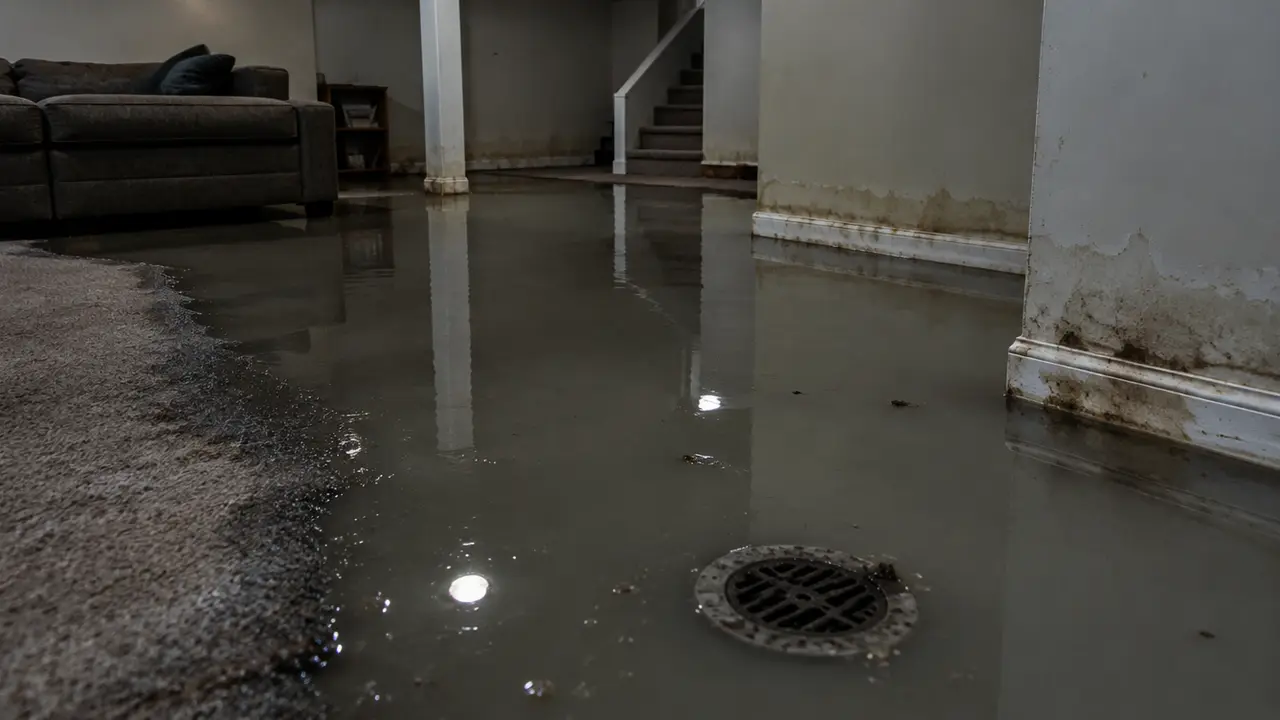
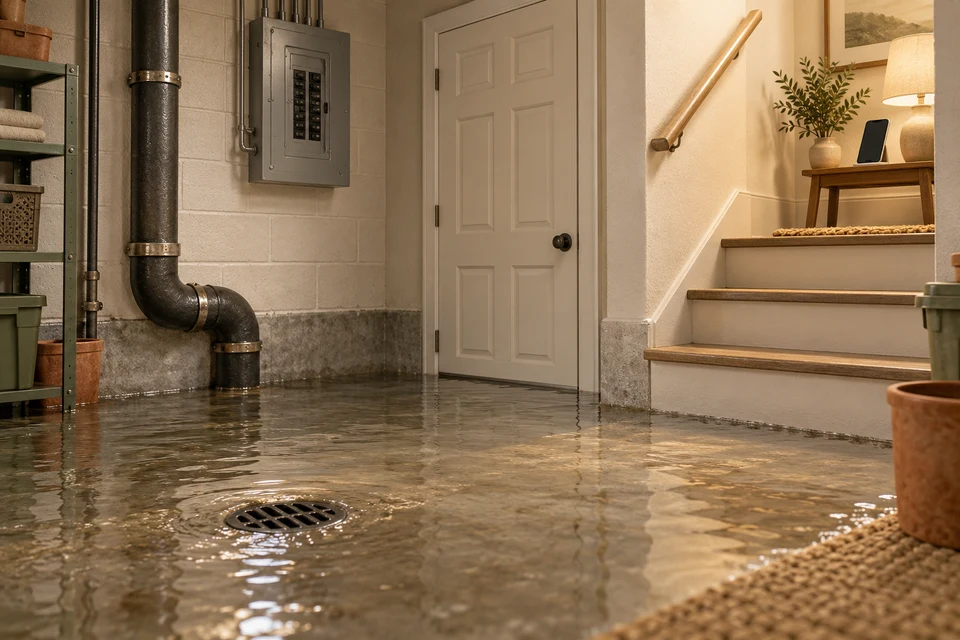
01 /If sewage is backing up right now
- Stop using water
No flushing, laundry, dishwashers or showers anywhere in the house. Every litre you send has to go somewhere, and the lowest drain is where it comes out.
- Keep people and pets away
Sewage carries pathogens. Keep children and pets out of the area, and wear gloves and boots if you must go near it.
- Watch for electrical risk
Do not wade into water near outlets, a furnace or appliances. If water is near live electrical equipment, stay out and get qualified help.
- Find the cleanout
City crews and contractors both need it. The City of Calgary's backup page says the customer must locate and expose a hidden cleanout.
- Report it and document it
Use your municipality's channel, photograph the damage before anything is moved, and notify your insurer early.
The urgent intake and safe first steps page has the full checklist. HAUSE is an independent information and service-request network, not a contractor: the desk takes requests, but no arrival time is promised, and availability depends on who can attend.
02 /Why is winter hard on Alberta sewers?
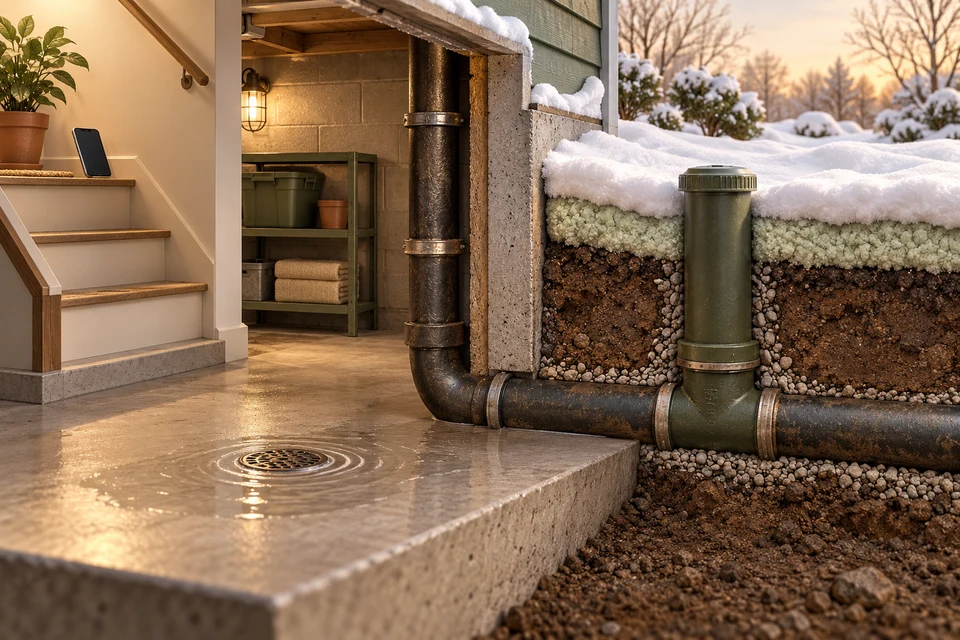
Winter adds three stresses at once: frost in the ground, colder and slower flow in the pipe, and harder access to the line.
| Stress | What happens | Why it matters |
|---|---|---|
| Frost in the soil | Frozen ground expands and heaves; frost goes deepest where snow cover is removed | Can shift joints, crack brittle pipe and freeze water standing in a shallow section |
| Cold, slow flow | Grease firms up faster; a trickle from a quiet house can freeze in layers | Partial blockages build up and a sag holding water can freeze solid |
| Access | Snow hides outdoor cleanouts; frozen ground resists digging; short daylight | Diagnosis and any excavation take longer and cost more |
Chinook swings between thaw and hard freeze, common in southern Alberta, repeat the frost cycle several times a season. Each cycle moves the soil a little, which is why a weak joint that behaved for years can open up in February.
03 /Is it a frozen sewer or a frozen water line?
Check the taps first. A frozen water service stops water coming in, so taps run weakly or not at all. A frozen or blocked sewer stops water going out, so taps run normally but the water returns at the floor drain or basement toilet.
| Sign | Frozen water service | Frozen or blocked building sewer |
|---|---|---|
| Taps | Weak flow or none | Normal |
| Drains | Normal, when there is water to drain | Slow, gurgling, or backing up at the lowest drain |
| Typical location | Where the service enters the house, or shallow under a cleared driveway | A shallow or sagging section, often under a driveway or walk kept bare of snow |
| Who to call | Your municipality's water line, then a plumber | Your municipality's sewer channel, then a drain contractor |
Sewers freeze less often than water lines because they carry warm household water and are not full, but three situations make them vulnerable: a sag that holds standing water, a section laid shallow, and a house that is empty or barely used, where a slow trickle freezes in layers instead of flushing through.
04 /What do Alberta cities do when you report a winter backup?
Each municipality has its own route, and knowing it before a cold snap saves time. As checked September 2026:
- Calgary: call 311. The City says a crew runs a steel snake to the sewer main to determine whether the blockage is on private or public property; if it is private, you are advised to call a plumber. The customer must locate and expose a hidden cleanout, so clear the snow from an outdoor one before crews arrive.
- Edmonton: EPCOR says it offers a basic service to help diagnose drainage problems. EPCOR does not repay plumber invoices no matter where the blockage sits, and it bills a fee when prohibited waste is the cause.
- St. Albert: City Utilities operators assess reported backups (780-459-1500, 8 to 5 on weekdays). Crews can only clean or camera the line through a 4-inch cleanout inside the home; smaller ones are not normally eligible.
- Medicine Hat: City crews charge a fee, in place since April 1, 2020, to clear blockages on private property; the number is 403-529-8176.
For Red Deer, Airdrie, Okotoks and Lethbridge, the Alberta City Sewer Rules Finder and the cities page list the published ownership split and who to contact.
05 /What should you never do with a frozen or backed-up line?
Also resist waiting it out. A line that freezes once usually freezes again, and a winter backup often exposes a defect such as a sag that will still be there in spring. Record what happened so the diagnosis can be finished when conditions allow.
06 /Fall preparation and winter habits
A house left empty for weeks is a special case. Ask a plumber how to leave it, because a little flow can freeze where a full flush would not. The sewer warning signs guide covers what to log if symptoms start.
07 /Should a winter replacement proceed or wait for thaw?
Proceed when the line cannot be kept working: a collapse that stops flow, sewage surfacing in the yard, or backups that return days after each clearing. Wait when clearing restores flow and the camera shows a defect that is not yet blocking. The months before thaw are good for getting the evidence, the ownership answer, written scopes, the permit and locates in place.
| Situation | Usual direction |
|---|---|
| Collapse or broken pipe stopping flow | Proceed; excavate at least the failed section |
| Backups returning within days of clearing | Proceed or clear on a schedule while scopes are prepared |
| Ice plug in a sag, cleared successfully | Plan the regrade for thaw; clear again if needed |
| Camera shows cracks or roots, line flowing | Plan and price now; schedule for spring or summer |
Utility locates are needed in every season. Utility Safety Partners asks for requests at least three full working days before digging, and private sewer and water service lines are not marked, so a private locator is needed for those.
08 /How does winter excavation work?
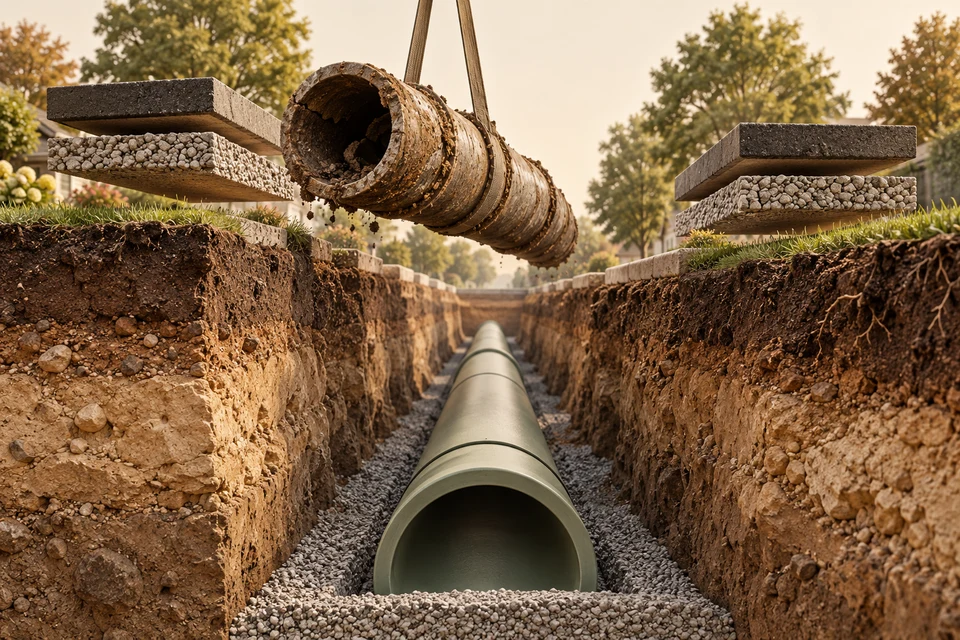
Winter excavation starts by getting through the frozen layer, either by breaking and ripping it or by thawing the ground first under insulated covers or with ground heaters. Once through the frost, the dig proceeds much as in summer, but slower, and the trench-safety rules apply the same way.
- Frost removal adds time and equipment, and the thicker the frost, the more it adds. Ask the contractor how they will handle it and whether it is priced in.
- Pits beat trenches in the cold. A trenchless plan with two pits has far less frozen ground to break or thaw than a full trench, though lining or fusing pipe in the cold has its own limits to ask about.
- Frozen spoil makes poor backfill. Frozen lumps do not compact and settle when they thaw, so ask what backfill will be used and how it will be compacted.
- Protection rules still apply. Alberta's OHS Code requires protection for workers in excavations deeper than 1.5 m, and spoil piles must sit at least 1 m back from the edge.
- Restoration often waits. Sod, concrete and asphalt are usually finished in spring; get the timing and a temporary surface written into the scope.
The open-cut replacement and trenchless lining pages describe each method's process in full.
09 /Questions to ask about winter equipment and insurance
- How will you thaw or clear the line, and what stops the method damaging the pipe?
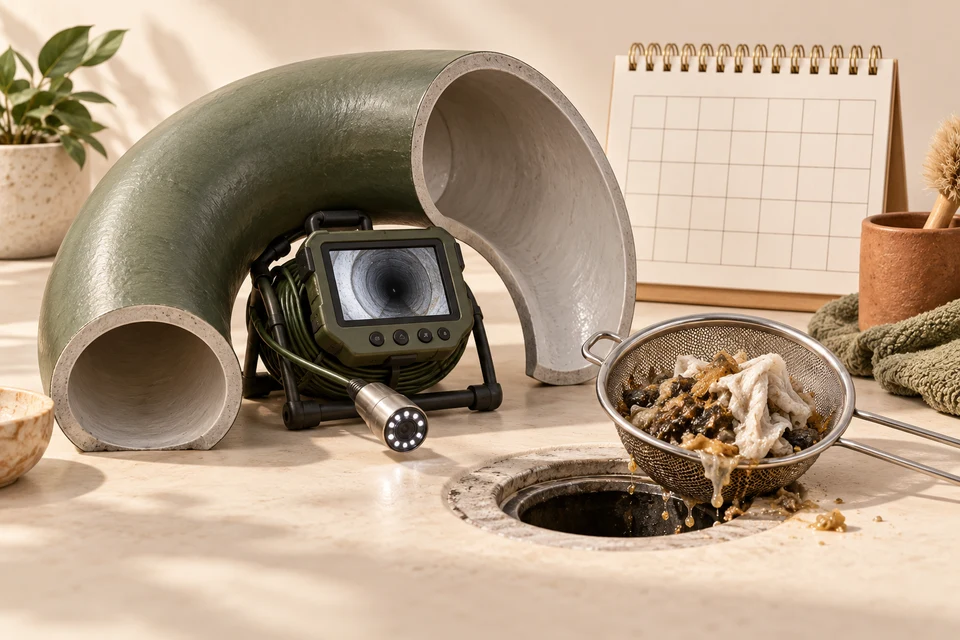
- Will you run a camera once it is clear, and record it with distances?
- If there is sewage to pump, how is it contained and where does it go?
- What does winter add to the dig: frost removal, heating, temporary surfaces, a spring restoration visit?
For insurance, the Insurance Bureau of Canada says basement water damage from a sewer backup is covered only if you bought optional sewer backup coverage. Photograph everything before cleanup, keep receipts, and call your insurer early, because policies set their own notice rules. When the line is flowing and you are ready to plan the repair, send your video and notes through the request form.
FAQQuestions people ask
How can a Calgary homeowner tell a frozen sewer from a frozen water service in January?
Check the taps. If they run weakly or not at all, the water service is the likely problem. If taps run normally but water comes back up at the floor drain or basement toilet, the sewer is blocked or frozen.
Does the City of Calgary clear a frozen or blocked sewer line on private property?
The City's backup page says a crew runs a steel snake to the main to find whether the blockage is private or public, and if it is private you are advised to call a plumber. Call 311, as checked September 2026.
Can EPCOR help diagnose a winter sewer backup in Edmonton?
EPCOR says it offers a basic service to help diagnose drainage problems. It will not reimburse plumber's fees regardless of where the blockage is, and charges a fee if prohibited waste caused it.
Is it safe to replace a sewer line during an Alberta cold snap?
It can be done safely with frost removal or ground thawing and the usual trench protection, but it is slower and costlier. If clearing keeps the line working, a planned replacement can usually wait for thaw.
Why do empty Alberta houses and cabins get frozen sewer lines more often?
Because a slow trickle freezes in layers instead of flushing through, especially in a sag or shallow section. Ask a plumber how to leave a property that will be empty through the winter.
Should a St. Albert homeowner call the City first about a winter sewer backup?
City Utilities operators assess reported backups, weekdays 8 to 5 at 780-459-1500, as checked September 2026. For City cleaning or camera work, the house needs an indoor 4-inch cleanout.
NETWORKGo deeper across the HAUSE Sewer network
What causes sewer backup, and how to tell which cause is yours
What causes sewer backup: roots, grease, wipes, sags, broken pipe, frozen lines and rain-overloaded city sewers, plus how to tell which one caused yours.
DrainAugering.caWhy your drain snake is not working, and how to get it past the bend
Drain snake not working? Why a cable will not go down the drain, stalls at a 90-degree bend, spins without clearing or gets stuck, and how to fix each one.
SewerJetting.caHot water jetting and frozen sewer lines in a Canadian winter
Frozen sewer line in winter? How hot water jetting and steam thawing work, why sewer lines freeze, what not to do, and how to prevent a repeat.