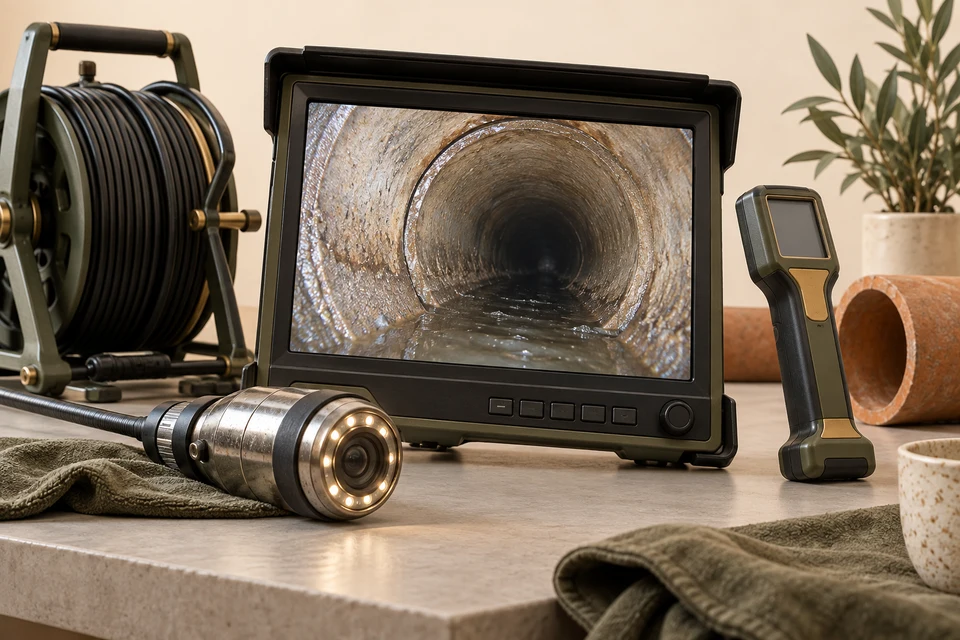
The Replacement Readiness Check asks eight questions about your line and returns an evidence-readiness score from 0 to 5, the gaps to fill before comparing replacement prices, and the direction the findings point: evidence first, clean and re-inspect, monitor, spot repair, lining, digging out a sag, replacing a collapse, or reviewing the whole length. It does not price or diagnose anything.
- The score counts only three things: the camera record (up to 3 points), whether the extent is known (1) and whether ownership is confirmed (1).
- A collapse or a sag always overrides everything else, because lining and bursting follow the old line.
- Defects along much of the run, or several earlier repairs at different points, move the answer to a full-length review.
- The tool never shows a price; planning ranges live on the pricing page.
Replacement Readiness Check
01 /What does the Replacement Readiness Check do?
It turns what you already know about a sewer line into two plain answers: whether your evidence is good enough to ask contractors for comparable replacement prices, and which kind of work that evidence supports. The old version of this site called it the replace-or-repair decision guide, and the idea is the same: organise the facts so the next camera run or contractor conversation is useful, without pretending a web form can see your pipe.
The check is deliberately strict about evidence. A backup, a smell or a contractor's verbal opinion does not move the score. A continuous recorded camera run with distances does, and so does knowing where each defect sits and who owns that section of pipe. Those are the same three things any honest written scope depends on.
02 /Which questions does it ask?
Eight drop-downs, each with a default that describes a common starting point: repeated backups, no camera inspection yet, nothing structural known, extent not known, material not known, no repairs, ownership assumed from the property line, and an open lawn on top.
- What brought you here: one slow drain, repeated backups or several drains, sewage backing up right now, a camera inspection that found damage, or buying, selling and planning ahead.
- Camera evidence you have: none, a partial run that was blocked or did not reach the main, a full recorded run with distances, or a full run with a written report and a surface locate.
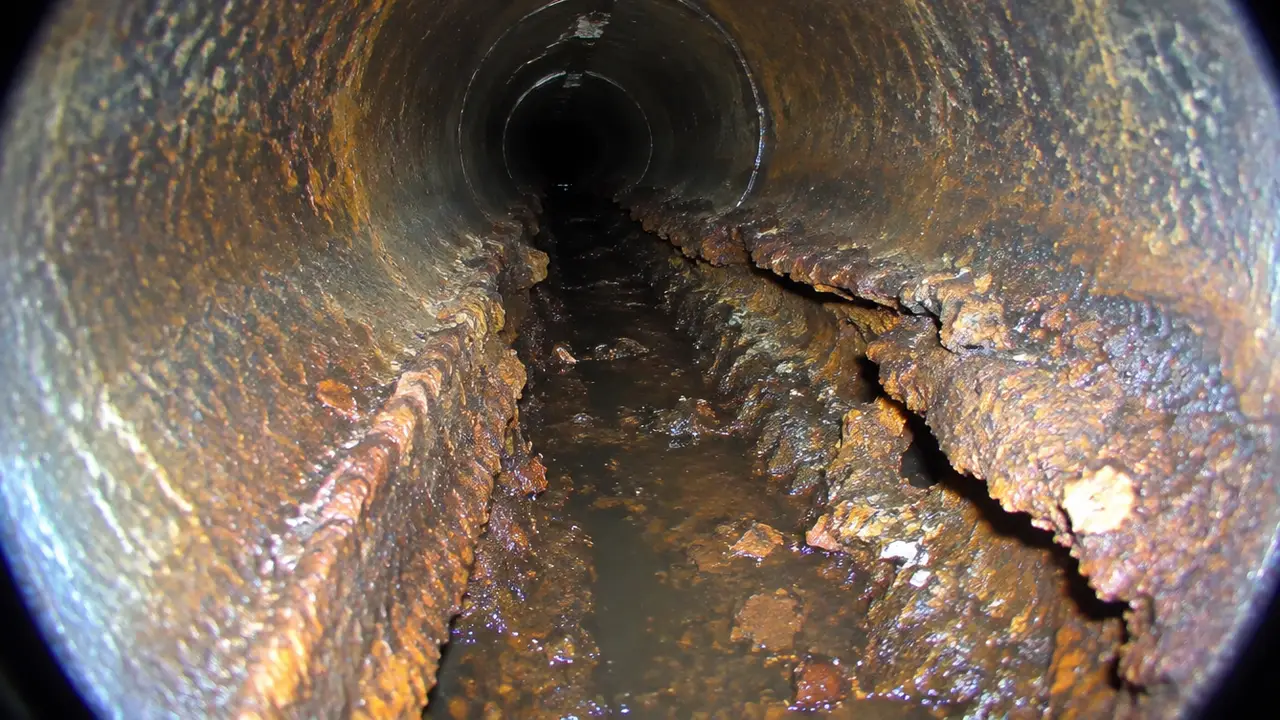
- Worst finding so far: nothing structural or not known, roots only, cracks with no soil getting in, offset or separated joints, a fracture or hole, a sag holding water, a collapse, or deformed fibre (Orangeburg) pipe.
- How far it extends: one spot, two or three spots, along much of the run, or not known.
- Pipe material: vitrified clay, cast iron, bituminous fibre, concrete, ABS or PVC, or not sure.
- Repair history: none, cleaned often or one earlier repair, or several repairs at different points.
- Ownership of the defect section: confirmed with the municipality, assumed from the property line, or not known.
- What is on top of the line: open lawn, a driveway or patio, mature trees, the basement slab, or a mix.
If you are unsure, choose the less favourable answer. The tool is most valuable when it tells you what to go and find out.
03 /How is the evidence-readiness score calculated?
The score runs from 0 to 5 and is the sum of three parts. Nothing else changes it: not the symptom, not the material and not the surface.
| Part | Answer | Points |
|---|---|---|
| Camera evidence | No camera inspection yet | 0 |
| Camera evidence | Partial run (blocked, or did not reach the main) | 1 |
| Camera evidence | Full recorded run with distances | 2 |
| Camera evidence | Full run, written report and surface locate | 3 |
| Extent | One spot, two or three spots, or much of the run | 1 |
| Extent | Not known | 0 |
| Ownership | Confirmed with the municipality | 1 |
| Ownership | Assumed, or not known | 0 |
| Score | Band | What it means |
|---|---|---|
| 0–1 | Not ready to price a replacement | Any replacement number you receive now rests on guesswork. |
| 2–3 | Partly ready | Quotes are possible, but they will differ in scope; fill the listed gaps first. |
| 4–5 | Ready for comparable, scoped quotes | Give every contractor the same video and ask them to price the same scope. |
Under the score, the tool lists each missing piece as an action: get a recorded run of the whole line; finish a partial run by cleaning first or entering from another access point; ask for a surface locate and a written summary; pin down where each defect sits; and confirm ownership with your municipality. The Alberta City Sewer Rules Finder shows what each municipality publishes about that last point.
04 /How does it decide which way the evidence points?
The direction comes from the worst finding, its extent and the repair history, checked in a fixed order. The first rule that matches wins, which is why a collapse or a sag always leads.
| Order | If | The tool says |
|---|---|---|
| 1 | Worst finding is a collapse | Replace at least the collapsed section |
| 2 | Worst finding is a sag holding water | Dig and regrade at least the sag |
| 3 | Worst finding is deformed fibre pipe | Full-length renewal review |
| 4 | Extent is much of the run, or several repairs at different points | Full-length renewal review (replace, burst or line) |
| 5 | Fracture or offset, one spot | Spot repair review |
| 5 | Fracture or offset, two or three spots | Sectional repairs or full-length lining review |
| 5 | Fracture or offset, extent not known | Spot or sectional repair review, extent first |
| 6 | Cracks, two or three spots | Lining review |
| 6 | Cracks, one spot or extent not known | Monitor, or spot repair |
| 7 | Roots only, no repairs yet | Clean, then re-inspect the entry points |
| 7 | Roots only, with earlier cleaning or repairs | Clean, then price sealing the joints or lining |
| 8 | Nothing structural, one slow drain | Not a replacement question yet |
| 8 | Nothing structural, anything else | Evidence first |
Rules 1, 2 and 6 lean on statements published by EPCOR, Edmonton's drainage utility, as checked September 2026: a collapsed portion has to be replaced, sags can only be fixed by removing the pipe and regrading the trench bottom, and small cracks may be tolerated if they are not wide enough to let backfill into the pipe. Those are engineering facts about pipe, not Edmonton rules, so the tool applies them everywhere. The defect-to-method guide shows the same logic as a matrix.
05 /What else does the result show?
- An urgent banner when you choose that sewage is backing up right now, pointing you to the urgent first steps. A replacement decision can wait until the line is cleared and filmed.
- A recording warning when you name a finding but have no camera evidence: a finding without a video cannot be priced or compared.
- A pipe note for the material you chose, such as clay joints failing one at a time, or cast iron thinning along the bottom.
- A surface note: open lawn keeps open-cut restoration cheapest; driveways and pavers make a trenchless price worth getting; mature trees and basement slabs change how the work is laid out; mixed surfaces can be priced section by section.
- Next steps linking to your city's rules, what a usable camera record contains, the planning ranges, and the request form.
Changing any answer after the first result updates it straight away, so you can see how much a full camera run or a confirmed boundary moves the score.
06 /What are the limits of this tool?
It is an editorial rule set, not an assessment of your pipe. It cannot see grade, depth, pipe diameter, connections, other utilities or soil, all of which can change the method. It treats your answers as true, so a vague camera report produces a vague direction. It does not know your municipality's rules; that is what the city rules finder is for.
Most important, it never shows a price. The direction tells you what kind of work to ask about; the pricing page holds the Alberta planning ranges for each kind, and only a written quote built on your video is a price.
07 /How should I use the result?
- Fill the gaps
Work through the listed actions until the score is 4 or 5. Usually that means one proper camera run with a surface locate, and one written question to your municipality.
- Write one scope
Describe the start and end points, the defects and their distances, and the method the direction points to. Ask for an alternative price where the tool suggests a review, for example a spot repair and a full-length price side by side.
- Check the local path
Use the Alberta city pages to see who issues the permit or approval, who applies, and what the municipality handles at the connection.
- Compare like for like
Send the same video to each contractor. When the quotes arrive, line them up item by item against the quote checklist.
If you would like another set of eyes on the video before you spend money, send it through the request form with your answers from this tool. HAUSE is an information and request network, not a contractor, and does not do the work itself.
FAQQuestions people ask
Why does the Replacement Readiness Check ignore the symptom when scoring?
Because a symptom starts an investigation but cannot tell anyone what to replace. The score counts only the evidence a written scope depends on: the camera record, the extent and ownership.
Can the readiness score reach 5 without a written camera report?
No. A full recorded run earns 2 points; the written report with a surface locate earns the third. Extent and confirmed ownership add the other two.
Why does a sag override a crack in the readiness check?
A liner or a bursting head follows the existing grade, so a belly survives both. The only fix for a sag is digging it out and regrading, which is why that rule is checked before any other.
Does the readiness check apply outside Alberta?
The scoring and direction rules are about evidence and pipe, so they work anywhere. The notes about permits, locates and ownership refer to Alberta; use the city rules finder for those.
What should I do if the readiness check says evidence first?
Book a recorded camera inspection of the whole line with distances from a named access point, ideally with a surface locate. Then run the check again with the findings.
NETWORKGo deeper across the HAUSE Sewer network
Sewer pipe lining cost: what a CIPP liner should cost in Canada
Sewer pipe lining cost in Canada (2026): CIPP liner ranges in CAD for full laterals and single sections, the line items, cost drivers and quality checks.
SewerInspector.caCommon sewer defects, explained by what they do to the pipe
Common sewer defects explained: roots, cracks, fractures, offset and separated joints, sags, deposits, holes and collapse, with severity and usual next steps.
SewerRoots.caPermanent fixes for roots in sewer lines
Permanent fixes for roots in sewer lines: CIPP lining, sectional point repairs, pipe bursting and open-cut replacement compared by cost, lifespan and fit.