A new sewer line lasts longest when you keep the job records, protect it from grease and wipes, keep the cleanout reachable, and check it once in the first year. Care differs by what was installed: a CIPP liner, a burst HDPE pipe and a PVC open-cut line each have their own weak points, usually at connections and transitions rather than along the pipe itself.
- Keep the before and after video, an as-built sketch with measurements, the permit and inspection record and the written warranty together.
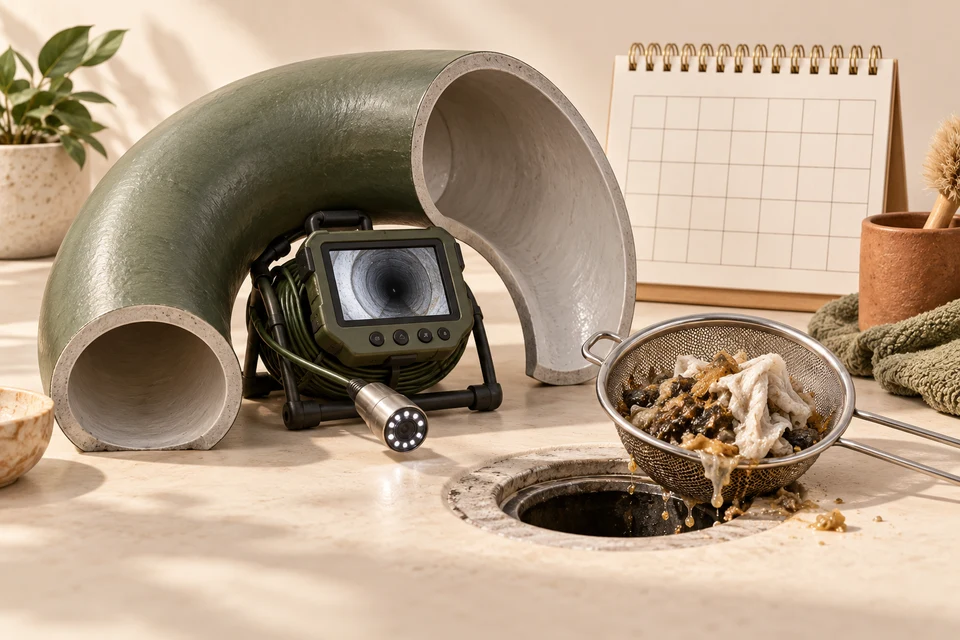
- Grease is the usual cause of backups according to the City of Calgary, so what goes down the drain matters more than any maintenance product.
- A reachable cleanout makes every future clearing, camera run and municipal check faster, and some city services depend on it.
- Connections, reinstated branches and the transitions to old pipe are where a new line most often develops problems; watch those first.
01 /What should you keep from the replacement job?
Keep every record that describes what was installed, where it runs and who approved it. Five years from now, the person diagnosing a slow drain will ask what the pipe is, how deep it is, where it connects and whether anything was left of the old line. Those answers live in the job file, not in anyone's memory.
| Record | Why it matters later |
|---|---|
| Pre-work camera video with distances | Shows what the old line looked like and why the work was chosen |
| Post-work camera video | The baseline every future inspection is compared against |
| As-built sketch with measurements from fixed points | Lets a locator or excavator find the pipe, pits and fittings without guessing |
| Pipe material, size and method | CIPP, HDPE and PVC are cleaned and repaired differently |
| Permit number and inspection record | Proves the work was inspected; buyers and insurers may ask |
| Written warranty and contract | Defines what is covered, for how long and who to call |
| Locate records and photos of the open trench or pits | Show depth, bedding and nearby utilities |
Permit records differ by city. As checked September 2026, the City of Calgary's homeowner permit page lists two inspections for homeowner plumbing work, rough-in and final, and Edmonton books inspections through SelfServe or 311. Ask whoever held the permit for the final inspection record and file it with the rest.
02 /Why the first year matters
The first year is when installation problems show themselves, and when most warranties are easiest to use. Backfill in a trench settles through its first freeze-thaw cycle and spring melt; a pit can sink; a connection can move. None of this is unusual, but it is better found while the contractor is still answerable for it.
- Walk the route after spring thaw
Look for settlement along the trench line or over pits, and for wet spots that were not there before.
- Watch the lowest drains
A floor drain or basement toilet that gurgles or rises is the earliest sign of a restriction.
- Ask about a follow-up camera run
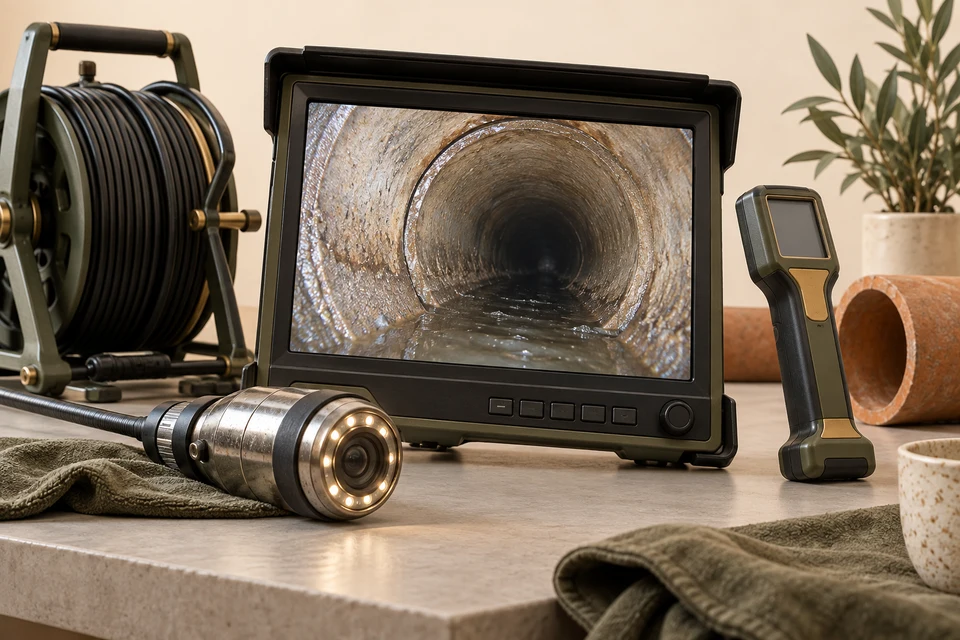
If anything has changed, or the contractor recommends it, a recorded run compared against the post-work video shows movement at joints and connections.
- Check the warranty dates
Note when coverage ends and book any check comfortably before then.
A follow-up camera inspection with recorded video and a locate is typically quoted at $250–$600, and some contractors include post-work video in the job, which is typically $0–$400 when billed separately.
03 /How should care differ for CIPP, HDPE and PVC lines?
Each method leaves a different pipe in the ground, and the weak points move with it. There is no universal schedule; follow the installer's and manufacturer's written guidance for the product you have.
| System | Where problems usually start | Care notes |
|---|---|---|
| CIPP liner inside the old pipe | Reinstated branch openings and the liner ends where it meets old pipe | Ask which cleaning tools and pressures the liner tolerates before anyone augers or jets it |
| HDPE pipe from bursting | Couplings at the pits and connections to the house or city side | Fused lengths have no joints along the run; watch the ends |
| PVC from open cut | Gasketed joints, fittings and trench settlement | Settlement in the first year can affect grade; report sags early |
For a lined pipe, tell any future contractor it is a liner before they start. Aggressive cutting heads meant for roots in clay are not what a liner needs. For any system, a recorded run after cleaning tells you whether the cleaning did harm.
04 /Keep the cleanout reachable
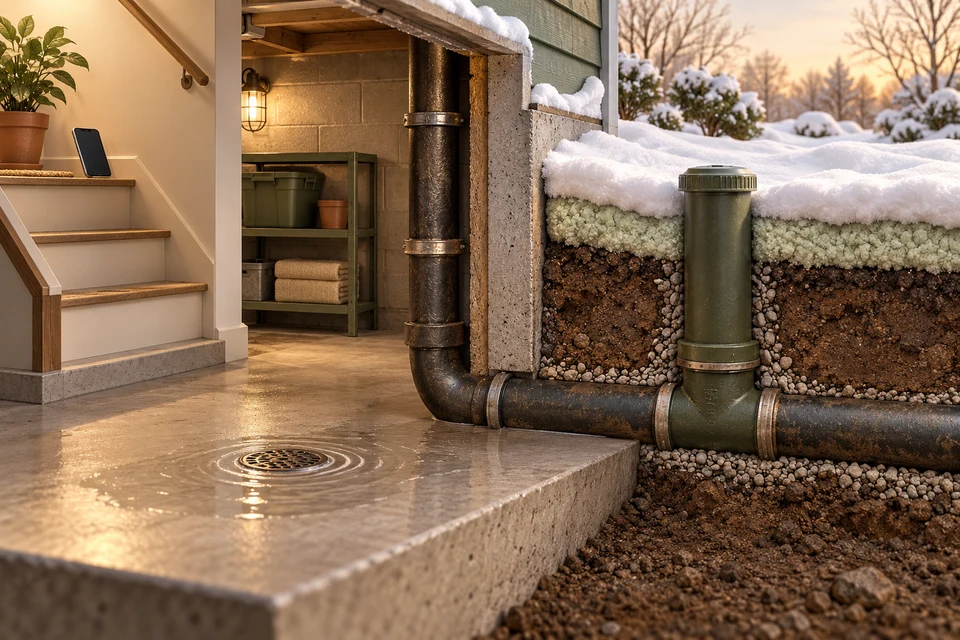
A reachable cleanout is the cheapest maintenance feature a sewer can have, and several Alberta municipalities build their services around it. As checked September 2026, the City of Calgary's sewage backup page says the customer must locate and expose a hidden cleanout; St. Albert says City cleaning or camera help needs a 4-inch cleanout inside the home, and smaller cleanouts are not normally eligible; EPCOR says its crews cannot safely work in spaces under 5 ft high and 4 ft by 4 ft wide at the cleanout.
- Do not box a cleanout in behind drywall, shelving or a finished floor; leave an access panel if you finish around it.
- Keep the cap tight so sewer gas and pests stay out.
- If the replacement did not include an accessible cleanout, adding one is typically quoted at $600–$2,500.
05 /What should never go down the drain?
Grease is the big one. The City of Calgary says grease is usually the main cause of backups, and a new pipe collects it as readily as an old one. EPCOR charges a fee if a blockage it attends is caused by prohibited waste items, and Medicine Hat has charged a fee since April 1, 2020 for City crews to clear blockages on private property, both as checked September 2026.
Wipe greasy pans with paper towel before washing, collect cooking fat in a container for the garbage, and follow your municipality's guidance for disposing of paint and medications.
06 /Kitchen disposal and laundry habits
- Run cold water before, during and after using a food disposal, and use it sparingly; compost where you can.
- Keep fibrous and hard waste out of the disposal: celery, corn husks, potato peels, bones and fruit pits.
- Clean the washing machine's lint filter and consider a lint trap on the discharge hose; synthetic fibres collect in drains.
- Spread heavy laundry days out rather than running several loads back to back, which sends a long surge to the lowest drain.
07 /Seasonal care for an Alberta sewer
Winter and spring are when Alberta sewers show stress, so plan checks around them.
| Season | What to do |
|---|---|
| Fall | Confirm the cleanout is reachable and capped; clear leaves from outdoor cleanouts; note any slow drains before the ground freezes |
| Winter | Keep the basement heated; keep snow off outdoor cleanouts and the plumbing vent; watch for slow drains after long cold spells |
| Spring | Walk the trench route for settlement; test every drain; look for new wet spots once the frost is out |
| Summer | Book any camera run or work on the line; plan landscaping and trees away from the route |
Snow piled over a driveway insulates it; plowing it bare lets frost go deeper over a shallow pipe. See winter sewer problems for the cold-weather side.
08 /Roots near new joints
Roots enter a pipe through an opening, so a new line with tight joints resists them far better than old clay. The openings that remain are the connections, the transitions between new and old pipe, and any joint that moved as the trench settled.
Before planting a tree, find the route on your as-built sketch and keep new trees well away from it. Talk to an arborist and a sewer contractor before any root work near the line, and use root treatments only when camera evidence and qualified advice support them. The Medicine Hat wastewater page notes the City is responsible for root infiltration on public-property piping from public-property trees only, so roots on the private side remain the owner's problem there.
09 /Your maintenance action plan
- After completion: file the video, sketch, permit record and warranty together.
- First year: walk the route after thaw and book a follow-up run if anything changes.
- Every day: keep grease, wipes and debris out of the drains.
- When something changes: log slow drains, gurgling, odours, backups or wet spots with dates.
- Every season: follow the checklist above and keep the cleanout reachable.
- When warranted: book professional review rather than guessing.
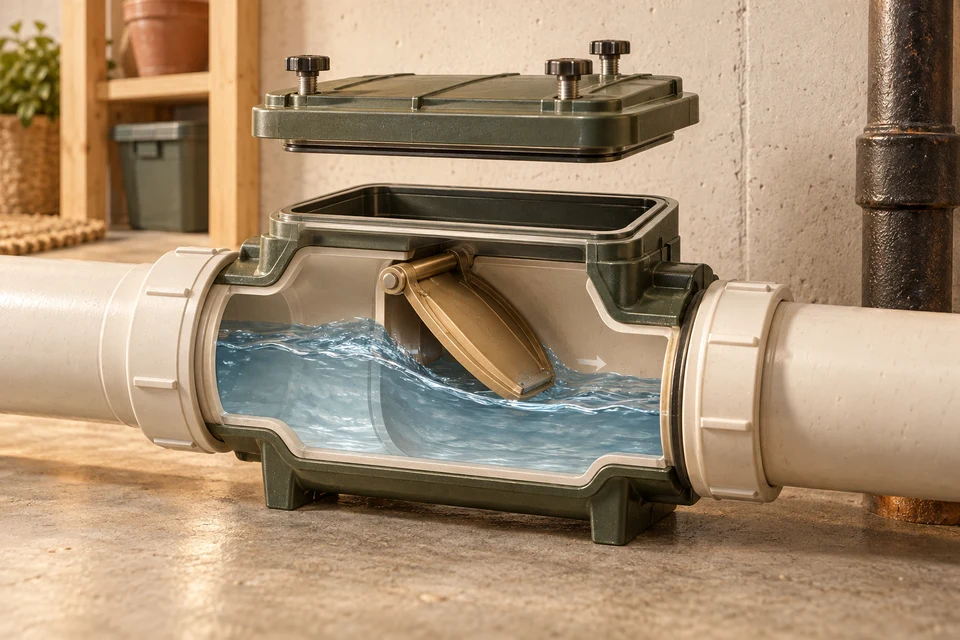
If the replacement did not add a backwater valve, the backwater valve guide explains the options; typical installation quotes run $1,800–$4,500. If something already seems wrong with the new line, the Replacement Readiness Check helps sort your evidence, and you can send your records through the request form.
FAQQuestions people ask
How soon after a Calgary sewer replacement should the new line be scoped again?
There is no set interval. A follow-up camera run makes sense if anything changes, such as settlement over the trench or a slow floor drain, or if the contractor recommends one before the warranty ends.
Does St. Albert need a particular cleanout size before City crews can help with a blockage?
Yes. St. Albert's sewer issues page says City cleaning or camera help needs a 4-inch cleanout inside the home, and smaller cleanouts are not normally eligible, as checked September 2026.
Who maintains the backwater valve on a newly replaced Edmonton sewer?
The owner. EPCOR says owners are responsible for maintaining and repairing the sewer lines on their property, including the backwater valve if one is present.
Can roots from a boulevard tree get into a new sewer line in Medicine Hat?
They can enter at any opening, usually a connection or transition. The City says it is responsible for root infiltration on public-property piping from public-property trees only, so roots on the private side stay with the owner.
Is hydro jetting safe for a CIPP-lined sewer in an Alberta home?
It can be, with the right nozzle and pressure. Ask the installer what their liner tolerates, tell the jetting contractor it is a lined pipe, and get a recorded run afterwards.
What paperwork should an Airdrie homeowner keep after replacing a sewer line?
The before and after video, an as-built sketch with measurements, the permit and inspection record, and the written warranty. Airdrie's claims page also asks owners to keep the private section flowing freely, so maintenance records help too.
NETWORKGo deeper across the HAUSE Sewer network
Inspecting the sewer after a backup: finding out why it happened
Why a sewer camera inspection after a backup matters: private vs municipal causes, timing, what to record for insurance, and how to stop it happening again.
SewerCleaners.caMain sewer line cleaning: what is actually involved
Main sewer line cleaning explained: how pros access the line, cable vs jetting, camera proof, how long it lasts, and what a complete job should include.
SewerQuotes.comNew sewer line cost: new connections, infill services and septic-to-sewer
New sewer line cost in Canada (2026): CAD planning ranges for new house connections, infill services and septic-to-sewer conversions, plus fees to confirm.