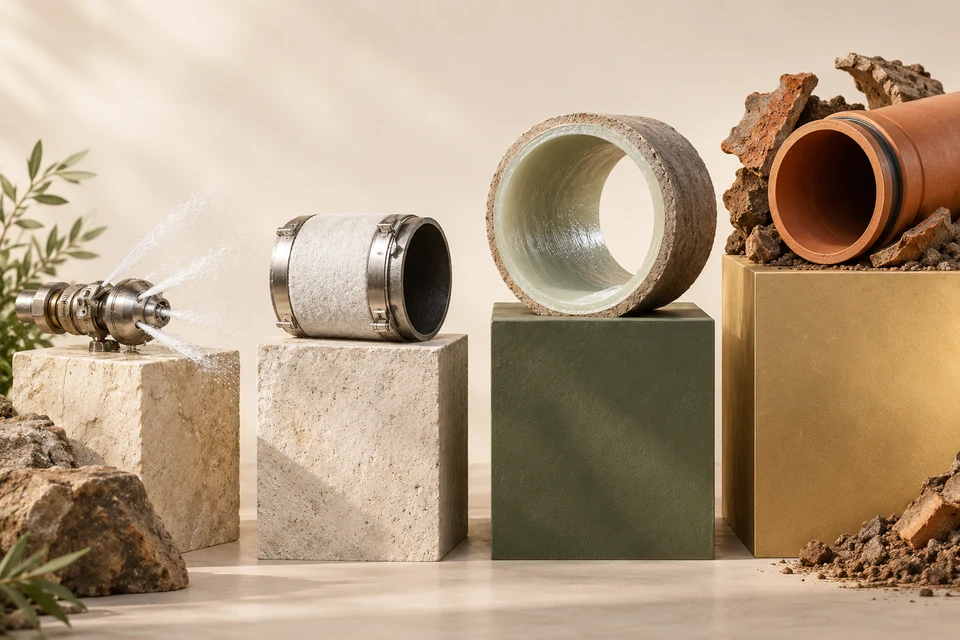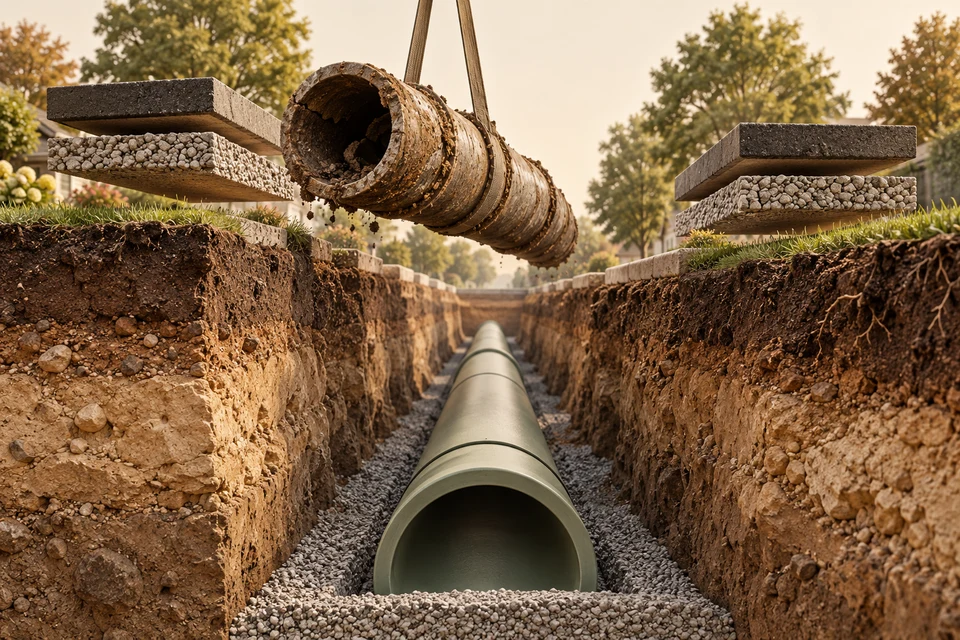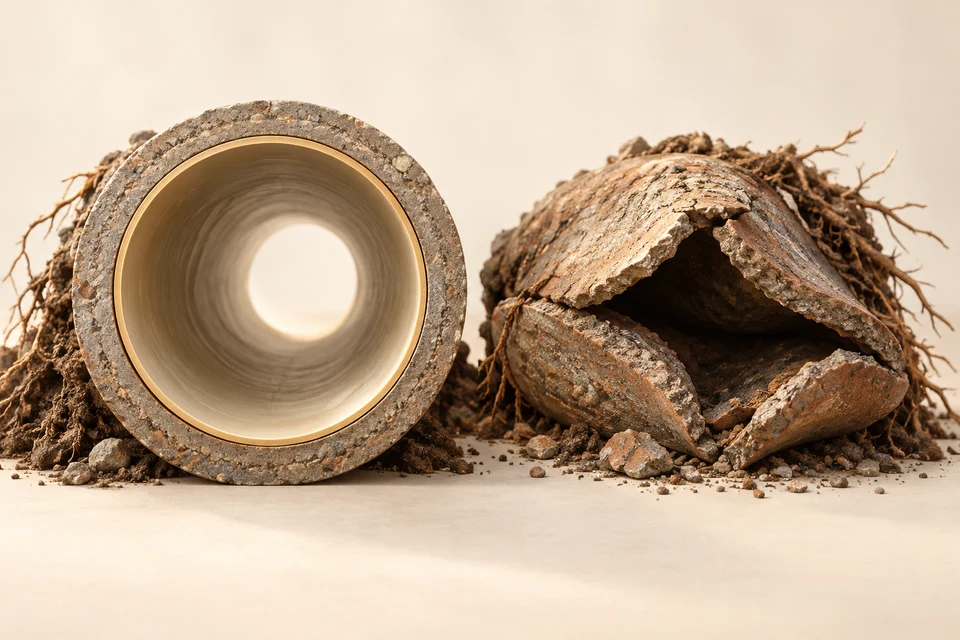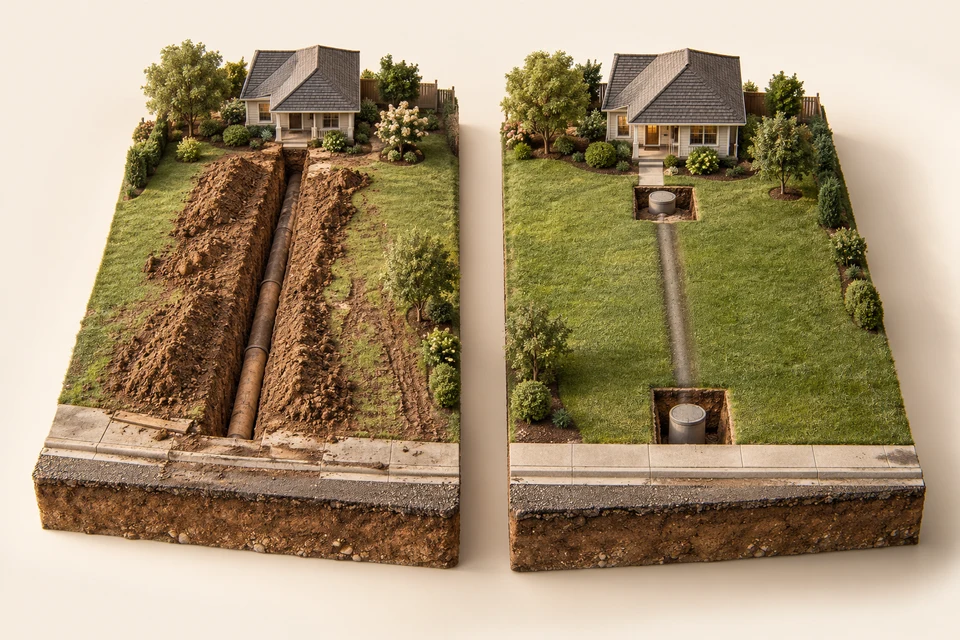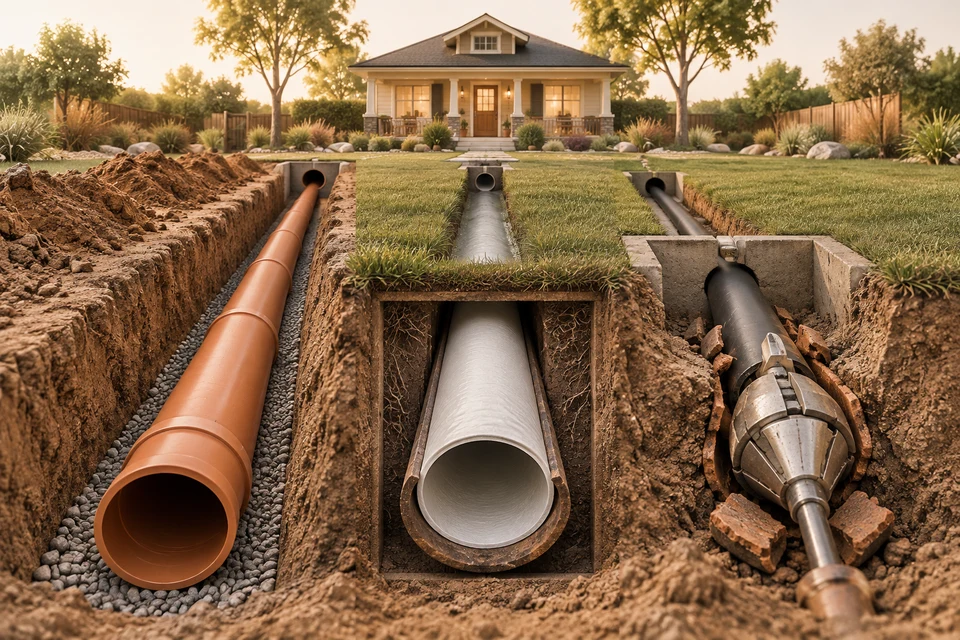
The defect decides, not the method. Traditional open-cut replacement digs a trench, removes the old pipe and can fix grade, alignment and collapses. Trenchless lining or bursting works from small access points and suits a pipe that still holds its shape and grade. A sag or a collapsed section needs digging at least there, so many Alberta jobs combine a short excavation with trenchless work on the rest.
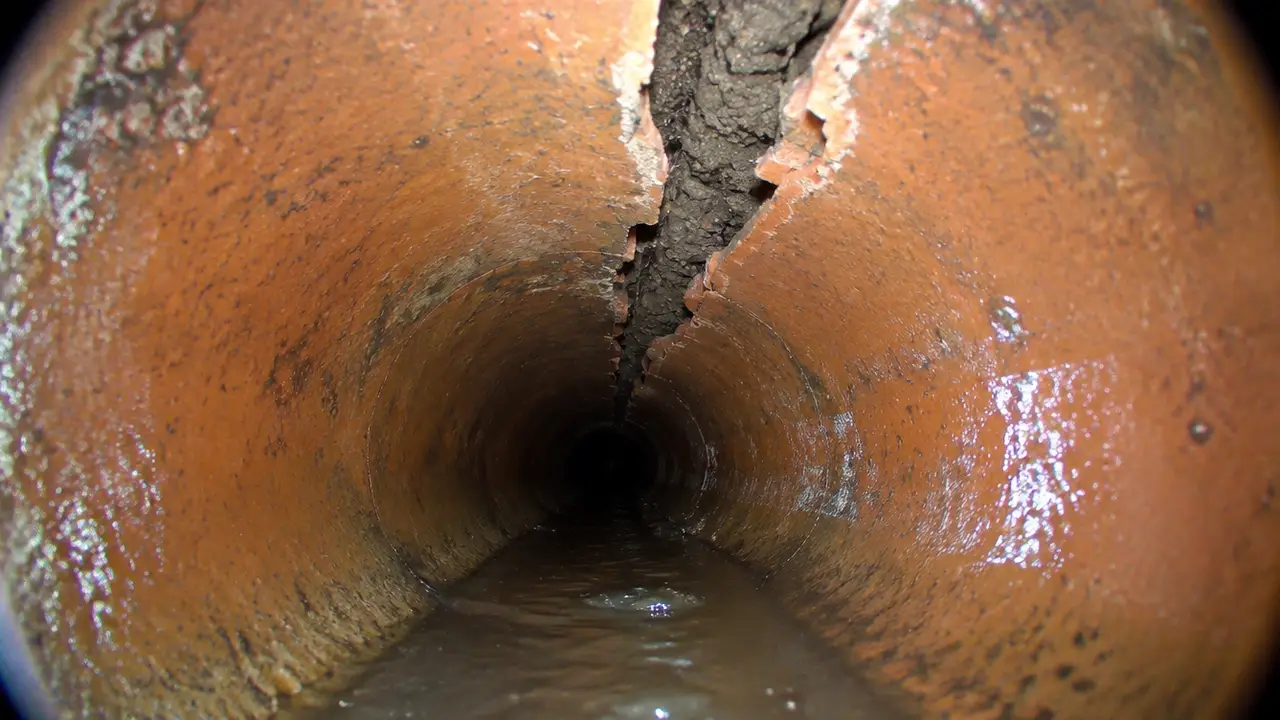
- Start from the camera evidence: grade problems and collapses point to excavation, while cracks, roots and open joints on a pipe that holds its shape can suit lining or bursting.
- EPCOR states that a sag can only be fixed by removing the affected pipe and regrading the trench bottom, and that replacing a collapsed portion is the only viable option.
- Compare complete written scopes, including access pits, reinstated connections, restoration and post-work video, not method labels or per-metre prices alone.
- Frost, clay soils and seasonal restoration limits affect both methods in Alberta and belong in the schedule and the price.
01 /What is the difference between traditional and trenchless replacement?
Traditional replacement, also called open-cut or excavation, exposes the sewer along its length in a trench, takes the old pipe out and lays new pipe on prepared bedding at a set grade before backfilling. Trenchless replacement leaves the ground over most of the line undisturbed and works through the existing pipe from a cleanout or a small number of pits.
Two trenchless families matter for a house sewer. Cured-in-place pipe (CIPP) lining pulls or inverts a resin-saturated tube into the old pipe and cures it into a new pipe inside the old one. Pipe bursting pulls a cone-shaped head through the old pipe, breaking it outward, while a new pipe, usually fused HDPE, follows in the same pass. Both follow the old route; neither can straighten a belly on its own.
For the national method theory behind each technique, SewerReplacement.ca covers the methods in depth. This page stays with the Alberta decision.
02 /Traditional and trenchless compared side by side
The last row is where comparisons usually go wrong. A trenchless quote that leaves out two pits under interlocking pavers, or an open-cut quote that says "restore to rough grade" when you have a finished yard, is not comparable to its competitor. Put both on the same checklist before comparing totals.
03 /Which defects point to which method?
The defect decides the method, and the method has to fix the worst defect on the run, not the average one. EPCOR's guidance for Edmonton homeowners, as checked September 2026, states it plainly: sags can only be fixed by removing the affected pipe and regrading the trench bottom, small cracks may be tolerated if they are not wide enough to let backfill into the pipe, and replacing a collapsed portion is the only viable option.
| Worst finding | Points toward | Why |
|---|---|---|
| Collapse or missing pipe | Excavate and replace at least that section | Nothing can be lined, and bursting needs a path |
| Sag or belly holding water | Dig and regrade at least the sag | Lining copies the belly; bursting follows it |
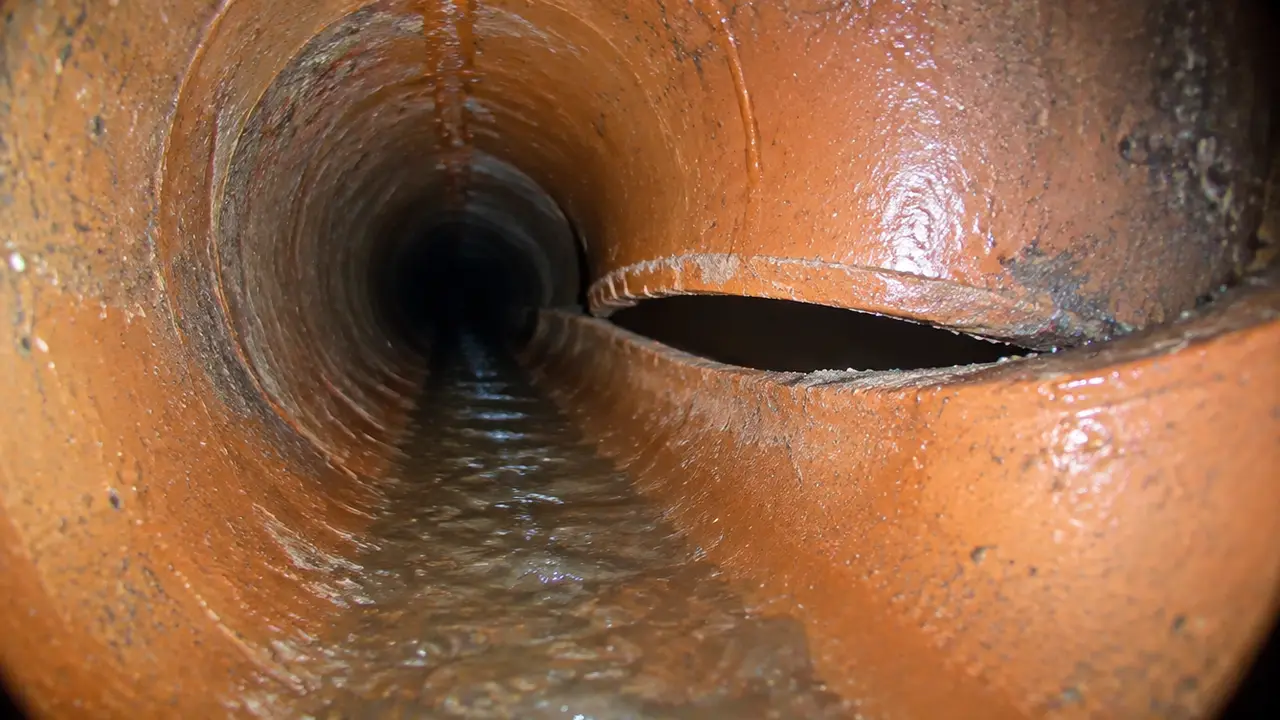
| Offset joint | Lining if the liner can pass; otherwise dig | A large offset can block the liner or head |
| Fractures and open joints, shape intact | Full-length lining or bursting review | The host still holds shape and grade |
| Roots at a few joints | Clear, then sectional liners or monitor | Liners seal the joint the roots used |
| Small hairline cracks only | Clean, record and monitor | May be tolerated if no soil is entering |
The Replacement Readiness Check applies this logic to your camera findings and returns the direction the evidence points, without prices.
04 /When is open-cut replacement the right call?
- The line has collapsed, or a section is missing or crushed.
- The grade is wrong: a sag holds water, or the pipe runs too flat to carry solids.
- The pipe needs relocating, for example around a new addition or away from a foundation.
- The connection at the main or at the house needs rebuilding, not just reinstating.
- The yard is being dug anyway for landscaping, a water service or foundation work.
- The existing material or the offsets make lining or bursting impractical.
Open cut is also the method that gives you the most to inspect: the pipe, bedding and connections are in plain view before the trench is covered. The open-cut replacement page walks through that process.
05 /When does trenchless work fit?
- The pipe still holds its shape and grade, with cracks, open joints or roots rather than collapses or bellies.
- A driveway, garage slab, deck or mature tree sits over the line.
- Access for a liner or bursting pits is practical at both ends.
- Branch connections can be reinstated or reconnected, and the contractor explains how.
- The selected system is supported by the camera evidence and the written scope.
Lining keeps the old pipe as a host and slightly reduces the inside diameter; bursting destroys the old pipe and can keep or increase the size. The trenchless lining eligibility page covers what makes a pipe a candidate.
06 /What do the methods cost in Alberta?
Typical quoted ranges for a 15–25 m residential run are below. The totals move most with depth, hard surfaces over the line, the number of access pits and the city-side connection.
| Item | Typical quoted range |
|---|---|
| Open-cut replacement, soft landscaping, under 2 m | $12,000–$25,000 ($600–$1,000/m) |
| Open-cut replacement, 2.5–4 m deep or hard surfaces | $22,000–$50,000+ ($1,000–$2,000/m) |
| Full-length CIPP lining | $9,000–$28,000 ($500–$1,200/m plus setup) |
| Pipe bursting | $10,000–$30,000 ($550–$1,300/m plus pits; each pit $1,500–$6,000) |
| Excavated spot repair | $3,500–$16,000 |
| Sectional (point) liner | $2,500–$6,500 first section; $1,500–$3,500 each extra, same visit |
| Mobilisation and utility locates | $500–$2,000 |
| Permits and inspections | $150–$1,000+ |
| Municipal connection or tie-in | $0 to $15,000+ |
| Post-work camera video | $0–$400 |
The pricing page breaks these down by line item and explains what drives each one.
07 /What Alberta conditions change the choice?
- Frost. Frozen ground is slow and costly to dig; winter excavation usually needs frost removal or ground thawing before the trench can open. Trenchless work still needs pits, and the contractor should explain how cure or fusion is handled in the cold.
- Clay soils. Much of Alberta sits on clay that is heavy to excavate, holds water, and shrinks and swells with moisture. That affects trench stability, compaction of backfill, and how much settlement a finished trench shows.
- Depth and trench safety. Alberta's OHS Code requires protection for workers in excavations deeper than 1.5 m, by cutting back walls, a temporary protective structure, or both. Cut-back walls make the dig wider at the top, which raises restoration.
- Seasonal restoration. Sod, concrete and asphalt are hard to place properly in deep winter, so a winter open cut may leave final restoration until spring. Get that written into the scope.
- Mature trees. Boulevard and backyard trees in older Calgary and Edmonton neighbourhoods can sit right over the line; a trench cuts roots, while pits can often be placed clear of the root zone.
08 /A worked Alberta decision example
This is an illustrative example, not a real job. An Edmonton bungalow has an 18 m sewer from the basement cleanout to the property line. A recorded camera run with a locate finds roots at three joints under the driveway between 3 m and 9 m, a sag holding water from 11 m to 14 m under the front lawn, and a minor offset at 17 m, close to the property line.
- Find the worst defect
The sag. EPCOR says a sag can only be fixed by removing the pipe and regrading, so lining the whole run would leave the belly in place.
- Check ownership
EPCOR is responsible from the property line to the main. The offset at 17 m needs its position measured against the property line before anyone prices it.
- Build the options
Option A: open-cut the full 18 m, including the driveway. Option B: excavate and regrade the 3 m sag in the lawn, then line the driveway section from the cleanout, reinstating the joints the roots used.
- Price both on one checklist
Option A falls in the hard-surface open-cut range because of the driveway. Option B combines a moderate-depth excavated repair ($5,000–$9,000) with lining of roughly 10 m, plus locates, permit and post-work video.
- Decide on the full scope
Compare restoration, the permit holder, schedule and post-work video, then choose. Option B keeps the driveway; Option A gives a single new pipe end to end.
Your own findings will differ. Run the Alberta City Sewer Rules Finder for your municipality's ownership split and permit body before pricing.
09 /Questions to ask every contractor
- Is my pipe a candidate for trenchless work, and which finding on my video decides that?
- How will you correct any sag or collapse, and where exactly will you dig?
- What is the total cost, including access pits, restoration and the city-side connection if needed?
- How long will each method take, and what could delay it in winter?
- Which permit is needed, and who applies for it?
- Will I get a recorded camera run after the work, and a sketch of what was installed?
- What warranty applies to each method, in writing?
Alberta's plumbing codes page notes that contractors may require a Restricted Certificate of Competency "R" for sewer and water services, so ask which certification the crew holds. When you have two written scopes, send them with your video through the request form.
FAQQuestions people ask
Can an Edmonton sewer with a sag be fixed with a trenchless liner?
Not the sag itself. EPCOR states that sags can only be fixed by removing the affected pipe and regrading the trench bottom. A liner can still suit the rest of the run once the sag has been dug out and regraded.
Is trenchless sewer replacement cheaper than digging in Calgary?
Sometimes, not always. Trenchless tends to win when a driveway, garage or mature tree sits over the line; open cut can be cheaper on a shallow run under lawn. Compare full written scopes, including restoration.
Can open-cut sewer replacement be done in an Alberta winter?
Often yes, with frost removal or ground thawing first, which adds time and cost. Final restoration such as sod or concrete may have to wait for spring, so get that timing written into the scope.
Does pipe bursting work on the clay sewer pipes common in older Alberta neighbourhoods?
Brittle pipe such as vitrified clay is generally a good bursting host, provided the head can be pulled through. Nearby utilities, depth and the soil still need review before the method is chosen.
Who applies for the permit when a contractor replaces a sewer line in Lethbridge?
The City of Lethbridge says permits are obtained by a licensed plumbing contractor with a valid City business licence, or by a resident homeowner who can show the competency to do the work to code, as checked September 2026.
NETWORKGo deeper across the HAUSE Sewer network
Permanent fixes for roots in sewer lines
Permanent fixes for roots in sewer lines: CIPP lining, sectional point repairs, pipe bursting and open-cut replacement compared by cost, lifespan and fit.
SewerQuotes.comSewer line replacement cost: open-cut vs trenchless, line by line
Sewer line replacement cost in Canada for 2026: open-cut, CIPP lining and pipe bursting planning ranges in CAD, per-metre math, line items and what moves price.
SewerJetting.caHydro jetting tree roots: what it clears, and why the roots come back
Hydro jetting tree roots in a sewer line: root nozzles vs cable cutters, why roots regrow at the same joints, clay pipe care, and when to line instead.