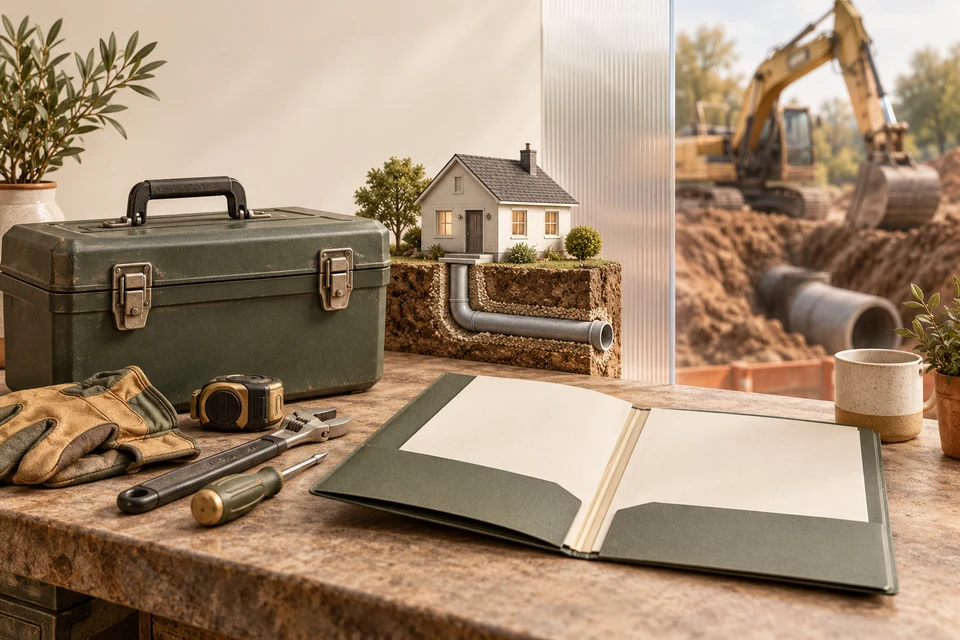
Sometimes, for part of the job. Calgary, Edmonton, Lethbridge and Airdrie all issue homeowner plumbing permits, but each attaches conditions: you must own the home, live in it and do the work yourself, and Lethbridge also wants proof of competency. The connection on the city side is a separate approval, the trench is the most dangerous part, and your private line is not marked by locates.
- A homeowner plumbing permit is a city-by-city privilege with conditions, not a province-wide right; rentals are excluded in Calgary and Edmonton describes owner-occupied single detached houses.
- Work must meet the National Plumbing Code of Canada 2020, in force in Alberta since April 1, 2023, and pass the city's rough-in and final inspections.
- The tie-in to the municipal system is governed separately: Calgary uses indemnified contractors, Okotoks needs written CAO approval and Red Deer needs Engineering Services approval.
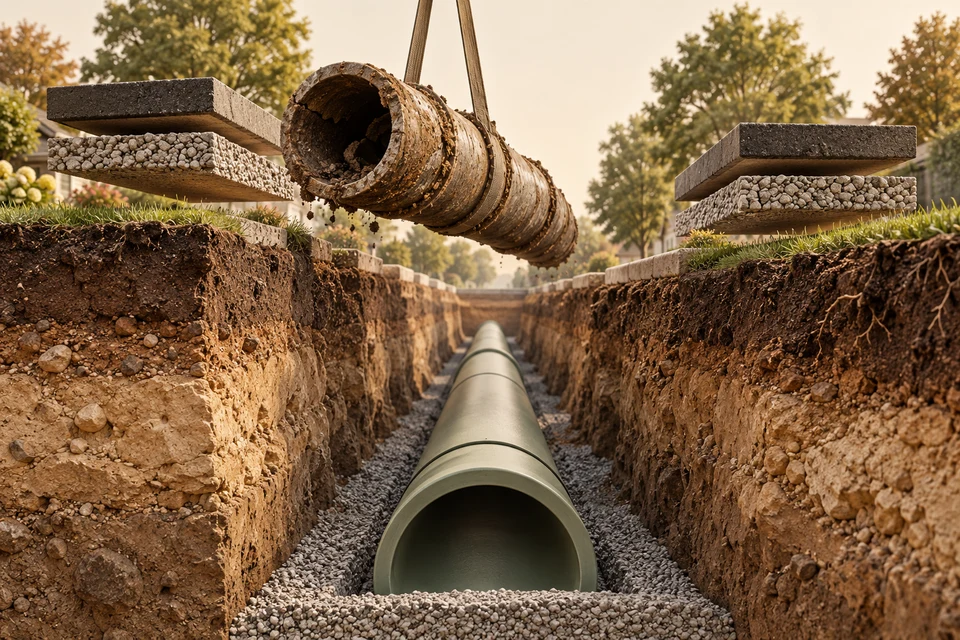
- Any trench deeper than 1.5 m can collapse without warning; Alberta's OHS Code requires cut-back walls or a protective structure for workers, and the physics are the same for an owner.
- Realistic homeowner jobs are evidence gathering, access prep, supervision and restoration; the excavation, pipe laying and connection usually belong to a qualified crew.
01 /Is a homeowner allowed to replace a sewer line in Alberta?
Yes, in several Alberta cities a homeowner can hold the plumbing permit for sewer work on their own property, but only under that city's conditions and only for the private portion. Each municipality decides who may apply, and the answer changes once the work reaches the property line or the main.
Whoever does the work, the standard is the same. The Government of Alberta states that the National Plumbing Code of Canada 2020 has been in force in the province since April 1, 2023. A homeowner's trench, bedding, slope, joints and cleanout are inspected against that code exactly as a contractor's would be. The province also notes that contractors may need a Restricted Certificate of Competency "R" to work on sewer and water services in Alberta, which tells you how specialised the province considers this work.
The real questions are which city you are in, whether you meet its conditions, which section is failing and which tasks you can do safely. The Alberta City Sewer Rules Finder answers the first two for the eight municipalities this site covers.
02 /What are the homeowner permit rules in each Alberta city?
The table below summarises what each municipality's own pages say, as checked September 2026. Where a city's page is silent, the row says confirm.
| Municipality | Can the homeowner hold the permit? | Conditions and notes |
|---|---|---|
| Calgary | Yes, for plumbing (all types except gas) | Own the home, live in it (not a rental) and do the work yourself. A permit is required when water and sewer lines in or around the home are replaced. Two inspections: rough-in and final. |
| Edmonton | Yes, in a single detached house you own and occupy | Do the work yourself. Drains and backwater valves are listed as permit work. Contractors must be licensed with the City. |
| Lethbridge | Yes, if you can demonstrate competency | A resident homeowner who can show sufficient competency to do the work to code, or a licensed plumbing contractor with a City business licence. |
| Airdrie | Yes, as a homeowner-led trade permit | From January 2026 each homeowner-led plumbing, electrical or gas permit carries a $100 fee; hired contractors are exempt from it. Ask Building Inspections (403.948.8832) what your scope needs. |
| Red Deer | Confirm | Removing or installing a sanitary, storm or water service on a lot needs Engineering Services approval under Utility Bylaw 3606/2018. Ask Engineering Services (403-342-8158) whether a homeowner may apply. |
| Okotoks | Confirm | Making, altering or removing a connection to the wastewater system needs the CAO's written approval (Bylaw 25-21, s.5.1), at the applicant's cost. |
| Medicine Hat, St. Albert | Confirm | Neither city's sewer pages set out homeowner permit rules for this work; ask the building or permit office before you plan. |
Two patterns stand out. First, rentals and multi-unit buildings fall outside the homeowner route in the cities that spell it out: Calgary excludes rentals, and Edmonton describes the owner-occupied single detached house. Second, the permit follows the person doing the work: in Calgary a hired contractor applies, and Edmonton's homeowner permit covers only work you do yourself.
03 /Does a homeowner permit let me connect to the city sewer?
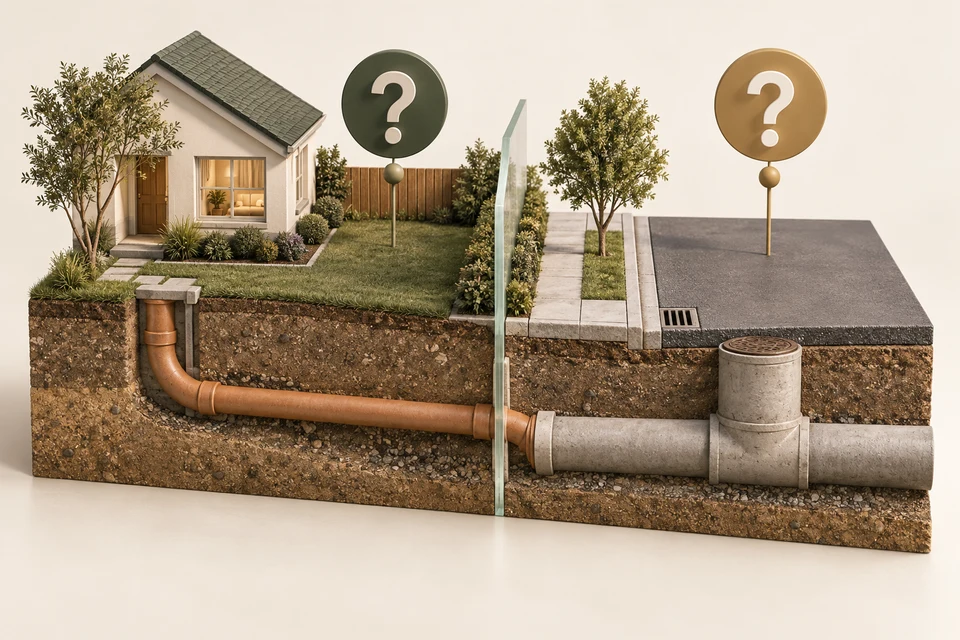
Not automatically. Most Alberta municipalities treat the connection to their system separately from the pipe on your lot, and that is where homeowner work usually stops.
- Calgary: the City's page on installing water and sewer connections says installations on private property are owned by the builder or homeowner and built by the builder's or homeowner's contractor at their expense. The City inspects connections under its Master Indemnification Agreement and publishes a list of approved indemnified contractors. The page also says it has no legal status as an official bylaw interpretation, so call 311 before assuming what you may do at the tie-in.
- Okotoks: Sanitary Sewer Bylaw 25-21 says no person may make, alter or remove a connection to the wastewater collection system without the CAO's written approval. The application is made in writing and the work is at the applicant's cost.
- Red Deer: anyone removing or installing a service on a lot applies to Engineering Services. Final signature and payment are made in person at City Hall.
- Edmonton: EPCOR is responsible for the pipe from the property line to the main. Any work that touches that portion is a conversation with EPCOR, not something a homeowner permit covers.
If your camera run shows the failure is on the house side, homeowner participation is at least possible. If it sits at or past the property line, plan on the municipality's process from the start. The responsibility guide explains how each city draws that line.
04 /Why is digging your own sewer trench so dangerous?
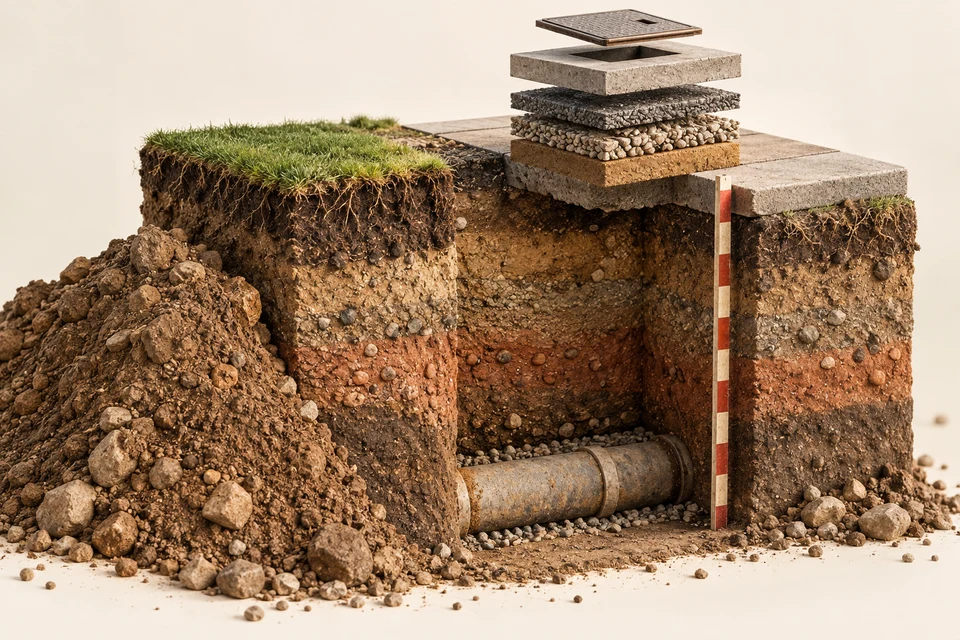
Because trench walls fail suddenly and soil is heavy enough to pin a person before help arrives. Alberta's building sewers are laid deep enough to stay below frost, so a replacement trench is frequently deeper than 1.5 m; ask for the measured depth of your line rather than assuming. A single cubic metre of wet clay weighs well over a tonne, and even a partial collapse can trap someone.
Alberta's Occupational Health and Safety Code, Part 32, sets the rules for workers. Under s.450, a worker in an excavation more than 1.5 m deep who is closer to the wall than the excavation is deep must be protected by cutting the walls back, by a temporary protective structure, or both. Section 451 sets the cut-back angles: not less than 30° from vertical in hard, compact soil and 45° in soil likely to crack or crumble, and from the bottom at 45° in soft, sandy or loose soil. Section 453 keeps spoil piles at least 1 m back from the edge.
Cut-back walls turn a narrow slot into a wide crater that rarely fits beside a foundation or fence, which is why crews usually bring a trench box or shoring. The cost factors guide works through the geometry.
05 /Will locates mark the line I want to replace?
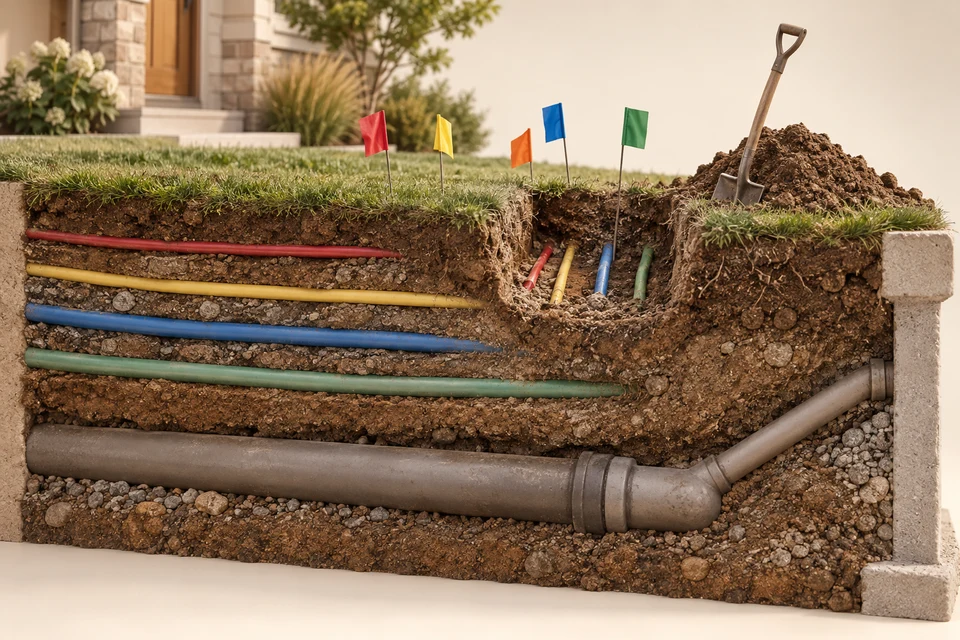
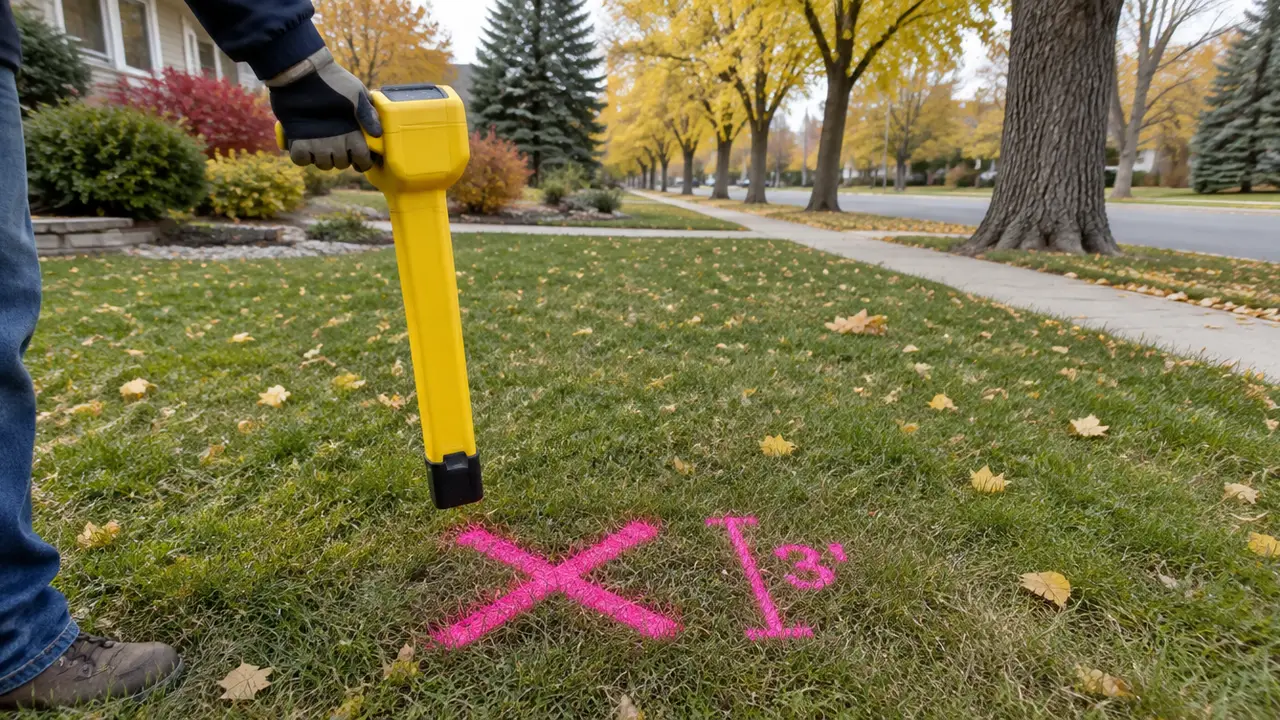
No. Utility Safety Partners' Click Before You Dig service marks registered buried facilities after a request made at least three full working days ahead, online or at 1-800-242-3447. Customer-owned lines, including water and sewer service lines, sprinklers and lines between buildings, are not registered and are not marked.
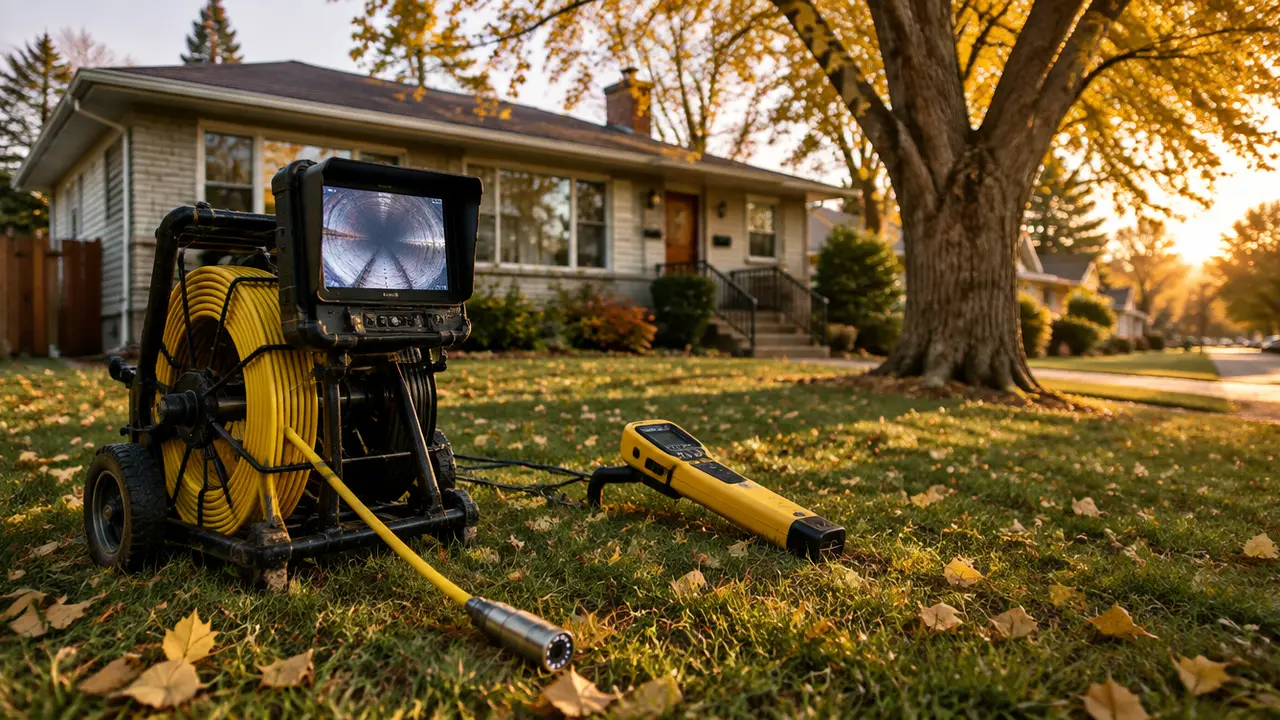
So the pipe you are replacing, and often the water service beside it, get no paint; a private locator or camera sonde finds them. The marks you do get show approximate location, not depth, and USP says to expose any line by hand within 1 m of either side of the marks (5 m for high-pressure pipelines). The full sequence is in the locates and safe digging guide.
06 /Which parts can a homeowner realistically do?
The useful homeowner contribution is usually around the dig rather than in it. The split below is a practical guide, not a legal one; your permit, your city and your comfort with risk decide the final line.
| Task | Homeowner? | Why |
|---|---|---|
| Collecting evidence: recorded camera run, distances, photos | Yes | You commission and keep it; it drives every later decision. |
| Clearing access: basement storage, cleanout, yard furniture | Yes | Saves crew hours and protects your belongings. |
| Requesting locates and hiring a private locator | Yes, or confirm who does | Agree in writing who is the excavating party. |
| Removing sod, pavers or deck boards for reuse | Often | Shallow, careful work that lowers restoration cost. |
| Machine excavation and trench protection | Rarely | Requires equipment, soil judgement and protective systems. |
| Laying pipe to grade, bedding and joints | Only with real competency | Slope and bedding errors cause the next sag or blockage. |
| Connection at or past the property line | Usually no | City-side processes, indemnified or approved contractors. |
| Backfill, final grading, topsoil and seed | Often | Once inspection is passed and the crew has compacted the fill. |
A common split: the homeowner handles evidence, access and restoration, and a contractor holds the permit and does the excavation, pipe and tie-in. That saves on labour, not risk.
07 /What inspections will the city want to see?
Expect at least a rough-in inspection with the pipe exposed and a final inspection after the work is complete. Calgary lists those two for homeowner permits and books inspections through 311 or VISTA, with next-day requests made by 2 p.m. Lethbridge describes a rough-in before piping is concealed and a final, booked at least one business day ahead through eInspections. Edmonton takes inspection requests through SelfServe or 311.
- Leave the pipe exposed
Do not backfill before the rough-in inspection. Covering first can mean digging it up again.
- Record a camera run after the work
It shows the new pipe is continuous and on grade, and it belongs in your house file.
- Book the final
Close the permit so the work is on record for insurance and resale.
08 /How should I decide?
Run the Replacement Readiness Check to see whether your camera findings support replacement at all, then check your city's rules. If you want to do part of the work, ask contractors to price the job with and without your share. Compare those numbers with the ranges on the pricing page, and when you are ready, send your details through the request form.
FAQQuestions people ask
Can a tenant or landlord in Calgary use a homeowner plumbing permit to replace a rental's sewer line?
No. The City's homeowner permit requires that you own the home, live in it and do the work yourself, and it excludes rentals. A tenant does not own the property, and a landlord does not live in the rental, so the work needs a contractor who applies for the permit.
Does Edmonton let the owner of a duplex take out a homeowner plumbing permit for sewer work?
The City's residential plumbing permit page describes the homeowner permit for someone who owns and occupies a single detached house and does the work personally. A duplex, suite or other multi-unit building falls outside that description, so confirm with the City before planning to hold the permit yourself.
What does Lethbridge mean by demonstrating competency for a homeowner plumbing permit?
The City says a resident homeowner may obtain a permit if they can demonstrate sufficient competency to do the work to code. Its page does not describe how that is assessed, so ask the permit office (311 or 403-320-3111) what they will want to see before you apply.
Is Airdrie's homeowner trade permit fee charged if I hire a plumber instead?
No. From January 2026 Airdrie charges $100 for each homeowner-led electrical, plumbing or gas trade permit, and hired contractors are exempt from that fee. The contractor's own permit costs still apply; ask Building Inspections what your scope requires.
Do I need Okotoks approval to reconnect my own new sewer pipe to the Town main?
Yes. Bylaw 25-21 says no person may make, alter or remove a connection to the wastewater collection system without the CAO's written approval, the application must be in writing, and the work is at the applicant's cost. Apply before any digging near the connection.
Can I dig my own sewer trench deeper than 1.5 m in Alberta if I am the only one in it?
You should not. The OHS Code requires protection for workers in excavations over 1.5 m deep, by cutting walls back, a protective structure or both, because walls collapse without warning. Being the owner changes who the law names, not how the soil behaves, and working alone removes anyone who could call for help.
NETWORKGo deeper across the HAUSE Sewer network
Sewer camera inspection certification and training: what it proves
Sewer camera inspection certification and training in Canada: NASSCO PACP and LACP, home inspector courses, safety training and what a credential proves.
SewerQuotes.comSewer line replacement cost by city: why local quotes differ
Sewer line replacement cost by city: why Calgary, Edmonton, Regina and other Canadian markets quote differently, GST/HST by province, and local drivers.
PipeCleaning.caWhat drain cleaning is, and what a pipe cleaning service actually does
What is drain cleaning? What a pipe cleaning service does on a visit, whether it counts as plumbing, who can do it, and how to choose a service near you.