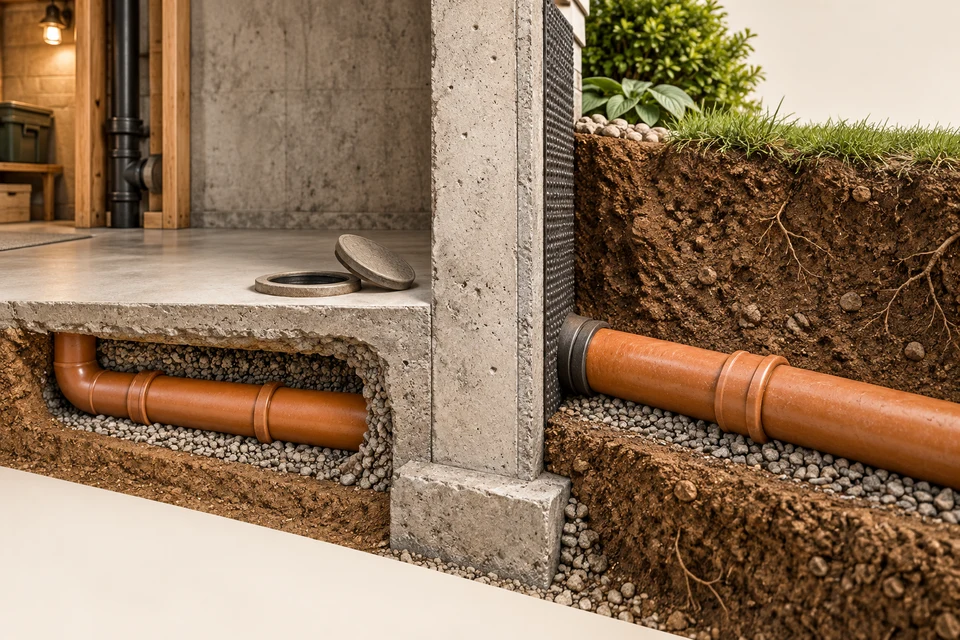
Interior sewer replacement means cutting the basement slab to replace the building drain inside the foundation; exterior replacement means excavating, bursting or lining the building sewer outside it. The camera distance from the cleanout, compared with where the foundation wall sits, tells you which section failed. Each has different disruption, permits and costs, and many older Alberta homes need both.
- The building drain runs under the basement floor; the building sewer runs from the foundation wall toward the property line and the main.
- Measure the camera distance from the cleanout to the inside face of the foundation wall; defects closer than that are under the slab.
- Interior work means slab cutting, dust control and often a finished basement opened up; exterior work means excavation or trenchless methods outdoors.
- Calgary requires a plumbing permit when sewer lines in or around the home are replaced, and Edmonton lists drains as permit work.
- An under-slab spot repair has a typical quoted range of $4,000–$12,000; the whole run and restoration decide the real total.
01 /What is the difference between interior and exterior sewer replacement?
Interior replacement is work on the pipe inside the house, under the basement slab; exterior replacement is work on the pipe outside the foundation. Plumbing codes usually call the first the building drain and the second the building sewer. The exact point where one becomes the other is a code definition your plumber and inspector will apply, so use their terms on the permit.
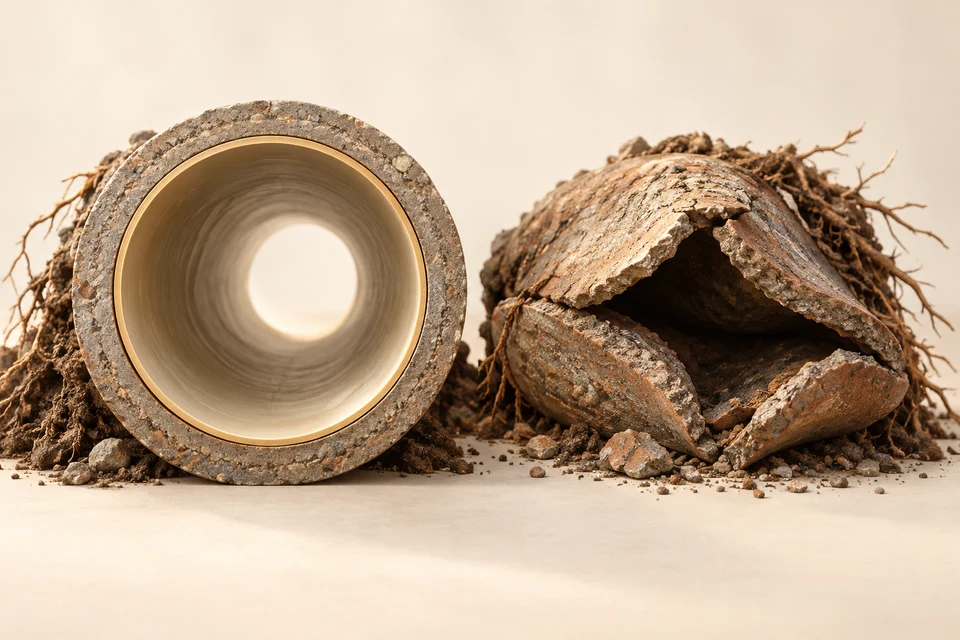
The two sections often differ in material and age. In older Alberta houses the building drain may be cast iron under the floor while the building sewer is clay or another material outside, and either may have been partly replaced in a past renovation. That mix is why a single camera run from the cleanout to the main is the starting point for any decision.
02 /How can I tell which section of my sewer failed?
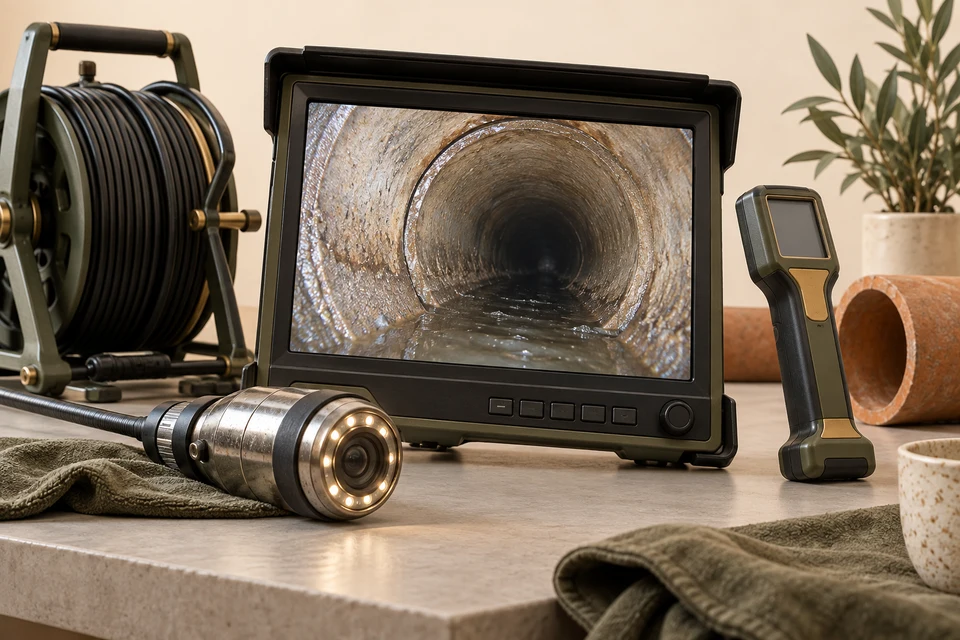
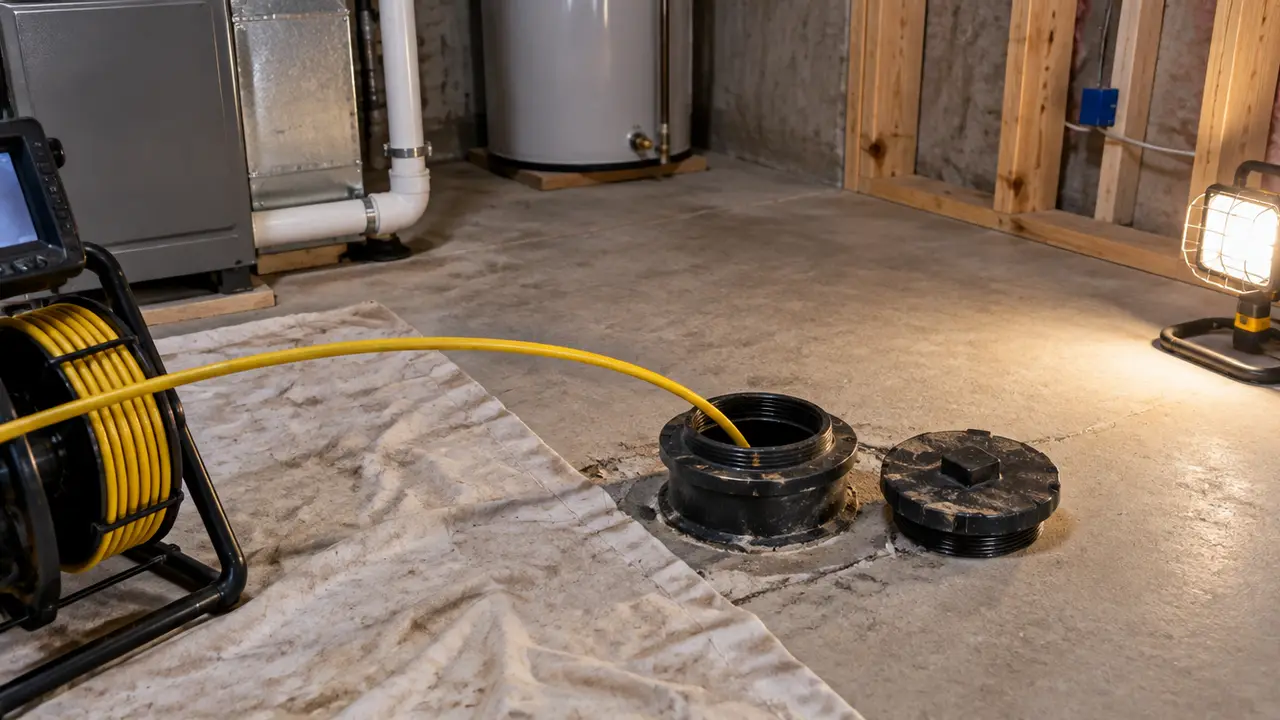
Compare the defect distances on the camera report with the distance from the cleanout to the foundation wall. Every distance on a sewer video is measured from where the camera went in. If you know how far that cleanout sits from the inside face of the foundation wall, anything closer is under the slab and anything further is outside.
- Identify the entry point
The report should name the cleanout or access used; a floor cleanout, a stack cleanout and a toilet flange give different starting points.
- Measure to the wall
Tape the horizontal distance from the cleanout to the inside face of the foundation wall along the pipe's likely route. Add the wall thickness to find where the pipe leaves the house.
- Read the defect distances
List each significant defect with its distance and clock position from the report.
- Classify each defect
Closer than the wall: building drain. Beyond the wall: building sewer. Within about a metre of the wall: treat as uncertain until located.
- Confirm with a sonde
A surface locate over the camera head settles uncertain cases and records depth.
| Defect on the report | Distance from cleanout | Likely location |
|---|---|---|
| Offset joint | 1.1 m | Under the slab (building drain) |
| Crack at a joint | 2.6 m | At the wall: locate before deciding |
| Sag holding water | 7–10 m | Outside, under the yard (building sewer) |
| Root intrusion | 15 m | Outside, likely near the property line: check ownership |
The Replacement Readiness Check asks where the worst finding sits and how far it extends, and it returns the direction the evidence points. The camera evidence page explains what a report should record.
03 /What does interior sewer replacement involve?
It means opening the basement floor along the pipe route, replacing the building drain and restoring the slab. The crew saws the concrete in a strip, breaks it out, digs down to the pipe by hand or with small equipment, and replaces the damaged section or the whole run. The new pipe is bedded, inspected before cover, backfilled and compacted, and the slab is re-poured.
- Finished basements: flooring, walls, cabinets or a bathroom over the route may have to come out first. Ask for that to be scoped and priced, not discovered.
- Dust and air quality: sawing concrete releases fine dust that can contain crystalline silica. Wet cutting, dust extraction, sealed-off work areas and ventilation should be part of the plan.
- Plumbing out of service: while the drain is open, the fixtures that feed it cannot be used. Plan where the household will shower and use a toilet.
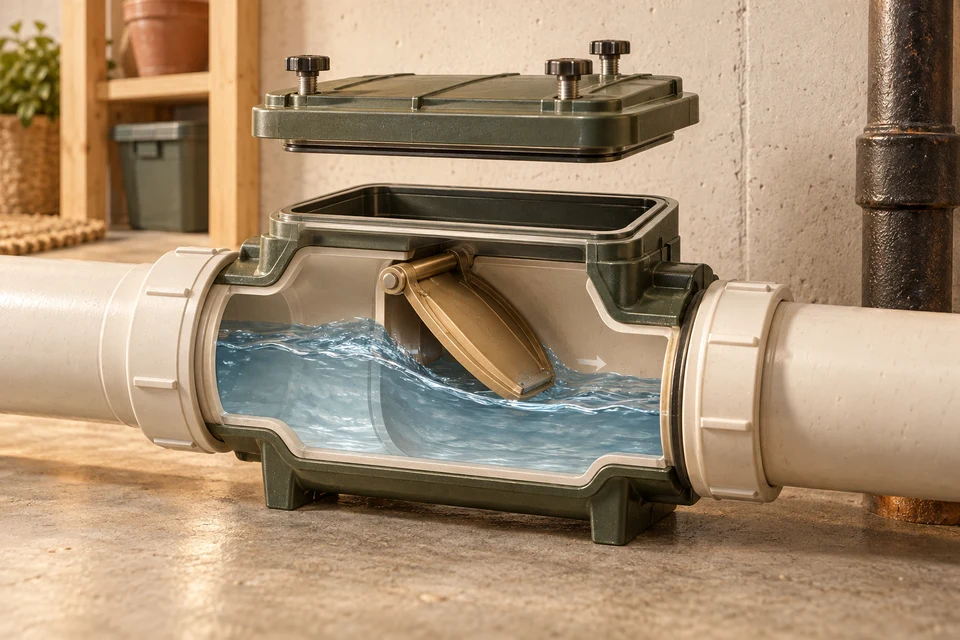
- Traps and the backwater valve area: the floor drain trap and any existing backwater valve sit on or near the building drain. If they are old, this is the moment to replace them.
- Access for EPCOR and other city crews: EPCOR says its crews cannot safely work in spaces under 5 ft high and 4 ft by 4 ft wide at the cleanout, so a cramped cleanout may be worth relocating while the floor is open.
Some interior sections can be lined rather than dug, if the pipe is continuous enough and the bends allow it. The trenchless lining page covers eligibility.
04 /What does exterior sewer replacement involve?
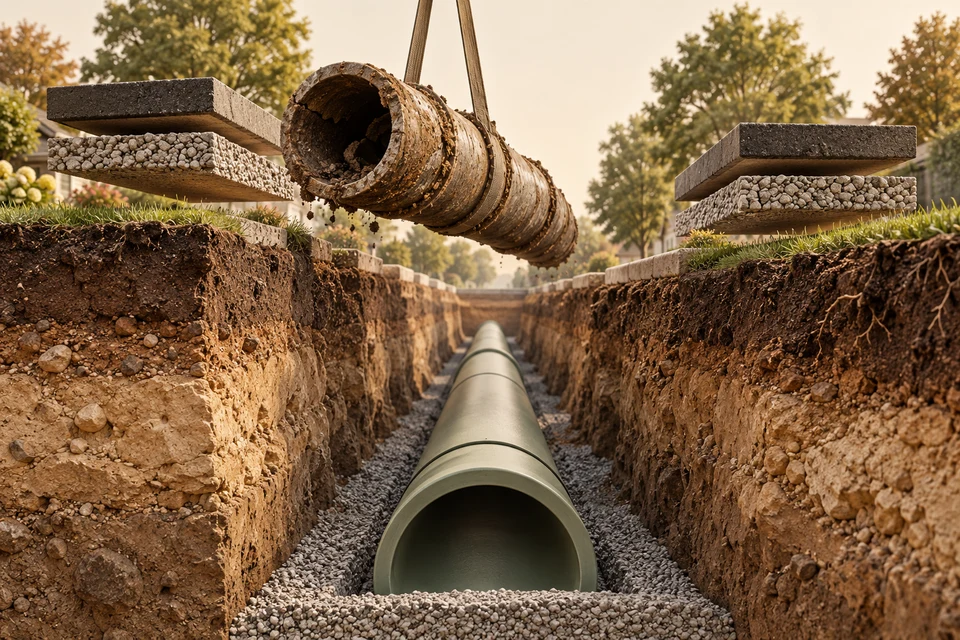
Exterior replacement renews the building sewer between the foundation and the property line, and sometimes beyond it with the municipality's approval. The main choices are open-cut excavation, pipe bursting and full-length lining, and depth and what sits on top usually decide between them.
Outdoors, Alberta's conditions take over: locates through Utility Safety Partners, trench protection under the OHS Code past 1.5 m, frost in winter and restoration of whatever the trench crosses. The traditional replacement page covers open cut in detail, and the locates guide covers the safety steps before digging.
05 /Should I replace both sections at once?
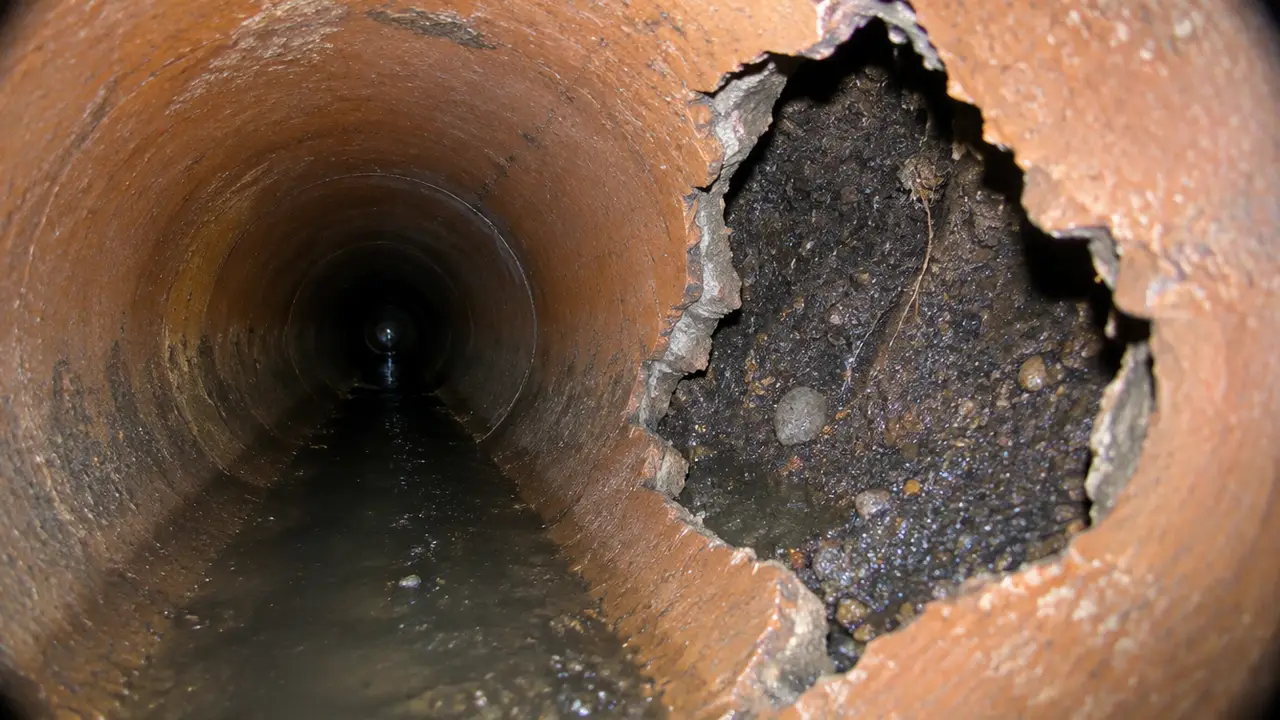
If both are failing, usually yes. Doing the interior and exterior together means one set of mobilisation costs, one permit process where the city allows it, a continuous new pipe from the stack to the property line, and a single post-work video that shows the whole line. The joint at the foundation wall, a common weak spot, is replaced rather than left as a transition between new and old.
If only one section is failing, the case depends on the other section's condition and age. A good building sewer under a finished basement is not a reason to break the floor; a cracked cast iron drain under an unfinished one might be worth replacing while the crew is on site. It is also the cheapest moment to add a cleanout or a backwater valve, as the backwater valve guide explains.
06 /Do interior and exterior sewer work need permits in Alberta?
In the cities that spell it out, yes. As checked September 2026, Calgary requires a plumbing permit when water and sewer lines in or around the home are replaced, with rough-in and final inspections. Edmonton requires a plumbing permit to install or alter plumbing including drains and backwater valves, with an exemption only for like-for-like maintenance in the same location; ask the City whether your work qualifies. Lethbridge requires a permit to replace sewer connections.
Exterior work that reaches the city connection brings in the municipality's own process, such as Red Deer's Engineering Services approval or Okotoks' written CAO approval. The Alberta City Sewer Rules Finder lists each one.
07 /How much do interior and exterior sewer repairs cost?
Excavated repairs vary most with depth and surface. The ranges below are typical quoted ranges from this site's pricing page.
| Work | Typical quoted range |
|---|---|
| Spot repair under a basement slab | $4,000–$12,000 |
| Spot repair, shallow lawn | $3,500–$6,500 |
| Spot repair, moderate depth | $5,000–$9,000 |
| Spot repair, deep or under a hard surface | $7,000–$16,000 |
| Open-cut replacement, 15–25 m | $12,000–$35,000+ |
| Cleanout installation | $600–$2,500 |
| Backwater valve installation | $1,800–$4,500 |
When you know which section failed, send the report and your measurements through the request form.
FAQQuestions people ask
How do I tell from a camera report whether my Calgary sewer break is under the basement floor or outside?
Measure from the cleanout the camera used to the inside face of the foundation wall. Defects at shorter distances are under the slab; longer distances are outside. Anything within about a metre of the wall should be confirmed with a sonde locate.
Does an Edmonton plumbing permit cover replacing the drain under my basement slab?
The City lists drains as plumbing that needs a permit to install or alter, with an exemption for like-for-like maintenance in the same location. Plan on a permit unless the City confirms your specific work is exempt.
Can EPCOR crews reach my Edmonton cleanout if it sits in a tight crawlspace?
Possibly not. EPCOR says its crews cannot safely work in spaces under 5 ft high and 4 ft by 4 ft wide at the cleanout. If the floor is open for interior work, relocating or improving the cleanout access is worth pricing.
Is it cheaper to fix one broken section under an Alberta basement slab or replace the whole building drain?
A single under-slab spot repair has a typical quoted range of $4,000–$12,000. If the camera shows several defects along an old cast iron drain, replacing the run once may cost less than repeated spot repairs; compare written quotes for both scopes.
Does St. Albert help with sewer cleaning if my home only has a small interior cleanout?
St. Albert's sewer issues page says City cleaning or camera help needs a 4-inch cleanout inside the home, and smaller cleanouts are not normally eligible. Interior sewer work is a good time to install one; confirm with Public Works.
Should a Lethbridge homeowner book the rough-in inspection before re-pouring the basement slab?
Yes. Lethbridge describes a rough-in inspection before piping is concealed and a final inspection, booked at least one business day ahead through eInspections. Pouring concrete first could mean breaking it out again.
NETWORKGo deeper across the HAUSE Sewer network
Common sewer defects, explained by what they do to the pipe
Common sewer defects explained: roots, cracks, fractures, offset and separated joints, sags, deposits, holes and collapse, with severity and usual next steps.
SewerJetting.caJetting before trenchless lining: why the prep cleaning decides the result
Why jetting before trenchless lining matters: root removal, descaling cast iron, cleaning to a bare wall, camera checks and what rushed CIPP prep causes.
SewerCleaners.caWhere is my backwater valve? How to find it, recognize it and open the cover
Where is the backwater valve in a house? How to find it, what it looks like, what access box, sleeve and cover mean, how to open it safely, and valve alarms.