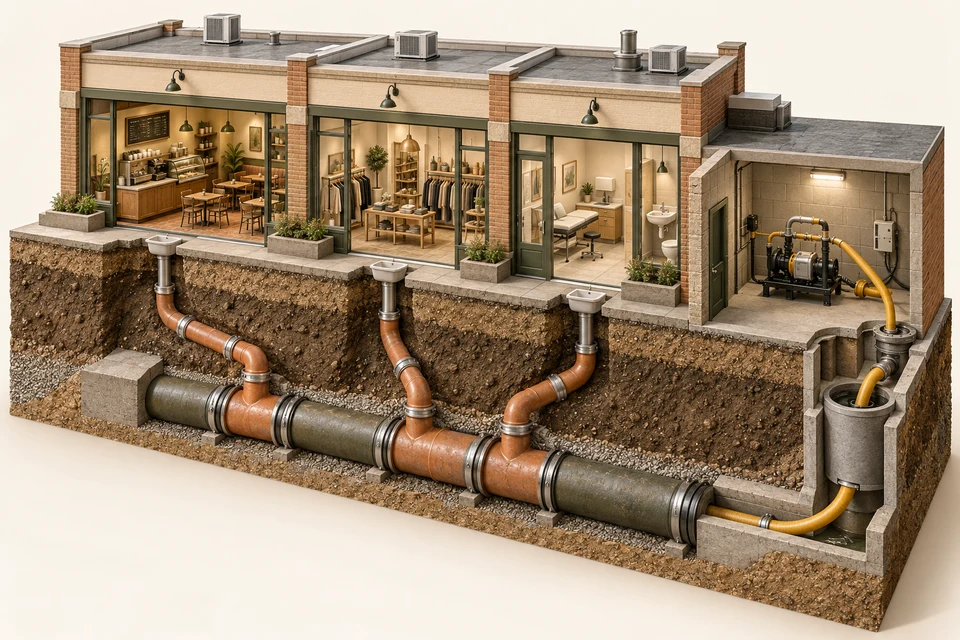
A commercial sewer replacement review works out who owns and decides on the line, what the camera and maintenance records show, and how the work can happen without closing the building. Condos, rentals, restaurants and offices add shared services, tenant notice, water-use windows, phasing, bypass pumping and stricter permit drawings. Scopes are priced from drawings and camera records; residential ranges do not transfer.
- Name the decision-maker first: an owner, a condominium board, a property manager or a landlord, and confirm what the bylaws or lease let each one approve.
- Map every unit, tenant and fixture a shared service carries before choosing a method, because a shutdown affects all of them.
- Lethbridge requires drawings with the plumbing permit application for complex or commercial systems (as checked September 2026).
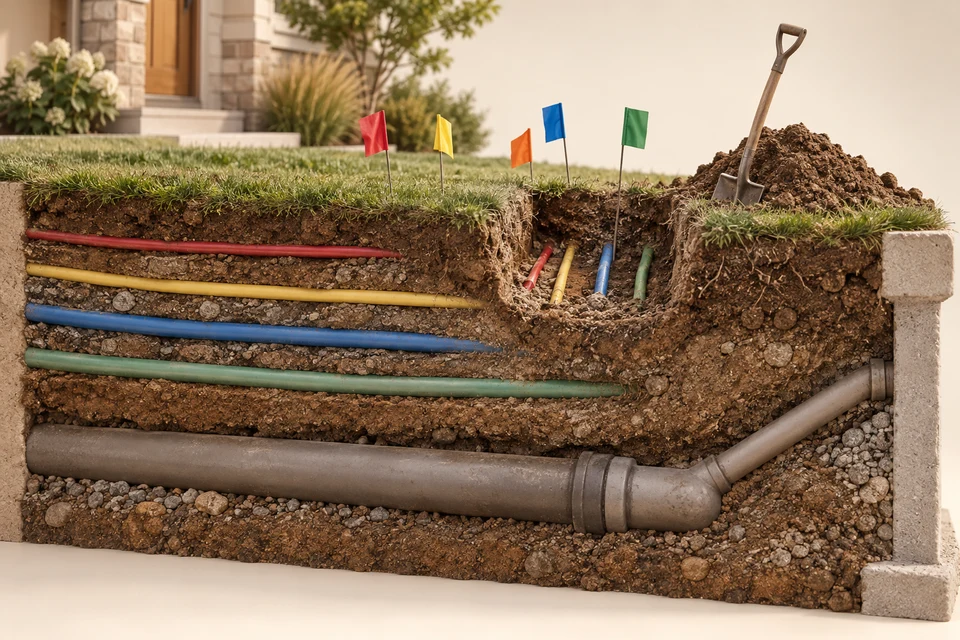
- Alberta OHS Part 32 applies to every trench on the job: locates before digging and wall protection past 1.5 m.
- No response time or downtime can be promised before the site and operations are known.
01 /What does a commercial sewer replacement review cover?
It covers six areas, each of which can change the method or the schedule. They are the review points this page has always used, expanded for Alberta properties.
| Review area | What to document | Why it matters |
|---|---|---|
| Operational constraints | Critical fixtures, occupancy, business hours, alternate facilities, acceptable shutdown windows | Sets how long the line can be out of service |
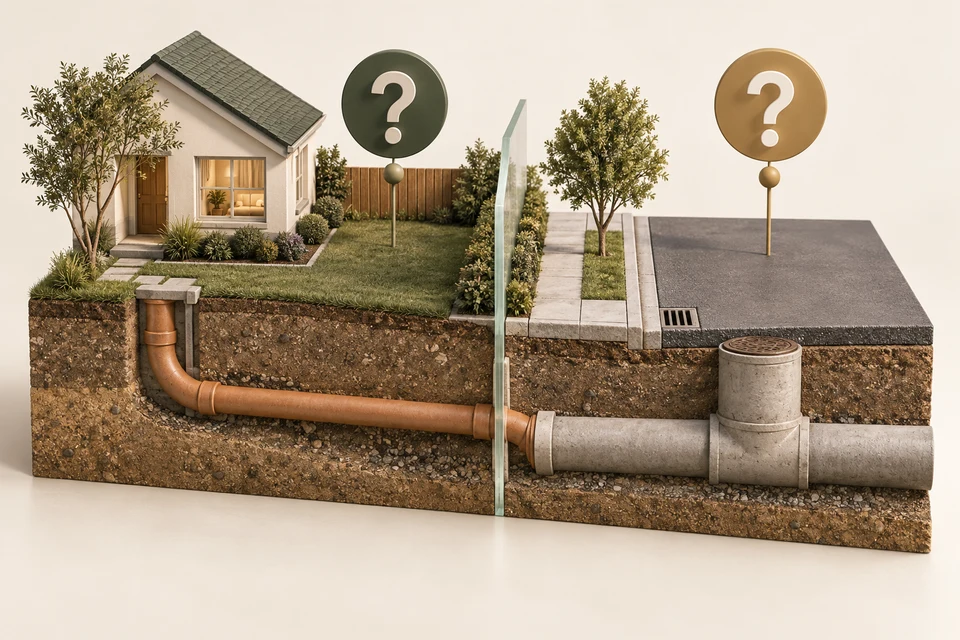
| System mapping | Affected run, branches, cleanouts, shared infrastructure, ownership boundaries, municipal connection | Shows who is affected and who pays for which part |
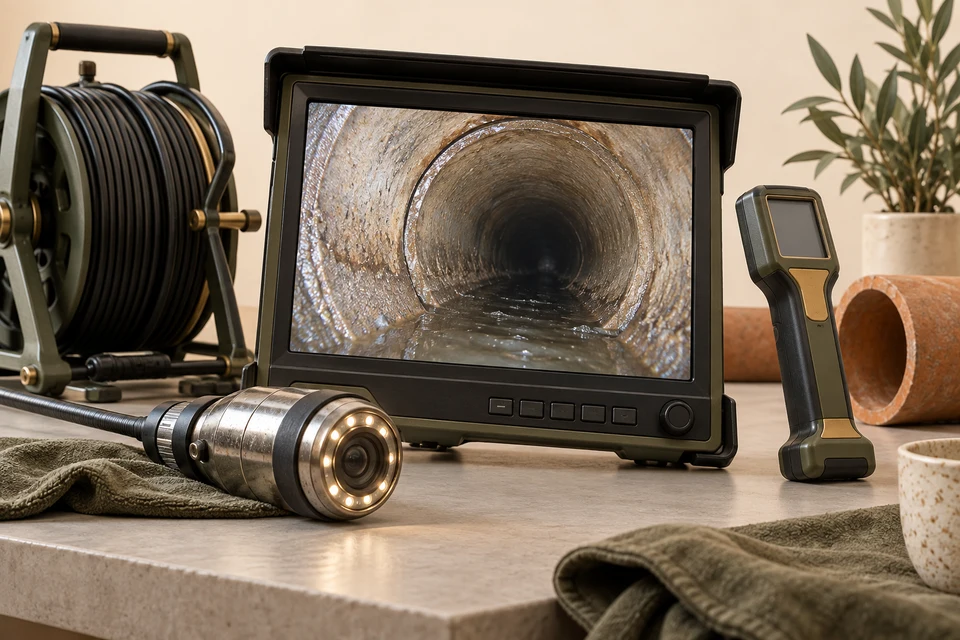
| Condition evidence | Camera records, cleaning logs and incident history | Separates a recurring blockage from structural failure |
| Access planning | Loading areas, slabs, tenant spaces, utilities, public routes, equipment access | Decides whether trenchless, open cut or interior work is practical |
| Regulatory review | Permits, inspections, health, building and property-management requirements | Drawings and approvals can take longer than the work |
| Phasing and communication | Sequencing, affected occupants, water-use restrictions, contingencies | Keeps tenants informed and the building usable |
The same evidence rules as a house apply. The camera evidence page explains what a usable recording contains, and the methods hub shows how findings map to repair, lining, bursting or open cut.
02 /Who decides on a sewer replacement in a condo or multi-unit building?
Whoever owns the pipe and holds the authority to spend on it decides, and in a multi-unit building that is often not the person who first reports the backup. Sort this out before collecting quotes.
- Condominium corporations: the board usually acts for the corporation on common property, but the condominium plan and bylaws decide which pipes are common property and what the board can approve without owners. A property manager often coordinates but may not have spending authority.
- Rental buildings: the owner or landlord decides; tenants need notice of water shutoffs and access to units. Check the lease and any notice requirements before scheduling.
- Bare-land condos, duplexes and townhouses: a service may be shared between units or run under a neighbour's lot. Title, easements and the plan decide who owns which metres.
- Commercial leases: the lease may put sewer maintenance on the tenant, the landlord or both. Read the repair and utility clauses first.
The municipality's split still applies at the property line. As checked September 2026, EPCOR owns the pipe from the property line to the main in Edmonton, and Calgary makes private-side servicing the owner's responsibility. The sewer responsibility guide covers the rest of the province.
03 /How are shared services, tenant notices and water-use windows planned?
Map the service first, then plan notices around the shutdown the chosen method needs. A single building sewer can carry several units, a restaurant kitchen and a laundry room; lining or replacing it takes all of them off line together.
- List every unit, tenant and fixture group upstream of the work.
- Find each cleanout and the point where the building sewer leaves the building.
- Ask the contractor how long each phase stops flow: cleaning, lining and curing, or cutting in new pipe.
- Pick windows that suit the occupancy: overnight or weekends for offices and retail, midday gaps for some residential buildings.
- Issue written notices with the date, the hours, which fixtures cannot be used and a contact for questions.
- Plan a fallback if the work runs long: portable toilets, alternate washrooms or bypass pumping.
Calgary's lateral lining pilot shows how short some shutdowns can be: the City says a connection is out of service for about three hours. Private projects vary more, so ask for the expected duration of each phase in the scope.
04 /What do phasing and bypass pumping involve?
Phasing splits a job into stages so parts of the building keep working; bypass pumping keeps sewage flowing around the section being worked on. Both add cost and planning, and both are general practices a contractor designs for the specific site.
- Phasing might replace an exterior run first while interior branches stay live, then tie in the building drain in a separate short shutdown.
- Bypass pumping plugs the line upstream, pumps the flow through temporary hose to a point downstream, and runs until the new section is ready. It needs a safe hose route, supervision and a plan for a pump failure.
- Staging for equipment, spoil and materials has to avoid fire lanes, loading bays and public walkways.
05 /What permits and trench rules apply to commercial sewer work in Alberta?
Commercial work follows the same municipal permits as residential, with more documentation. As checked September 2026:
- Lethbridge: a plumbing permit application includes a description of work, pipe layout, fixture locations, contractor licensing, and drawings for complex or commercial systems. Permits come from a licensed plumbing contractor with a valid City business licence.
- Calgary: all plumbing installations require permits, including renovation work; inspections are booked through 311 or VISTA.
- Edmonton: contractors must be licensed with the City to take out plumbing permits.
- Red Deer: anyone removing or installing a sanitary service on a lot applies to Engineering Services under Utility Bylaw 3606/2018.
- Okotoks: any new, altered or removed connection to the wastewater system needs the CAO's written approval under Bylaw 25-21.
Alberta's OHS Code, Part 32, governs every excavation on the site: section 447 requires buried facilities to be located and marked before ground is disturbed, and section 450 requires wall protection for workers in trenches more than 1.5 m deep. Public-side work, lane closures and work near other utilities add their own approvals; confirm them with the municipality. The locates and digging safely guide covers Click Before You Dig and private locates.

06 /What changes for restaurants and grease-heavy properties?
Restaurants need the grease question answered before the replacement question. The City of Calgary names grease as usually the main cause of sewage backups (as checked September 2026), and a line that is replaced without fixing the grease source will clog again.
- Pull the interceptor pump-out and cleaning records before filming the line.
- Have the line jetted to the pipe wall so the camera sees structure, not grease.
- Check whether the replacement scope includes the interceptor connection and any required sampling access; confirm requirements with the municipality.
- Plan work around kitchen hours; a closed kitchen is often the real cost of the job.
For pricing across grease-related sewer work, SewerQuotes.com is the network's cost reference.
07 /How is a commercial sewer project priced?
Commercial scopes are priced from drawings, camera records and a site visit, not from a per-metre rule. Pipe diameter, depth, slab cutting, interior restoration, bypass pumping, night or weekend work, traffic control and phasing all move the number, so the residential ranges on the pricing page do not transfer.
08 /What is the typical commercial review process?
- Collect records
Gather drawings, prior videos, cleaning records, incident history and known ownership information.
- Inspect and locate
Document the accessible system and locate findings relative to the building and property.
- Define operational needs
Identify shutdown constraints, tenant communication, access controls and critical operations.
- Compare methods
Review localised repair, open-cut replacement and condition-eligible trenchless work against the evidence.
- Confirm written scope
Set out permits, safety, schedule assumptions, testing, restoration, exclusions and change control.
- Execute and document
The selected contractor does the agreed work and provides the specified inspection and closeout records.
09 /What should you ask a commercial sewer contractor?
- Which assets, owners, tenants and decision-makers does this work affect?
- What do the inspection record and maintenance history show?
- What shutdown, access, safety and communication constraints have you planned for?
- How do the methods compare against the structural condition and our operations?
- Who holds the permits, what testing is included, and what closeout records will we receive?
- Can you provide proof of liability insurance and a WCB clearance letter?
Share the system evidence, addresses, property type and operational constraints through the request form for project intake. If a backup is happening now, start with the urgent first steps.
FAQQuestions people ask
Which Alberta commercial properties can request a sewer replacement review?
Restaurants, retail, offices, multi-unit residential, condominiums, industrial, institutional and other managed properties can send project details. Whether a provider fits and is available has to be confirmed for each location.
How can sewer replacement disruption be reduced for Alberta tenants?
A contractor can review phasing, alternate access, off-hour windows, bypass pumping and method options. No schedule or downtime can be promised before the site and operational constraints are known, so plan notices around the contractor's written phase durations.
Who pulls the permits for commercial sewer work in Calgary or Lethbridge?
Usually the contractor. Calgary homeowner permits are only for owner-occupiers doing their own work, and Lethbridge commercial systems need a licensed plumbing contractor and drawings. The proposal should name the permit holder and each inspection.
Is urgent commercial sewer help promised through SewerReplacements.ca?
No. No response time is promised through this site. Use the urgent intake page for active conditions, call your municipality where the public side may be involved, and call a provider directly when immediate contact is needed.
Can one request cover several Alberta properties or buildings?
Yes, a request can list multiple addresses, but each location needs its own evidence, access review, permit path and scope, because municipal rules and ownership splits differ between cities.
Does a condo board in Alberta need owner approval to replace a shared sewer line?
It depends on the condominium plan, the bylaws and the size of the expense. Check which pipes are common property and what the board may approve on its own, and get advice from the corporation's manager or lawyer before signing.
NETWORKGo deeper across the HAUSE Sewer network
Condo and multi-unit sewer inspections: who scopes what
Condo and multi-unit sewer inspections: shared vs unit piping, what boards should scope, what buyers should ask for, and access in occupied buildings.
SewerQuotes.comWho pays for sewer repair: buyers, sellers, landlords, tenants and condo owners
Who pays for sewer repair in Canada: buyer vs seller, landlord vs tenant, condo corporation vs unit owner, and neighbours who share one sewer lateral.
PipeCleaning.caCondo and apartment drain stack cleaning
Condo and apartment drain stack cleaning: why kitchen stacks back up on lower floors, how stacks are jetted or descaled, and how boards schedule it.